

A Comprehensive Analysis of Cupcake Product Classification, Inspection and Certification
There are various types of water cups used daily. Before using them, have you ever paid attention to whether they meet the inspection and certification standards? This article will systematically introduce the inspection, factory inspection and inspection key points from aspects such as cup classification, external inspection, physical and chemical safety, and performance testing, for the reference of inspectors, purchasers and manufacturers.
I. Cup Types (classified by container capacity)
Cup items include thermos cups, ceramic cups, glass cups, ceramic plates, bowls, etc. Based on the container capacity, they are classified into three categories:
Class 1 container: A flat and shallow container with the distance from the bottom to the highest edge being less than 25mm.
Class 2 containers: Excluding Class 1 and Class 3, these are concave vessels (such as bowls, large water jars, plates, and dishes with depth or capacity).
Three types of containers: storage jars with a capacity greater than 3 liters.
During the inspection process, it is necessary to first determine the category of the product in order to compare it with the corresponding safety limit standards.
II. External Inspection Items (Basics for Inspection)
The inspector needs to conduct a detailed inspection of the following items:
Labels, dimensions, wall thickness, color, shape: Consistent with the samples and the information provided.
Bottle body defect: No impurities, cracks, or bubbles. If there are bubbles at the bottom of the bottle, a special inspection is required to check for small holes (water with color can be used for injection), to prevent water accumulation and dirt accumulation during washing.
Packaging method: Glass products are fragile and it is necessary to ensure that the packaging is secure. For some retailers (such as Argos), a drop test must be passed; for Homebase, glass and ceramic products do not need to undergo a drop test, but transportation safety still needs to be ensured.
Food contact safety: If there are patterned colorations on the inner surface of the container, the migration amounts of lead and cadmium heavy metals need to be tested. The national standards, the US FDA, and the European standards (such as BS4768:1986) have different requirements. The factory must provide a third-party inspection report.
Lead and cadmium migration limit values:
Container category Lead leakage limit Chromium leakage limit
Class 1 containers 0.8 mg/dm² 0.07 mg/dm²
Class 2 containers 4.0 mg/L 0.3 mg/L
Class 3 containers 1.5 mg/L 0.1 mg/L
These indicators are the key items for product certification. During the inspection, the test reports must be verified.
III. Performance Testing Methods (Inspection and Certification)
The following test items are applicable to insulated cups and other similar containers. The inspectors should follow the standards when conducting the tests:
Odor check: The bottle stopper and the inner wall must not have any unpleasant odors.
Actual capacity: Check whether the measured nominal capacity is accurate.
Sealing leakage test: Fill the cup with water to the brim at room temperature. After 2 hours, observe if the water level has dropped. Check for any leakage at the inner and outer layers.
Corrosion resistance: Check whether there is any rust on the metal body (both inside and outside).
Heat resistance: Fill the container with water at 15 ± 10℃ up to the nominal capacity and leave it for 5 minutes; then empty it and refill it with water at 95 ± 10℃, leaving it for another 5 minutes. After emptying, check if the inner walls (glass, metal, plastic) are intact.
Stopper water resistance: Fill the bottle with 75% boiling water (containing 0.5% surface activator), tighten the cap with a torque of 2N·m (for non-rotating stoppers, try to screw it tightly), dry the outer shell, place it upside down for at least 10 minutes, and no water droplets should leak out.
Stability during placement: Place the cup in any orientation on a 10° inclined surface. From an empty cup to one filled to the marked capacity, it must not tip over.
Backstrap strength: Test to see if the backstrap is secure.
Impact Resistance:
Vacuum cup: When filled with water and dropped vertically from a height of 10 cm onto a hard wooden floor that is at least 3 cm thick, it must not break.
Other insulated cups: When filled with water and dropped from a height of 80 cm onto the cement floor three times (once from the bottom, twice from different sides), the insulation effect remained unaffected after the test.
Backstrap strength: Repeated force test to ensure no damage.
Hand pulling force and durability: It can withstand at least twice the weight of water filled to the nominal capacity, and can remain durable for 1 hour.
The above-mentioned test items are mandatory contents in the inspection report and are also an important basis for evaluating the inspection capabilities of the factory during the factory inspection process.
IV. Link between Factory Audit and Certification
Supplier Audit: The factory should verify the glass/ceramic forming, annealing, tempering, coating, assembly and other processes of the cup production enterprise; the calibration records of detection equipment (thickness gauge, tensile tester, drop test bench, salt spray chamber, etc.); the qualifications of inspection personnel; and the food safety management system (such as ISO 22000).
Product Certification: Export cups must comply with the certification standards of the target market (such as EU LFGB, US FDA, Chinese GB 4806). During the inspection process, verify the consistency between the product labels, instructions and the certifications.
Continuous improvement: For non-conformities identified during the inspection (such as excessive lead and cadmium content, poor sealing), a rectification report should be prepared. The inspection process should be used to close the loop and establish a quality traceability file.
Through the above inspection, testing, factory verification and certification processes, it is ensured that the cup products meet all the requirements in terms of food safety, physical strength and durability, thus guaranteeing the safety of consumers' use.
分享这个商品
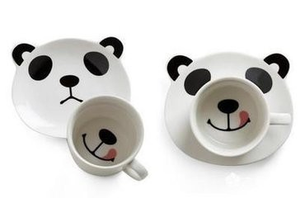
A Comprehensive Analysis of Cupcake Product Classification, Inspection
A Comprehensive Analysis of Cupcake Product Classification, Inspection and Certification