

A comprehensive guide for the entire process of luggage product inspection, factory verification and quality certification (including appearance, stitching, zippers, shoulder straps, safety, etc.)
Luggage (such as suitcases and handbags) is closely related to daily life. The quality control for luggage must cover the entire process from design, production, final product inspection, to supplier inspection. The following are the core points for luggage inspection and certification, which are suitable for reference by inspectors and purchasers.
1. Overall appearance inspection (comparison with the confirmed sample)
Shape and structure: The overall appearance should be consistent with the confirmed sample (sign plate), including the front and back dimensions, side dimensions, shapes and materials of each small piece.
Fabric texture: Straight-grain fabric cannot be cut into diagonal fabric; it should be cut along the straight grain; the entire fabric must not deform, be skewed, or be unbalanced.
Pocket alignment: The attached pockets should be parallel and without any unevenness in height; the zippers should be straight and without any left-right skew.
Smooth surface: The surface is flat and smooth, with no severe wrinkles; if it is a printed or checked fabric, the patterns of the attached small bags should align properly without any misalignment.
During the inspection process, a tape measure, visual inspection and photo-taking should be used; during the factory inspection, the layout control of the cutting process should be verified.
II. Fabric Quality Inspection (Material Certification)
Check whether the fabric has embroidery, whether the thread is thick, whether there are bamboo joints, whether it is torn or damaged, and whether there are holes.
Check for any color differences in the front and rear pockets, the left and right sections, and the inner and outer bags (color difference inspection).
The fabric color fastness and composition must comply with the certification standards (such as REACH, OEKO-TEX®).
During the inspection process, it is necessary to compare and confirm the samples under standard lighting conditions; during the factory inspection, it is required to review the incoming material inspection records and the supplier certification documents.
III. Quality Inspection of Sewing (Key Process Points)
No broken threads, skipped stitches, or missed stitches; the sewn threads should be straight, without any bends, and the turns should be smooth.
The sewing line must not be sewn to the edge of the fabric; the stopper should be of an appropriate size (neither too small nor too large).
The sewing thread color is usually matched with the fabric; if the customer requests a contrasting color (such as red fabric with white thread), it must be consistent with the confirmed sample.
During the inspection, the seams need to be pulled to check the strength; during the factory inspection, the operation standards and needle spacing density of the parking lot workers should be randomly checked.
IV. Zipper Inspection (Function and Appearance)
Smooth opening and closing: No sticking, damage, or missing teeth.
Zipper label: No detachment, scratching, oil leakage, rusting; no burrs, sharp edges, or sharp corners.
Surface treatment: For items such as zipper labels that have undergone spraying or electroplating, they must be inspected according to the defect standards of the corresponding process (no peeling, exposed base layer, or bubbles).
During the inspection process, it needs to be opened and closed more than 10 times; the certification must comply with the zipper standards such as ASTM D2061.
V. Inspection of Handles and Shoulder Straps (Load Safety)
Tensile test: Usually requires a tensile force of 21 pounds (approximately 9.5 kg), with no slippage or breakage.
Webbing quality: No embroidery, no thick yarn, no fraying; Thickness and density refer to the confirmed sample.
Metal/plastic fasteners (loop clasps, rings, snap fasteners):
Metal parts: No oil spraying or electroplating defects (scratches, exposed base, rust).
Plastic parts: No burrs, sharp edges or sharp corners; When the snap fastener is inserted, there should be a clear "bang" sound. It should not come loose even when repeatedly pulled with a 15-pound force.
Special safety requirements (for children/infant hanging bags):
The straps should be fastened using snap fasteners, Velcro or easily detachable stitching.
When pulled with a force of 15 pounds or 21 pounds, the strap must be able to break in order to prevent entanglement around the neck and suffocation.
All plastic and metal parts must comply with toy safety standards (such as EN 71, ASTM F963).
During the inspection, a pull tester will be used for spot checks; when conducting the factory inspection, it is necessary to verify the calibration records of the pull testing equipment and the safety design documents.
VI. Inspection of Other Accessories
Rubber band: No embroidery, the rubber strip is not exposed, the elasticity meets the requirements, and the sewing is firm.
Hook-and-loop fastener: Excellent adhesion. The two pieces on top and bottom align perfectly without any misalignment and do not protrude.
Nails (bolts): Used for fixing the rubber sheets or rubber rods. The heads of the nails are smooth and round, without cracks or causing discomfort when touched.
LOGO screen printing / embroidery:
Screen printing: Clear, strokes are uniform, and there is no uneven thickness.
Embroidery: The position, thickness of letters/patterns, curvature, color should be consistent with the sample, and the embroidery thread should not be loose.
Reduced-size wheat (labeling/ingredient label): Check the product's ingredients, model, design classification, origin, etc.; Verify if the sewing label position is correct.
VII. Special Requirements and Certifications
Adult Bags: Generally, there is no mandatory flammability test; the handles and stitching areas can withstand a pulling force of 15 to 21 pounds. Unless the customer has specific requirements.
Infant/Child Hang Bag:
Flammability and safety must be tested.
The shoulder straps or neck straps must be equipped with snap fasteners or Velcro, and they should be able to detach under a certain pulling force to prevent suffocation.
Plastic parts and metal parts must comply with toy safety certifications (such as EN 71-3 for heavy metals, ASTM F963 for mechanical and physical properties).
VIII. Factory Audit and Certification System Suggestions
Factory Audit: Inspect the cutting, sewing, assembly, and testing processes of the suppliers; Check if the tension meters, calipers, color difference display boxes, etc. are calibrated; Review the certification certificates of raw materials (fabrics, zippers, hardware), such as OEKO-TEX®, REACH, RoHS.
Product Certification: Exported luggage must pass the certification requirements of the target market (such as EU REACH, US CPSIA, and China GB 20400). During the inspection process, check the tags, washing labels, and warning statements for consistency with the certifications.
Continuous improvement: For the non-conformities identified during the inspection (such as loose stitches, unsmooth zippers, insufficient pulling force), a rectification report should be prepared. The inspection process should be used to close the loop and establish a quality traceability file.
Through the above inspection, testing, factory verification and certification processes, it is possible to ensure that the luggage products meet all the requirements in terms of appearance, durability, safety and environmental compliance, thereby reducing trade risks and enhancing brand reputation. For more professional content, please continue to follow this column.
分享这个商品
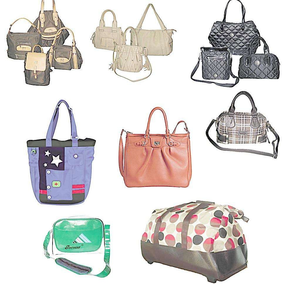
A comprehensive guide for the entire process of luggage product inspec
A comprehensive guide for the entire process of luggage product inspection, factory verification and quality certification (including appearance, stitching, zippers, shoulder straps, safety, etc.)