

Detailed Inspection Standards for Women's Shoes and High Heels: A Comprehensive Guide from the Surface to the Bottom of the Foot
Title: Detailed Inspection Standards for Women's Shoes and High Heels: A Comprehensive Guide from the Surface to the Bottom of the Foot
Introduction
Footwear inspection is a highly technical professional task that requires inspectors to possess extensive product knowledge and acute observation skills. Women's shoes, especially high-heeled shoes, due to their diverse styles and complex structures, have even stricter requirements for inspection. This article thoroughly analyzes the inspection standards for women's fashion shoes and high-heeled shoes, covering aspects such as the surface, accessories, bottom, and craftsmanship, providing systematic quality control references for inspectors, purchasers, and manufacturers. These standards are also important bases for supplier factory audits and product certifications.
I. Inspection Standards for Women's Fashion Shoes
(1) Key Points for Facial Inspection
The face of a shoe is like its "face", directly determining the first impression of the consumer. The inspector needs to carefully examine the following details item by item:
1.1 Flatness of the shoe surface and material quality
The climbing strap should not be twisted; the shoe sole should be free from scratches or damages.
Leather products: The front of the shoes, the shoe cover and the outer waist must not have any leather defects such as insect bites, scratches, or blemishes.
Check if the wool fabric has faded and whether the left and right feet are paired correctly.
1.2 Surface Smoothness
The surface of the leather cover must be smooth, free from wrinkles and bumpy areas.
The toe of the shoe must be smooth and flat, without any protrusions.
1.3 Suture Quality
The surface of the cover must not have any loose threads or broken lines.
It is impossible to have no boundaries or to break the rules.
1.4 Symmetry Test
Checking the length ratio of the shoe face to determine if they fit together
Whether the heights of the inner and outer waistbands and the height of the heel are consistent
1.5 Heel翘ness
Comparison of toe height consistency
Compare with the confirmed sample to see if it is correct
1.6 Color and Effect
Compare the sample shoes and check if there is any color difference on the shoe surface.
Is the glossiness and the color-removal effect the same as that of the confirmed sample?
1.7 Trademark Inspection
Check if the trademark letters are correct
Essential letters
1.8 Inside and Hongbao
The inner lining of the shoe toe must not be wrinkled or pressed against the foot.
Check if it has penetrated the midsole.
Porta-Bag inspection: Check if the Porta-Bags have been inserted under the midsole, whether any are missing or misplaced, and whether the hardness of the Porta-Bags is sufficient (especially the rear Porta-Bags must be hard)
(2) Inspection Points for Accessories
Accessories not only affect appearance but also involve safety performance. They are the key focus areas for safety certification:
2.1 Quality of Decorations
All kinds of accessories must not be cracked, chipped, scratchy, or have burrs.
Not suitable for iron materials (to prevent rusting)
Cannot be easily detached
2.2 Electrical Embroidery Quality
The needle spacing for electro-embossing must be aesthetically pleasing.
Non-detachable
No significant color difference allowed
2.3 Firmness of Bead and Clip Fasteners
If the upper part of the shoe has decorative beads or buttons, its durability must be excellent.
Testing method: Pull and stretch it, and see if it falls off.
(III) Key Points for Bottom Inspection
The bottom structure directly affects the comfort and durability of the shoes, and is also the focus of the physical performance tests:
3.1 Midsole and Steel Core
Is the midsole core made of hard steel material? Has the bending resistance test been passed?
Does the composition of the midsole material meet the company's requirements?
Does the midsole curvature match the toe box?
Is the bottom edge rolled over?
3.2 Topsole (bottom of the shoe heel)
Is it made of PU material?
Is there any color difference?
Has the wear resistance met the standard?
Whether there are gaps or separations between the skin and the stitches
3.3 Heel Height Test
Has it undergone impact testing and meets the company's requirements?
Regarding whether there are gaps or separations between the sole and the upper part
3.4 Installation Firmness
Whether the installation is secure or not, use threaded nails along with four dental nails.
Test the pulling force
Keep it stable and do not allow it to sway.
The front part of the sole should be flat without any wavy shape.
3.5 Seat Position and Toe Nails
Check whether the nail heads on the seat are protruding or sunken.
Are there any spikes on the heel (projecting from the side of the heel)?
3.6 Outsole and Waterproof Platform
Do the outsole and the waterproof platform fit each other?
The sole must not fade in color.
The thickness and softness/hardness must meet the standards.
3.7 Internal Cleaning
There must be no foreign objects inside the shoes.
The nails inside the shoes need to be removed and cleaned thoroughly.
3.8 Dressing Inspection
Does the fitting look comfortable?
Will high heels be unstable when walking?
II. Inspection Standards for Women's High Heels Over 2CM
(1) Facial Considerations
1.1 Flatness of the Shoe Surface
The surface of the shoe upper must be smooth and continuous, without any wrinkles or folds.
The size and position of the accessories must be the same as those of the confirmed sample.
1.2 Effect Processing
The color-removing or burnishing effects for shoe shapes must be based on the confirmed sample.
1.3 Inside and Hongbao
The inside should not be wrinkled, peeled off or creased.
Hongbao should not be wrinkled.
1.4 Glue Line
The glue line must not protrude more than 1mm beyond the edge.
The foot position should not be used to push off.
1.5 Shoe insoles
The insoles must be firmly attached and levelled.
The insoles must be made with a 3MM thick latex as the core material.
1.6 Warping and Film
The warping degree should be normal. A range of 10MM to 12MM is ideal.
The film must be flat and smooth.
1.7 Nailing
Do not hammer nails too hard.
1.8 Trial Wear Verification
The bulk goods must be tried on and approved before the inspection.
1.9 Fit and Comfortibility
The size, fit, thickness and tightness of the shoes must be appropriate.
Do not press, squeeze or strike the feet.
1.10 Stability of the Follow-up
Just like the clothes are not slanted or swaying
Not allowed to be skewed or have a kicked-in heel phenomenon
(II) Bottom Notes
2.1 Physical Properties Testing
All physical property tests must be passed (such as wear resistance, tear resistance, peel strength, etc.)
2.2 Material Consistency
The bulk materials must match the color chart.
2.3 Film Thickness
The thickness of the film must be 3MM and it should be odorless.
The molding base is the same as well.
The film surface must be coated with a protective film and then processed after it is molded.
2.4 Midsole Material
The midsole must be made of high-quality materials.
Sandals must, in principle, be made with aircraft material.
The core material must be manganese steel.
The width of the midsole edge protection should be 10mm or more.
2.5 Heel Midsole
Heels over 5 centimeters in height require the use of a 4-in-one midsole.
2.6 Shoe Mouth Reinforcement
The shoe opening needs reinforcement to enhance its durability.
(III) Notes on Process Requirements
3.1 Foot Placement Process
Fasten the straps securely
The shoe type is suitable for using four-pronged nails or tooth nails along with threaded nails.
The length of the nail should be based on the maximum length without causing the head to burst.
3.2 Reinforcement Belt
The shoe opening and the areas subjected to force must be reinforced with cotton strips.
3.3 Firmness of Accessories
The decorative flowers and fastening accessories must be firmly attached and should not be easily detached.
3.4 Hardness of Hongbao
The portobello mushroom should be pliable and have sufficient hardness.
3.5 Outsole Edge Protection
The midsole edge should have a width of 10MM.
And use PU glue to stick it together.
3.6 Strip-type Materials
When the strip-type materials are subjected to force, reinforcement must be added in the middle.
The drawstring cannot burst open.
3.7 Waterproof Platform
The hardness of the waterproof platform material should be appropriate.
The adhesion between the midsole and the platform should be firm.
3.8 Markings for Low-Heel Shoes
For low-cut shoes, marks must be made on the shoe mold.
III. Sampling and Decision Rules
3.1 Sampling Plan
Determine the sampling quantity and acceptance level based on the AQL (Acceptable Quality Limit) standard.
For critical safety items (such as the strength of the steel core and the stability of the decorations), it is recommended to adopt a special inspection level.
3.2 Defect Classification
Fatal Defects: Such as broken steel core, detachment of decorations which may cause injury, and excessive toxic substances, with zero tolerance.
Main defects: Such as functional failure, obvious appearance issues, and size deviations, will be judged according to AQL standards.
Minor defect: Minor appearance defect, does not affect usage. Judged according to AQL standards.
3.3 Inspection Report
All inspection results must be recorded in the formal inspection report.
Including defect photos, measurement data and test results
Clearly define the conclusion and recommendations
IV. Linkage between Factory Audit and Certification
4.1 Supplier Capability Assessment
During the factory audit, the following aspects are given priority attention:
Quality control system (such as ISO 9001 certification)
Production process control capability
Equipment inspection and calibration records
Qualifications and Training of Inspectors
4.2 Product Certification Requirements
Depending on the target market, women's shoes may need to comply with specific certification standards
EU market: Must comply with REACH regulations and CE marking requirements
US market: Must comply with ASTM standards and CPSIA requirements
During the inspection process, it is necessary to verify the consistency between the product labels and the certification certificates.
4.3 Continuous Improvement
The problems identified during the inspection should be reported back to the supplier.
Repetitive issues need to be followed up and rectified through factory inspections.
Promote the continuous optimization of the supplier's quality system
Conclusion
The inspection of women's shoes and high heels is a systematic process that involves comprehensive checks on the surface, accessories, sole, and craftsmanship. Only through strict inspection standards, scientific sampling methods, and professional operation by inspectors can it be ensured that each pair of shoes meets the requirements in terms of comfort, aesthetics, and safety.
For brand owners and purchasers, entrusting professional third-party inspection agencies to conduct full-process quality monitoring in accordance with this standard can effectively reduce quality risks and safeguard brand reputation. For manufacturers, strictly adhering to this standard and passing the factory inspection and product certification is the fundamental way to enhance market competitiveness.
分享这个商品
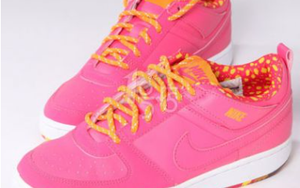
Detailed Inspection Standards for Women's Shoes and High Heels: A Comp
Detailed Inspection Standards for Women's Shoes and High Heels: A Comprehensive Guide from the Surface to the Bottom of the Foot