

Inspection and Testing Standards for Thermal Cups and Certification Guidelines: A Comprehensive Guide from Thermal Efficiency to Quality Control for Impact Resistance
I. Core Inspection Items for Thermal Cups
1. Thermal Insulation Efficiency
Thermal insulation efficiency is the core indicator of a thermal container. During the inspection process, the inspector should follow the following steps:
Add boiling water to the thermos cup. After a while, touch the lower part of the cup.
Normal condition: The lower part of the cup should be cold, while the upper part near the lid should be warmer.
Reason: The vacuum layer on the cup body prevents heat conduction. However, since the cup lid is not in a vacuum, some heat will escape.
Judgment criteria: If the cup body is noticeably hot, it indicates that the vacuum level is insufficient and the insulation performance is not up to standard.
2. Capacity Inspection
The capacity of the insulated container is related to the ability to hold a sufficient amount of items on the one hand, and directly affects the insulation temperature on the other hand - under the same diameter, the larger the capacity, the higher the required insulation temperature. Therefore, neither the positive nor negative deviation of the capacity can be too large.
Testing method:
Measure the actual capacity using standard measuring tools
Compare with the stated capacity
Judgment criteria: The capacity deviation should be within the allowable range as stipulated by the national standard.
3. Hot water leakage test
The quality of the insulated cup is related to safety of use and also affects the appearance of the usage environment. This is a crucial item that must be strictly inspected during the inspection process.
Testing method:
Fill the thermos cup with hot water.
When picking up the cup, check if there is any hot water leaking between the cup body and the cup lid.
Judgment criteria: Regardless of the amount of leakage, as long as there is any leakage, it is judged as non-compliant with quality standards.
4. Impact Resistance Test
The quality of the insulated cup directly affects its service life. During daily use, bumps and impacts are inevitable. If the shock absorption property of the accessory materials is poor or the precision is insufficient, gaps will occur between the inner liner and the outer shell. The shaking and impacts during use may cause the asbestos pad to shift, cracks to appear on the small tail (vacuum sealing), affecting the insulation performance. In severe cases, the inner liner may even rupture.
Testing method:
Simulate scenarios of daily falls or bumps
Check the clearance between the bottle body and the outer shell
Check whether the asbestos padding is displaced and whether there are any cracks on the small tail.
Criteria for judgment: No displacement, no cracks, no loosening.
5. Label Inspection
A genuine insulated cup should comply with relevant national standards, and its product label must be complete and clear.
Inspection items:
Product name, capacity, diameter
Factory name and factory address
The adopted standard number
Usage instructions and precautions during use
Certification marks (such as CCC, CE, etc.)
Criteria for judgment: If the labels are missing or incorrect, it is considered as unqualified.
II. Common Misconceptions and Quality Identification
Misconception 1: The heavier, the better the quality
The inspector should be aware that a product being heavy does not necessarily mean it has good quality. Some manufacturers deceive consumers by adding miscellaneous items (such as magnetic plates, insulation fillers) inside the cup to increase its weight. Such products are not genuine vacuum cups. Although they may have a certain degree of insulation effect, it is far inferior to that of a vacuum cup.
Identification method:
Shake the cup. If you can feel any movement of foreign objects inside, it indicates a non-vacuum structure.
The weight is abnormally heavy and there is no reasonable explanation for it. We should be on high alert.
Misconception 2: A branded thermos cup must be good.
Branded products do have guaranteed quality, but their prices are usually higher. When inspecting the product, one should focus on the cost-effectiveness:
This premium insulated cup can maintain warmth for up to 10 hours.
Products of ordinary brands that meet the standards can also maintain warmth for about 8 hours.
Based on the budget and requirements, choose products with good appearance and meeting the insulation standards.
III. Inspection of the Structure and Process of the Thermal Cup
1. Cup Body Molding Process
Carefully inspect the structure of the cup body to determine the production technology of the manufacturer:
One-piece molding: There are no seams from the cup body to the bottom. The quality is the best and the lifespan can reach over 8 years.
Welding process: The cup body shows weld seams. Although it can undergo vacuum treatment and be insulated, its lifespan is not as long as that of an integrated design. Over time or after being dropped, there may be air leakage and the insulation time will decrease.
When conducting the inspection, it is advisable to opt for the one-piece molding structure.
2. Simple Judgment of Vacuum Degree
Testing Method:
Add boiling water to the cup.
Wait for a moment.
Touch the lower part of the cup - it should feel cool.
Touch the cup lid - it should give a warm sensation
If the cup body gets hot, it indicates that the vacuum layer has failed.
IV. Sampling and Decision Rules
1. Sampling Plan
Determine the sampling quantity and acceptance level based on the AQL (Acceptable Quality Limit) standard.
Key items such as insulation efficiency and hot water leakage should adopt a zero-defect sampling plan.
2. Defect Classification
Defect Category Definition Judgment Criteria
Fatal Defect Hot water leakage, bottle cap rupture, missing labels Zero tolerance. Any defect found will result in the entire batch being deemed non-conforming.
Major Defect Insufficient insulation efficiency, excessive capacity deviation, insufficient impact resistance Judged according to AQL standards
Minor Defect Minor scratches on appearance, packaging flaws Judged according to AQL standards
3. Inspection Report
All inspection results must be recorded in the formal inspection report.
Including actual measurement data of insulation efficiency, leakage conditions, capacity deviations, and photos of appearance defects, etc.
Clearly define the conclusion and recommendations
V. Linkage between Factory Audit and Certification
1. Supplier Capability Assessment
During the factory audit, the supplier of insulated cups needs to focus on the following assessment:
Source of Stainless Steel Materials and Quality Certification
Vacuum pumping equipment and process control capabilities
Quality control of the welding process (for welded cup bodies)
Impact resistance testing equipment and records
Qualifications and Training of Inspectors
2. Product Certification Requirements
The insulated cup products need to meet the corresponding certification standards when entering different markets:
Target Market Certification Requirements Inspection Focus
Chinese Market GB/T 29606 "Stainless Steel Vacuum Cups", GB 4806 series food contact material standards Insulation efficiency, capacity, impact resistance, heavy metal migration
European Market LFGB certification, REACH regulations, CE mark Food contact safety, harmful substance limits
American Market FDA certification, California 65 proposal Heavy metal limits, insulation performance
During inspection, it is necessary to verify the consistency between the product label and the certification certificate.
3. Continuous improvement
Any quality issues discovered during the inspection should be promptly reported to the supplier.
Repetitive issues need to be followed up and rectified through factory inspections.
Establish a quality traceability record to support product certification audits
VI. Consumer Purchase Suggestions
For ordinary consumers, when choosing a thermos cup, you can follow the following simple inspection steps:
Check the label: Ensure that the product name, capacity, manufacturer's name, standard number, etc. are all complete.
Inspect the appearance: Check for any seams on the cup body (better if it is an integrated design), and ensure the surface is free from scratches.
Listen to the sound: Shake the cup, no unusual noise.
Test insulation: Pour hot water into the cup. The lower part of the cup should not be too hot to the touch, and the cup lid should be warm.
Check for leaks: After filling with water, invert or tilt it, and there should be no leakage.
Request to review the third-party inspection report and certification certificate
分享这个商品
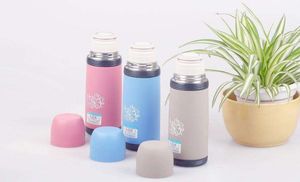
Inspection and Testing Standards for Thermal Cups and Certification Gu
Inspection and Testing Standards for Thermal Cups and Certification Guidelines: A Comprehensive Guide from Thermal Efficiency to Quality Control for Impact Resistance