
Inspection methods, procedures and precautions for crawler cranes
The all-terrain crane integrates the high-speed driving capability of the truck crane and the off-road crane's passing performance. It features core technologies such as multi-axis all-wheel steering, oil and gas suspension, and single-cylinder pin-type telescopic boom. It is an indispensable lifting equipment in fields such as large-scale wind power installation, petrochemical construction, bridge construction, and municipal emergency rescue. The single unit value ranges from several million to several tens of millions. In case of accidents such as broken boom, torn slewing bearing, or vehicle overturning, it will cause catastrophic losses in terms of personnel, property, and project schedule. In scenarios such as new machine delivery and acceptance, second-hand equipment trading, lease asset return inspection, and major overhaul factory certification, a comprehensive and systematic inspection covering the chassis driving system, oil and gas suspension, super lifting boom system, multi-mode steering, intelligent safety control, and hydraulic and electrical systems is the core barrier to ensuring the inherent safety of the equipment and the true value of the assets.
I. Overview of Inspection Methods
Based on the tonnage level of the full-terrain crane (from hundreds of tons to thousands of tons), the boom type (main boom/auxiliary boom/tower boom/overhead crane), the driving method (multi-axis full drive), and the client's requirements, the inspection usually employs the following methods in combination:
Static full inspection: The vehicle is left stationary. The chassis frame, leg system, slewing bearing, telescopic arm system, outrigger device, counterweight system, wire rope/lifting mechanism, hydraulic and electrical control systems are inspected item by item through visual inspection, manual touch, and precise measurement with measuring tools.
Dynamic performance test: Verify the engine performance, multi-axis steering function, oil and gas suspension lifting, boom extension/retraction/lifting, leg retraction/folding, and other actions' speed, smoothness and control response on a safe site.
Load test: Using standard weights or calibrated substitutes, the rated lifting capacity, structural stiffness, stability, and effectiveness of safety devices are verified at multiple amplitudes. This is a core and indispensable part of the inspection for all-terrain cranes.
Deep verification of the safety control system: Trigger and test all safety functions one by one, including torque limiters, boom extension sequence control, outrigger tension control, leg state interlock, rotation angle and amplitude limit, over-pulling and over-releasing protection, and anti-toppling warning.
Document and Label Traceability: Verify the consistency and validity of the entire machine's label, chassis VIN code, boom label, serial numbers of all major components (engine, main pump, main valve, lifting winch, slewing reducer, telescopic cylinder, etc.), wire rope certificate, safety device calibration report, special equipment usage registration certificate and regular inspection report.
The third-party inspection is carried out based on a core execution package consisting of "static full inspection + dynamic performance testing + safety control system verification + load test + in-depth review of documents". Any simplification of the project must be based on a written confirmation of risk assessment.
II. Inspection Process
1. Data Collection and Preparation for Inspection
The client shall provide a list of all the ground cranes to be inspected, clearly specifying the manufacturer, model, maximum rated lifting capacity, boom configuration (number/length of main boom sections, auxiliary boom/tower boom/overhead boom configuration), drive type (such as 6-axis/7-axis/8-axis/9-axis full drive), emission stage, working hours, applicable standards (GB/T 3811, GB 6067.1, TSG Q7015, etc.). The inspector shall prepare: long tape measure/ laser distance meter, ultrasonic thickness gauge, paint film thickness gauge, penetration/magnetic particle inspection equipment, feeler gauge, micrometer, wire rope diameter gauge, hydraulic pressure gauge set, infrared thermometer, level gauge, walkie-talkie, calibrated standard weights or heavy objects, etc.
2. Confirmation of Venue and Safety Conditions
The loading test site must be solid and flat. The bearing capacity of the foundation must be calculated to meet the requirements of the maximum leg reaction force. If necessary, a roadbed box should be laid to expand the bearing surface.
The site radius must cover the maximum working radius of the crane plus a safety margin (usually not less than 1.5 times the maximum working radius). There must be no overhead cables, structures, or other obstructions above the site.
Wind speed monitoring: During the load test, the ambient wind speed must be below the limit specified by the manufacturer (generally no more than level 6, as specified in the manual). A wind speed meter is provided on site.
The inspection area is marked with double warning lines. Non-inspection and command personnel are strictly prohibited from entering. The lifting commanders and test drivers must hold valid special equipment operation qualification certificates, and unified command signals and emergency plans should be established.
3. Identity and Label Verification
Vehicle nameplate: Verify the manufacturer, model, factory serial number, manufacturing date, rated lifting capacity, etc., and ensure they are consistent with the "Special Equipment Use Registration Certificate".
Chassis VIN code: Stamp the frame VIN code and compare it with the certificate of conformity and driving license. Check for any grinding or tampering.
Lifting arm nameplate: The nameplates on each section of the main boom, the auxiliary boom, the tower boom, and the outrigger boom correspond to the overall machine information.
Main assembly nameplates/serial numbers: Record of nameplates or serial numbers for key assemblies such as the engine, main hydraulic pump, control valve group, lifting winch, slewing reducer, luffing cylinder, telescopic cylinder, and outrigger cylinder, to determine the original factory matching rate.
Wire rope certificate: Manufacturer, model, diameter, breaking tension and factory certificate of the hoisting wire rope, luffing wire rope (if applicable), and emergency tensioning wire rope.
Special equipment procedures: Are the "Special Equipment Use Registration Certificate" and "Periodic Inspection Report" within their validity periods? Any missing nameplates, mismatched serial numbers, or expired procedures must be upgraded to serious non-conformities and recorded in writing.
4. Inspection of Chassis and Driving System - Multi-axle All-wheel Drive and Oil-Gas Suspension
Frame beam: The chassis frame of the full ground crane is a multi-layer high-strength steel welded structure. Comprehensive and thorough visual inspection is conducted from front to back. Key areas to check: the welding area between the leg box and the frame, the connection area between the slewing bearing base ring and the frame, the front/back suspension cylinder mounting seats, and the traction hook/attachment device area. Any suspected cracks must be cleaned and then undergo PT/MT flaw detection.
Oil and gas suspension system: The exterior of each shaft suspension cylinder shows no leakage, and the chrome coating on the piston rods shows no peeling or scratches. The nitrogen pressure of the accumulator is detected cylinder by cylinder using special tools. If it is lower than the nominal value, it is recorded. Suspension lifting function test: Operate the suspension control of the cab, the entire chassis should rise and lower synchronously smoothly without lag or inclination.
Multi-mode steering system: Verify the normal operation of functions such as highway driving mode (rear axle locking), all-wheel steering mode, crab mode, and rear axle independent steering mode. The indicator lights/dashboards of each mode are consistent with the actual situation. Check the clearance of the steering cylinder and all tie rod ball joints.
Tires: Multi-point measurement of tread depth for giant engineering radial tires. No bulges, cuts or exposed steel wire layers on the tire sidewall. The wheel rim lock ring is intact. Random inspection of bolt torque.
Transfer case/drive axle: Check for no oil leakage from the housing, and inspect the oil level. Check the condition of the universal joint and intermediate support of the transmission shaft.
5. Leg Support System Inspection - The First Line of Defense for the Overall Stability of the Machine
Leg box body: The telescopic leg box body structure shows no deformation, cracks or weld repairs. The telescopic movement of the legs is smooth, and the mechanical locking pin/screw is reliably inserted after the legs are fully extended.
Vertical outrigger cylinder: The coating on the piston rod is undamaged, and the hydraulic lock function is effective (after the outriggers extend, the directional valve should be closed, and the cylinder should not retract on its own). The foot plate/base is in good condition, and the connecting pin shaft is firmly attached.
Leg status sensor and interlock: The extension到位 sensor for each leg, the leg pressure sensor (if any), and the torque limiter are interlocked for testing. - Simulate that one of the legs is not fully in place, the system should issue an alarm and restrict the movement of the boom in the dangerous direction.
6. Rotation system inspection - The core assembly connecting the upper and lower vehicles
Swivel support: Check the connecting bolts between the inner/outer rings of the swivel support and the upper and lower vehicle frames. Use a torque wrench for spot checks or tapping method to determine if they are loose. The tooth surface of the gear ring has no broken teeth, severe wear, or pitting and peeling. The sealing strip is intact without any detachment, and the lubricating oil has no leakage.
Rotation support operation inspection: During the dynamic rotation test, listen throughout the process. Any periodic "clicking" abnormal sounds must be recorded and warned about - this is often a precursor to damage to the raceway or rolling elements of the rotation support.
Rotation mechanism: The rotation motor/brake housing shows no oil leakage, and the brake functions properly (there is no inertial sliding after the rotation stops).
Center rotary joint: The hydraulic center rotary body has no leakage; the signal from the electric slip ring (if present) is uninterrupted, and the connectors are securely fastened.
7. Boom System Inspection - The "Backbone" of the All-terrain Crane
This is the most technologically advanced and valuable part of the crawler crane.
Arm body appearance: There are no collision depressions or severe corrosion on the surfaces of each main arm, auxiliary arm, and tower arm. The heat affected zone of the welds is the key inspection area - the arm head, arm tail, edge of the reinforcing plate, welds of the telescopic slider seat, and connection hinge points of the super elevation/auxiliary arm. Use a strong light flashlight to scan closely. Any suspected cracks should undergo PT/MT flaw detection.
Single-cylinder plug-type telescopic system: This is the core feature that distinguishes full-terrain cranes from ordinary truck cranes. Verify the smoothness of the telescopic cylinder movement; after each section of the boom extends fully, the boom pin (connecting adjacent boom sections) and the cylinder pin (connecting the telescopic cylinder to the boom section) should be automatically or manually reliably locked, and the indicator light/digital display should indicate correctly. Check the wear of the boom pin holes at the tail of the telescopic boom and the boom pins - elliptical deformation and cracks at the edge of the holes are major hazards. Check the wear and gap of the telescopic slider/meshing pad.
Lift arm straightness: When the lift arm is fully extended and horizontal, use a theodolite or the string method to measure the lateral offset of the arm head. This helps determine whether the lift arm has undergone permanent deformation due to overload or collision.
Overhead lifting device (configuration): The overhead lifting arm structure is in good condition, with no cracks in the welds. The overhead lifting tension cylinder/hoist functions normally, and the steel wire rope is in good condition. The overhead lifting locking mechanism is reliable. Function verification of the overhead lifting tension sensor and control system - the overhead lifting tension should be automatically adjusted within the rated range.
8. Hoisting and Lifting System Inspection
Main/auxiliary lifting winch: Inspection of the fixing bolts of the winch base. The reducer has no leakage and operates without abnormal noise. The brake is sensitive in opening and closing, and the wear of the friction plates is checked. The wear condition of the rope groove on the drum, and the arrangement of the steel wire rope is neat without any disorder.
Steel wire rope: Measure the diameter of each strand and section using a diameter gauge. If the wear exceeds the standard (diameter reduction ≥ 7%) or the number of broken wires in one twist length reaches the scrapping standard stipulated in GB/T 5972, it must be determined as unqualified. The rope end fixation (wedge joint, alloy casting) is firm and reliable. Inspection of the lubrication status of the steel wire rope.
Lifting mechanism: Measurement of clearance between the ear seat pin and the lifting cylinder; no leakage throughout the entire stroke; Function of the balance valve - when the operating handle is in the neutral position, the boom should stop reliably without any significant downward movement. If it is a lifting winch type, then check according to the lifting winch standards.
Pulley system: All pulleys rotate smoothly. The wear of the rope grooves is inspected using a caliper or template. If it reaches the scrap standard, it must be recorded as a serious defect. The anti-detachment rope device is in good condition.
9. Balance and Accessories System Inspection
Counterweight blocks: The numbers and weight markings of each counterweight block are clear. The positioning pins/hooks for stacking the counterweights are in good condition. The automatic attachment/detachment system for the counterweights (if present) functions properly.
Hook: The surface of the hook shows no cracks or splits, and the deformation of the opening degree is no more than 15% of the original size. The anti-detachment hook safety latch is effective.
Auxiliary arm/tower arm retraction and extension mechanism: The operation of the auxiliary arm folding/extension mechanism is smooth, the clearance of the connecting pin shaft is normal, and the locking is reliable.
10. Inspection of Hydraulic and Electrical Systems
Hydraulic system: There is no leakage in the main pump/preliminary pump housing, and the operation is without abnormal noise. The main control valve group has no oil seepage. All hydraulic hoses are inspected one by one for aging, cracking, and bulging. The interference and friction points between the hoses and the boom are particularly checked. The hydraulic oil level and quality are inspected (in accordance with the aforementioned standards). After the load test, a comprehensive recheck is conducted to ensure that there are no new leaks at all connections.
Electrical control system: The display function of the driver's cab console is normal. The torque limiter system has no fault codes. The appearance of the boom length/angle/rotation angle sensors is intact, and the cable connections are tight. The sensors for outrigger tension, leg pressure, anemometer, etc. are in online status.
Lights and alarms: The working lights, outline lights, turning warning lights, and the buzzer/vibration alarm function are all functioning properly.
11. Special verification of the security control system - Every electronic defense line must be tested.
The safety control of the full ground crane relies heavily on the closed-loop interlock of sensors - controllers - actuators. The inspection must be carried out through "trigger tests" for each item:
Torque Limiter: Gradually increase the working range until the limit is reached, and verify: The warning (sound and light alarm) is triggered when the load reaches 90% of the rated load (or the system set value); The automatic disconnection of dangerous direction movement is triggered when the set protection value (usually ≤ 110%) is reached. Record the actual load and range at the time of triggering.
Overload/over-discharge protection: When the hook is slowly raised or lowered to the extreme position, the protection device should trigger an alarm and cut off the power supply in the corresponding direction.
Lifting arm extension and retraction sequence control: During the full extension and full retraction process, verify that each section of the arm extends and retracts in the designed sequence. Any skipping of sections or disorderly operation must be recorded.
Leg interlock protection: Simulate a situation where one of the legs is not extended or is not bearing weight. When the boom rotates/extends/retracts into the unstable envelope area corresponding to that leg, the system should issue an alert or cut off the dangerous direction of movement. Verify each mode of operation in multiple scenarios.
Over-rotation safety interlock (if configured): In the event of simulated over-rotation without tension being properly applied or with abnormal tension, the system should restrict the main boom from moving in a dangerous direction.
Anti-overturning warning: When the load test approaches the limit state of the rated load, observe whether the system issues an early warning.
Emergency Stop: Press the emergency stop buttons for getting on and off the vehicle respectively. The corresponding power sources should stop and all actions should cease.
12. Dynamic Performance and Load Testing - The Major Test
No-load test run (performed before load test):
Full motion speed test: All movements such as lifting, slewing, telescoping, rotation, and leg retraction and extension should be smooth in both high-speed and low-speed modes, and the combined movements should be coordinated.
Multi-mode steering operation verification.
Rated load test:
Select the three typical working amplitudes (long arm, medium arm, and short arm) from the manufacturer's load characteristic table, and lift the corresponding rated load objects one by one.
Hover 200mm above the ground, check that the structural deflection is normal and the legs are not lifted.
The braking is reliable during lifting, rotation and luffing operations, and the load does not slide down.
Hover for at least 5 minutes and measure the settlement of the hook/loaded object.
Static load test (as per the contract or standards, usually 1.25 times the rated load):
After all parties have confirmed the safety conditions in writing, slowly lift the load at 1.25 times the rated capacity, raise it 100-200mm off the ground, and hover there for no less than 10 minutes.
After unloading, immediately check that the main structural components such as the boom, slewing bearing, legs, and frame have no permanent deformation or new cracks.
This is a high-risk project and must be carried out by experienced test run supervisors and operators under strict supervision.
Dynamic load test (per the requirements of the contract or standards, usually 1.1 times the rated load):
Lift 1.1 times the rated load, perform all actions such as lifting, rotating, and slewing, and verify the dynamic braking performance.
After completion, conduct a comprehensive review of all systems.
13. Comprehensive re-inspection after the test
After the load test, the following must be carried out:
100% re-inspection of the critical welds of the boom assembly;
Re-inspection of the swivel support bolts and gear ring condition;
Re-inspection of all hydraulic connectors and cylinder seals;
Re-inspection of the condition of the steel wire rope;
Re-inspection of the outriggers and locking mechanism.
14. Report Output
Summarize all inspection records, load test curves/data, safety device test lists, and image materials to form the "Third-party Full-terrain Crane Inspection Report". The report must clearly indicate the test results of each safety device (qualified/不合格/untested), and attach photos for the non-tested items. The names and certificate numbers of the inspectors, crane operators, and test drivers must be recorded.
III. Important Notes
Inspection of thousand-ton equipment - Safety is the sole red line
In the event of an accident during the load test of the full ground crane, the consequences would be unimaginable. Before the test, a written safety plan must be formulated, clearly defining the responsibilities of each position, the emergency evacuation routes and the handling measures.
The wind speed must be monitored throughout the process. Once it exceeds the manufacturer's limit, the load test must be immediately stopped.
No personnel are allowed to enter the area beneath the lifted object, the lower limit plane of the crane boom, or the dangerous fan-shaped area prone to overturning. This safety principle must be strictly adhered to in the inspection of equipment weighing over 100 tons.
Single-cylinder pin mechanism - The core technology of the full-terrain crane
If the arm pin or cylinder pin of a single-cylinder telescopic boom becomes worn or fails, it may cause the boom section to malfunction during the telescoping process.
If the outer cover is detached or cannot be unlocked, the consequence will be that the boom bends or even breaks. During inspection:
It is necessary to check whether the arm pin holes are round and smooth, and whether there is any elliptical deformation or minor cracks on the edges of the holes.
It is necessary to verify that the indication of the arm pin/cylinder pin being in place is consistent with the actual mechanical locking state. It cannot be confirmed solely based on the electrical signal.
Tension safety of the hoisting system
The outrigger device alters the force state of the boom through pre-tensioned steel cables or hydraulic cylinders, serving as a "force multiplier" for the long boom operation of large-tonnage crawler cranes. Abnormal outrigger tension (either too tight or too loose) will change the boundary conditions of the boom's force application, directly posing a threat to structural safety. It is necessary to verify the accuracy of the readings from the outrigger tension sensors, as well as the alarm and protection functions of the control system in case of abnormal outrigger tension.
Oil and Gas Suspension - Dual Roles of Travel and Operation
The oil and gas suspension of the full-terrain crane not only affects the driving comfort, but also needs to ensure the stability of the entire vehicle through suspension locking or chassis leveling during the lifting operation. During the inspection, the following must be done:
Test whether the suspension lifting and locking functions are operating normally.
Confirm the accuracy of the chassis leveling - Place a level on the upper plane of the slewing bearing and verify the levelness after automatic leveling.
Pressure attenuation of the accumulator is a common problem and it must be tested cylinder by cylinder.
Steel wire ropes - The specifications and quantities used in crawler cranes are far greater than those of ordinary cranes.
Large-tonnage crawler cranes may be equipped with multiple sets of wire rope systems such as main hoisting, auxiliary hoisting, super lifting tensioning, and luffing (cable winching). The inspection must be conducted on each wire rope, section by section, and with multiple parameters (diameter, broken wires, deformation, lubrication) taken into account. If any wire rope reaches the scrap standard, the overall safety assessment of the machine will be deemed不合格 (unqualified).
The compliance of special equipment is a "no-pass" criterion for the inspection.
The full ground crane belongs to the large-scale lifting machinery in the category of special equipment. The "Special Equipment Use Registration Certificate" and the "Periodic Inspection Report" must be valid within their respective periods. Any cases of overdue non-inspection or unlicensed use should be clearly recorded as major management deficiencies in the report, and the legal risks faced by the client should also be informed.
Oil analysis - A must-have for high-end equipment inspection
For large-tonnage crawler cranes, it is strongly recommended to collect samples of hydraulic oil, engine oil, and lifting/rotation reducer gear oil for laboratory analysis. The metal elements in the oil can reveal early abnormal wear of pumps, valves, reducers, and cylinders, which is the most effective way to detect problems before they manifest in mechanical appearance.
Photographic Archives - The Vitality of Large-tonnage Equipment Inspection Reports
Armature weld seam flaw detection photos, arm pin hole inspection photos, state photos of the super elevation tension sensor, panoramic photos of the landing status of the legs during the load test, screen display photos of the moment the torque limiter was triggered, close-up photos of the defective parts of the steel wire rope - each of these photos is an unshakable evidence chain for the inspection conclusion. It is recommended to record the entire process of the load test with multi-position video.
分享这个商品
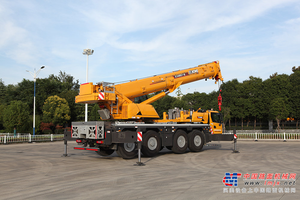
Inspection methods, procedures and precautions for crawler cranes
Inspection methods, procedures and precautions for crawler cranes