

Inspection methods, procedures, and precautions for tow trucks
As the "heart" of road logistics, the technical condition of the tractor directly determines the safety of transportation and operational efficiency. In processes such as bulk procurement, new vehicle delivery, used vehicle trading, or export inspection, a rigorous third-party inspection system can effectively avoid quality risks. From the perspective of third-party inspection and factory inspection, this article systematically disassembles the inspection methods, the entire process, and key precautions for the inspection of tractors.
I. Overview of Inspection Methods
Based on the site conditions and the requirements of the client, the inspection of the tractor typically employs the following methods and combinations:
Static comprehensive inspection: During the vehicle's stationary state, each item of the appearance, structure, dimensions, markings, and various system components is inspected and measured one by one.
Dynamic road test: On a safe enclosed road or designated route, test the dynamic performance of power, transmission, steering, braking, suspension, etc.
Test bench inspection: By using equipment such as the braking test bench, side slip test bench, axle load instrument, and chassis dynamometer, quantitative performance data can be obtained.
Function verification: Conduct individual operations and verify specific functions such as cab flipping, saddle seat locking, electrical lighting, air conditioning and heating, and power take-off.
Documents and traceability verification: Verify the vehicle registration plate, VIN code, engine number, certificate of conformity, consistency certificate, and the information on key components' registration plates to ensure consistency.
During third-party inspection, it usually follows the approach of "static full inspection + dynamic road test + functional verification", and additional bench testing and in-depth document verification are added based on the contract requirements.
II. Inspection Process
1. Declaration and Data Collection
The client provides a list of the vehicles to be inspected, configuration sheets, certificates of conformity, consistency certificates, and related technical agreements. Based on this information, the inspection party formulates the inspection plan, prepares standards, tools, and record forms.
2. Vehicle Positioning and Status Confirmation
Upon arrival at the scene, it was confirmed that the vehicle was parked on a solid and flat surface, with normal tire pressure, no load, and normal levels of engine coolant, engine oil, steering fluid, and brake fluid. The inspector wore reflective vests, safety helmets, and anti-shatter shoes, and set up safety warnings.
3. Identity and Label Verification
Make a photocopy or take a photo of the VIN code (chassis number) and compare it with the certificate of conformity and the nameplate one by one.
Check the riveting condition of the nameplate, and record the manufacturer, model, power, number of axles, empty weight, and total allowable towing weight, etc. parameters.
Check the engine number and motor number (if applicable), and ensure there are no signs of grinding or tampering.
4. Measurement of the vehicle's exterior and dimensions
Inspect the color difference, run-off, scratches and rust of the paint; check the flatness of the cab sheet metal and the uniformity of the door gaps.
Measure the external dimensions (length, width, height), wheelbase, rear overhang, tire specifications and tread depth using a tape measure or distance gauge, and ensure compliance with GB 1589 and the contract requirements.
Check the completeness and fixation status of the front and rear bumpers, side protection devices, fenders, rearview mirrors and blind spot mirrors.
5. Inspection of the cab and interior
Check the opening and closing of the car doors, the raising and lowering of the windows, the remote control of the door locks, and the central locking function.
Test the functions of the dashboard, indicator lights, and information display screen, and record the fault codes (if any).
Check the integrity of the interior components such as seat adjustment, seat belt, steering wheel adjustment, sun visor, bed, and storage space.
Start the engine, evaluate the cold start performance and idle stability, listen for any abnormal sounds; check the working conditions of the air conditioning, heater, defrosting, horn, and windshield washer.
6. Inspection of the chassis and power transmission system
Engine: Inspect external leaks (oil, water, gas) of the engine body, belt wear, interference of wiring harnesses and pipelines. Check acceleration and oil return responses, exhaust smoke color (normal is light gray or no visible smoke).
Clutch/Gearbox: Whether the clutch engagement and disengagement is smooth, the smoothness of gear shifting, whether the gearbox housing has cracks or oil leakage, and inspection of the hydraulic retarder (if any) appearance and piping.
Transmission shaft: Check for looseness of the universal joint and the intermediate support bearing. The protective sleeve is in good condition.
Drive axle: Check for oil leakage in the main reducer and at the wheel hubs. Clean the ventilation plugs. Record any abnormal temperatures at the axle ends (check after road test).
Suspension system: The coil springs have no cracks or broken pieces, and the horse bolts are securely fastened; the airbag suspension is inspected for the appearance of the airbags, the height valve connections, and the pipelines.
Steering system: Check the free rotation range of the steering wheel. Ensure that the steering gear, tie rod, and tie rod ball joint are free from looseness, leakage.
Brake system: Brake master cylinder, air passage drying tank, air reservoir drainage, pipe interface leakage check with leak detection fluid; wear indication of brake pads (if observable); inspection of ABS/EBS solenoid valves and wheel speed sensors connections.
Fuel/Urea System: Tank fixation, appearance, anti-theft measures; Urea tank, urea pipeline heating and liquid level sensor appearance.
7. Traction Control Device - Inspection Focus on Saddle Base and Electro-pneumatic Interface
This is the key component that distinguishes the tractor from ordinary trucks. Each item must be carefully inspected:
Saddle seat: The model is consistent with the contract. The base plate shows no deformation or cracks. The saddle seat panel and the manual locking mechanism of the traction pin operate flexibly and lock securely. The lubricating oil filling status.
Rocker arm and connecting piece: No abnormal wear or gap.
Electrical connection socket: The pins are free from bending, rusting, and the rubber sheath is intact. It has been tested to match the trailer.
Gas line coupling valve: The connection functions of the red (main gas supply line), yellow (control line), and blue (auxiliary) line connectors are normal. The color markings are correct, and they automatically couple with the connectors or quick-connect valves to ensure sealing.
Simulation of trailer connection function: Conduct an electrical inspection of the trailer light circuit (if an adapter is available), or at least verify the corresponding voltage output.
8. Electrical and Lighting System Inspection
Open the position lights, low beam, high beam, turn signals, fog lights, reversing lights, brake lights, license plate lights, hazard warning lights in sequence according to the operation checklist, and confirm the color, brightness, and flashing frequency of the lights. Check the front and rear outline lights and side indicator lights (if applicable). The volume of the electric horn meets the requirements. The battery is securely fixed, the terminal heads are protected, and the main power switch functions properly.
9. Dynamic Road Test
Carried out on a safe, straight and dry road surface:
Starting smoothness, clutch engagement without any shaking or abnormal noise.
Acceleration performance is excellent. The engine speed increases smoothly, and there are no gear skipping or disengagement issues in the transmission.
The steering is light and responsive, with no deviation or head movement during driving.
Perform emergency braking under the specified initial speed, assess the braking efficiency and directional stability, and observe whether there is any severe skidding in the braking marks.
The auxiliary braking (engine braking/slowing device) function has been activated.
After the road test, immediately check the temperatures of each hub and brake drum. The temperature difference should not be too large, and there should be no oil leakage from the axle head.
10. Exhaust emissions and noise (as required)
Use a portable smoke meter to measure the free acceleration smoke level of the diesel engine, and use a sound level meter to measure the stationary/accelerated noise. Compare with the agreed standards for judgment.
11. Issue inspection report
Summarize the inspection data and image materials, mark the non-conforming items and observation items, and form a formal inspection report that includes photos, VIN code records, and measurement data. Deliver it to the client.
III. Important Notes
Safety protection always comes first.
The inspectors wore reflective vests, safety helmets, protective gloves and anti-shock shoes throughout the process.
Before entering the vehicle's undercarriage, it is necessary to ensure that the vehicle has been turned off, the parking brake is engaged, and wheel chocks are placed at the front and rear of the tires.
During the dynamic road test, the "test vehicle" sign should be hung. The test driver must have the corresponding driving qualifications, and an observer should be seated in the passenger seat.
It is strictly prohibited to touch or inspect the high-pressure common rail pipeline or the high-temperature exhaust manifold with bare hands.
The traction control device cannot afford the slightest negligence.
The locking mechanism of the saddle must be manually released and reattached for simulation. One must visually confirm that the locking hook is fully closed and the safety lock is in place.
The gas line connection disconnection test is conducted by maintaining the rated pressure and checking for leaks. This ensures that the risk of brake failure due to potential air leakage is eliminated.
The pins of the electrical connection socket need to be connected to the voltage. It is necessary to verify each circuit one by one using a test light or a multimeter to prevent open circuits or loose connections.
The consistency between the documents and the actual vehicle is the bottom line for inspection.
Any situations such as unclear VIN codes, re-bolted nameplates, or unclear engine numbers should be immediately upgraded to major discrepancies and all inconsistent information should be recorded. It is not acceptable to allow passage based solely on verbal explanations.
The standards and applicable scope need to be clarified.
Clearly define the inspection basis in advance: national standards (GB 7258, GB 1589, etc.), enterprise standards, customer special agreements or export destination country regulations. In particular, for parameters such as the total mass of the trailer, the height of the saddle from the ground, the overall dimensions limit, and the emission stage, they must be strictly compared.
Environment and details influence the judgment.
When starting in a low-temperature environment, appropriately extend the starting time, but the battery voltage drop and the status of the starting motor must be within the normal range.
The surface rust on the brake discs caused by prolonged vehicle storage should not be wrongly judged as a sign of failure; however, severe rusted grooves need to be recorded.
A small amount of condensate water in the gas pipeline needs to be analyzed to determine its source. It should be handled separately from the water accumulation in the gas storage cylinder and the failure of the drying tank.
Photography and Traceability
For each defect, a clear photo or video must be provided, along with numerical values measured using tools (such as a feeler gauge for gaps and a tape measure for dimensions). A photo of the VIN code is essential in the report to ensure that each determination can be traced.
Conclusion
The inspection of tractor vehicles is a systematic, professional and highly safety-integrated technical task. For third-party inspection and factory audit services, the rigor of the process, the professionalism of the inspectors, and the ability to identify risks, together constitute the core value of the inspection. Only by integrating static inspections, dynamic tests, and file comparisons, and strictly adhering to safety regulations, can a genuine, accurate, and traceable quality report be delivered, ensuring the first line of safety for the circulation and operation of large vehicles.
分享这个商品
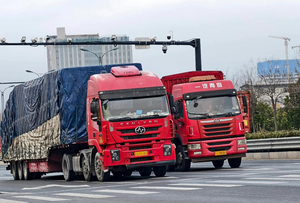
Inspection methods, procedures, and precautions for tow trucks
As the "heart" of road logistics, the technical condition of the tractor directly determines the safety of transportation and operational efficiency.