
Inspector and third-party inspection company: Comprehensive analysis of inspection, factory inspection, testing, and certification services
In supply chain quality control, terms such as "inspectors", "third-party inspection companies" frequently appear. But what exactly do inspectors do? What services do third-party inspection companies provide? This article will systematically introduce inspection, factory inspection, testing, and certification-related businesses from aspects such as definitions, job contents, service types, and work processes.
I. Definition and Distinction of Inspection Personnel
Factory QC (Quality Controller): Mainly responsible for quality control during the production process, and belongs to the internal inspection position.
Inspector: Usually refers to the inspectors from foreign trade companies or third-party inspection agencies. Their main task is to conduct final inspections to ensure quality before shipment.
Core responsibilities: Conduct rigorous and meticulous inspections of product quality, objectively and impartially report the quality situation, and truthfully fill out the inspection report.
II. Inspection Work Content (Certification Value)
Verify whether the goods meet the quality requirements stipulated by national laws and regulations or relevant standards.
Timely prevent delivery delays and product defects, and take emergency and remedial measures.
Reduce consumer complaints, returns and exchanges, as well as losses in business reputation caused by inferior products.
Reduce the risks of compensation and administrative penalties arising from the sale of inferior products.
Verify the quality and quantity of the goods to avoid contract disputes.
Compare and select the best supplier, and obtain suggestions for quality improvement.
Reduce the high management fees and labor costs that enterprises incur for monitoring and inspecting their products.
III. Types of Inspection Services (Full Process Quality Control)
Pre-production inspection: Random sampling inspections are conducted on raw materials, initial processed products, and components to control quality at the source.
Inspection during production: Conducting inspections on semi-finished products or newly produced finished products to identify deviations and propose corrective measures. This is equivalent to the process audit in factory inspections.
Sampling inspection of finished products before delivery: Before the products are packaged and ready for shipment (approximately 80% of the packaging is completed), an AQL sampling inspection is conducted in accordance with international standards such as ISO2859 and ANSI/ASQC Z1.4, to check the quantity, process, function, color, size, and packaging.
Supervise shipping: Before the final products are dispatched, inspect the cleanliness of the containers and the packing conditions during the process of the factory, warehouse, or containerization, to ensure safe transportation.
Factory assessment (factory inspection): A team of inspectors conducts an inspection of the working conditions, production facilities, quality assurance system, and personnel situation at the factory. They issue an assessment report and provide rectification suggestions. This is the core content of the factory inspection service and is also the prerequisite for enterprises to obtain certification.
IV. Preparatory Work Flow Arrangement (Inspector Operating Standards)
Contact the factory at least one day before the trip to confirm the arrival of the goods and the person in charge.
Bring a camera (with sufficient battery power), business cards, a tape measure, a utility knife, and sealable plastic bags, etc. as tools.
Carefully review the delivery notice (inspection materials), previous inspection reports, and confirmation samples, and resolve any issues promptly before they arise.
Understand the traffic routes and weather conditions.
V. On-site Inspection Execution Steps (Actual Operation for Inspection and Certification)
Upon arrival at the factory, notify the company and inquire about the completion status of the order (total quantity, packaged finished products, in-progress quantity, etc.). If the quantity does not match, report immediately; if the goods are in production, need to review the production process, identify problems in advance, and request improvements.
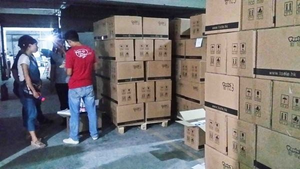
Take photos to verify the shipping labels on the inner and outer boxes, as well as the packing situation; inspect the size, material and cleanliness of the cartons.
Indicate the gross weight, the size of the outer carton, and verify it with the delivery notice.
Fill in the specific packing details in the inspection report (such as quantity/inner box, outer box quantity, packing tape, and sealing method).
Carry out the box drop test as per the customer's requirements (in accordance with the ISTA standard).
Check for any damage to the outer box and inner box (middle box). The color of the inner box partitions should be white or gray.
Check whether the product is damaged, has sharp edges or burrs.
Samples are randomly selected from the goods according to the AQL standard for inspection.
Take photos to record the defective products and the production line situation.
Check if the product is consistent with the confirmed sample: color, position/size of the trademark, appearance, surface treatment (no scratches, stains), functions, etc. Pay special attention to:
Screen-printed logo: No breaks or frayed edges, the logo does not fade during tape testing, and the logo is intact.
The product does not fade in color.
Check whether the color box is damaged, has creases or scratches, and whether the printing effect is consistent with the sample.
Confirm that the product is made with brand-new and non-toxic raw materials, and the ink is also non-toxic.
Check that all parts are installed properly and are not likely to come loose.
The inspection function is operating normally.
Check for no sharp edges or sharp corners that could cause cuts.
Check the cleanliness of the products and all packaging materials (color boxes, paper cards, plastic bags, self-adhesive labels, bubble bags, instructions, etc.).
Confirm that the product is in good condition and properly stored.
Extract the head office samples (including representative defective items) as per the requirements of the delivery notice.
Fill out the inspection report, communicate with the factory supervisor for confirmation, and sign and date it.
If the goods are seriously non-compliant or require rework, understand the rework arrangements and time at the site, and then reply to the company.
VI. Linkage between Factory Audit and Product Certification
Factory Audit: Third-party inspection companies can provide factory assessment services, covering aspects such as social responsibility, quality system, and anti-terrorism security, assisting customers in obtaining brand certifications (such as BSCI, WRAP, ISO 9001, etc.).
Product Certification: During the inspection process, verify whether the products comply with the requirements of CE, CCC, RoHS and other certification marks, and issue a certificate of inspection.
Continuous improvement: Any non-conformities identified during the inspection should be rectified through follow-up at the factory inspection, forming a closed-loop management system and establishing a quality traceability file.
Through the above systematic inspection, factory verification, testing and certification services, enterprises can effectively reduce trade risks and enhance product quality and brand reputation. For more professional content, please continue to follow this column.
分享这个商品
Inspector and third-party inspection company: Comprehensive analysis o
Inspector and third-party inspection company: Comprehensive analysis of inspection, factory inspection, testing, and certification services