

Projection System Inspection and Certification Guide: Professional Testing Standards for Brightness, Contrast, Color and Noise
1. Brightness Inspection (Luminous Flux)
In the inspection of projectors, the so-called "brightness" actually refers to the total amount of light projected by the projector, measured in lumens (lm). The inspector needs to conduct the test using the ANSI standard 9-point method:
Illuminance: This indicates the intensity of light, measured in lux (Lux), with 1 Lux equivalent to 1 lumen per square meter.
Test steps:
The projector projects an image with 9 test points onto the screen.
Measure the illuminance values of the 9 points using an illuminance meter, and calculate the average value (average illuminance).
Multiply the average illuminance by the screen area to obtain the total luminous flux emitted by the projector, which is the "brightness".
Optimize the brightness and the maximum brightness:
Optimize brightness: Measured after the projector was adjusted according to ANSI standards.
Maximum brightness: Measured after adjusting both contrast and brightness to their maximum levels.
Judgment criteria: The measured brightness value should reach a certain percentage of the product's specified value (generally not less than 90%); otherwise, it will be judged as a performance failure.
II. Contrast Test
Contrast refers to the ratio of white to black in the image, which directly affects the representation of color gradations. In the inspection process, two methods are commonly used:
ANSI Contrast:
Use 16 black and white color blocks (8 white and 8 black).
Calculate the ratio of the average brightness of the 8 white areas to the average brightness of the 8 black areas.
This value is usually relatively small and can accurately reflect the contrast in actual usage.
FOFO Contrast (Full White/Full Black Contrast):
Test the ratio of brightness between a fully white screen and a fully black screen.
This value is usually much greater than the ANSI contrast ratio, as black is easily affected by ambient light.
Inspection Note: Due to the reflection interference in the projector's optical path, the black image is difficult to be pure. Therefore, the ANSI contrast ratio can better represent the actual performance. The inspector should prioritize referring to the ANSI contrast ratio data.
Judgment criteria: The contrast should comply with the requirements specified in the product specification. Anything below the standard is considered non-compliant.
III. Color Saturation Test
Color saturation represents the degree of color vividness of the projected light, with a value ranging from 0 to 100%. The saturation of pure white light is 0, and the saturation of pure colored light is 100%.
Testing method:
Measure the chromaticity values of the three primary colors of RGB, and draw the color performance range of the projector on the CIE chromaticity diagram.
Compare this range with the NTSC color range and calculate the percentage (i.e., the color saturation).
The common sRGB standard is approximately 71% of NTSC.
Criteria for judgment: The color saturation should not be lower than the specified value on the product label, and there should be no obvious color deviation.
IV. Inspection of Uniformity of Brightness and Color
When a projector projects a large-sized image, there is often uneven distribution of brightness and color. During the inspection process, the following aspects should be given particular attention:
Test point: Based on the 9-point method, add 4 more points at the corners (total 13 points), as the light at the corners is the weakest.
Brightness non-uniformity:
Central area non-uniformity: The ratio of the maximum illumination to the minimum illumination at 9 o'clock.
Corner non-uniformity: The ratio of the maximum illumination to the minimum illumination at 13 points.
Acceptable standard: Center non-uniformity < 1.5; when it is < 1.2, the human eye can hardly detect it.
Color unevenness:
Measure the chromaticity coordinates (x, y) of 13 points on a white screen using a color illuminance meter.
Calculate the chromaticity deviation (ΔE) between each point and the center point.
The human eye can generally distinguish a deviation of 0.003. Deviations within the range of 0.001 to 0.010 are usually acceptable.
Judgment criteria: If the values exceed the above limits, it is determined as non-uniformity不合格.
V. Noise Inspection
The noise generated by the projector during operation may affect the user experience. The inspector should conduct the noise inspection according to the following steps:
Preheating: The projector is powered on and runs for 30 minutes.
Test location: Measurements are taken in five directions (front, back, left, right, and top) at a distance of 50 cm from the machine.
Testing tool: Noise meter (sound level meter).
Result calculation: Take the average value of the measurements obtained in five directions.
Criteria for judgment: The noise level should not exceed the product specification or relevant certification standards (such as ISO 7779). Generally, the noise level of home projectors should be below 35 dB.
VI. Linkage between Factory Audit and Certification
1. Supplier Capability Assessment (Key Point of Factory Audit)
During the factory audit, the projector supplier is required to conduct a key assessment of:
Optical engine assembly cleanliness and process control
Calibration and maintenance of brightness, contrast and color testing equipment
Noise testing laboratory environment and equipment accuracy
Aging test process and records
Qualifications and Training of Inspectors
2. Product Certification Requirements
Projectors need to meet the corresponding certification standards when entering different markets:
Target Market Certification Requirements Inspection Focus
Chinese Market CCC certification, GB/T 28037 "General Specification for Projectors" Brightness, contrast, safety, electromagnetic compatibility
European Market CE mark, RoHS, ERP energy efficiency directive Toxic substances, standby power consumption, nominal brightness
American Market FCC certification, Energy Star Electromagnetic interference, energy efficiency
During inspection, it is necessary to verify the consistency between the product label and the certification certificate.
3. Continuous improvement
Any quality issues identified during the inspection should be promptly reported to the supplier.
Repetitive issues need to be followed up and rectified through factory inspections.
Establish a quality traceability record to support product certification audits
VII. Sampling and Decision Rules
Sampling plan: Determine the sampling quantity and acceptance level according to the AQL standard.
Defect Classification:
Critical defect: Safety hazards (such as electrical leakage, excessive laser radiation), zero tolerance.
Main defects: Failure to meet standards for brightness/contrast/color, excessive non-uniformity, excessive noise.
Minor defects: Minor cosmetic flaws, damaged packaging.
The inspection report should include all test data, defect photos and a clear determination conclusion.
分享这个商品
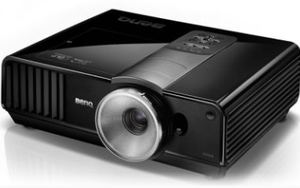
Projection System Inspection and Certification Guide: Professional Tes
Projection System Inspection and Certification Guide: Professional Testing Standards for Brightness, Contrast, Color and Noise