

Rise of Thailand's Manufacturing Industry: How Inspection, Factory Audit and Certification Safeguard the Quality Reputation of "Southeast Asia's Detroit"
Introduction In just over 30 years, the entire country of Thailand, particularly the Bangkok area, has become the true industrial hub of all Southeast Asian countries.
A large number of enterprises have settled here to produce and assemble products, which are then marketed to all markets including the Association of Southeast Asian Nations (ASEAN) and multiple markets in other regions. For global purchasers, understanding Thailand's industrial ecosystem and establishing a complete system for inspection, factory verification and certification is crucial to ensuring the quality and compliance of the supply chain.
Electrical and electronic equipment, including automotive equipment, alone account for half of Thailand's annual export volume of 220 billion US dollars. At the same time, the fact that locally produced products do not have to pay high import taxes has attracted large industrial enterprises to manufacture and sell at competitive costs. However, as the scale of exports expands, the quality inspection standards for products in target markets are becoming increasingly strict.
I. Japanese Companies' Southward Expansion and the Introduction of Quality Systems
The Japanese can be regarded as the pioneers of this kind of industrialization process. In the 1970s, production costs in Japan rose sharply, forcing some companies to relocate their factories to Thailand. This move enabled Thailand to develop its domestic industry and export trade. Currently, there are over 4,500 Japanese enterprises in Thailand, accounting for nearly half of all foreign companies in the country. It is estimated that 200,000 Japanese people live in Thailand, with half of them residing in Bangkok. This is why there are communities specifically built for Japanese people in Bangkok, and various service industries in the city have dedicated windows for Japanese customers, especially in hospitals that offer health check-ups, as this is a necessary step for employees and their families of Japanese companies.
The entry of Japanese enterprises not only brought capital and technology to Thailand, but also introduced a strict quality control system. Many Japanese factories established complete factory inspection standards from the very beginning and were extremely strict in screening suppliers, which promoted the quality upgrade of local supporting industries.
In addition, electrical and electronic equipment takes the lead in terms of export volume. In 2015, it accounted for 25% of the total export value, reaching 54 billion US dollars, and 15% of the gross national product. In other words, the tourism industry, which is usually regarded as a pillar of the Thai economy, only accounts for 11% of the gross national product, while agriculture accounts for 13%. All of this began in the 1960s with the assembly of televisions and radios. Today, Thailand manufactures and exports over 60 million household appliances annually, with 59% being air conditioners (Daikin, Mitsubishi, Fujitsu). For such electronic products, pre-shipment inspection (PSI) before export is of vital importance. Functional tests and safety inspections must be carried out in accordance with international standards to ensure compliance with certification requirements of destination countries such as the EU CE and US UL.
II. Southeast Asia's "Detroit": A Key Testing Ground for the Automotive Industry
The film "Lost in Thailand" has brought more people's attention to Thailand. Many people only know that Thailand is a country with a well-developed tourism industry. However, few people are aware that among the 10 ASEAN countries, Thailand is the largest automobile producer. Therefore, Thailand is not only known for its ladyboys, but also has a strong automotive industry.
The eastern coastal area of Bangkok is known as "the Detroit of Southeast Asia". Detroit, the "Motor City" of the United States, was once the headquarters of many major automotive groups such as General Motors, Ford and Chrysler. Nowadays, this region has become a key destination for global automotive parts procurement, with a huge demand for factory audits of suppliers.
How strong is Thailand's automotive industry? Let's take a look at some data. In 2015, Thailand produced 1.91 million passenger cars and 760,000 commercial vehicles. It ranked 12th globally and was the country with the strongest automotive production capacity in ASEAN. Its output was even higher than the combined total of Malaysia, Vietnam and the Philippines. Moreover, it has consistently held the top position among ASEAN countries.
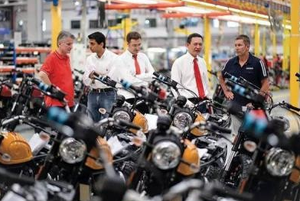
Every major brand in the automotive industry can be found here: Toyota, Honda, Mitsubishi, Nissan, General Motors, Mazda, Ford, BMW, and Mercedes-Benz. The same goes for motorcycle brands: Ducati, Triumph, Honda, BMW, Kawasaki, Suzuki, and Yamaha. The entire industry has over 2,400 enterprises, employing more than 500,000 people.
Over time, the production line has gradually expanded from component manufacturing to finished products, integrating about 20 manufacturers, subcontractors and equipment suppliers. Michelin, the first French company to enter Thailand, has approximately 7,000 employees and no fewer than six factories. Here, passenger car spare tires rather than original equipment tires, truck and aircraft tires are produced, along with molds, cables and natural rubber blends. Bosch, a German company, has over 1,000 employees and two factories in Thailand, and is currently building its third factory. Delphi, Faurecia, Goodyear, DuPont and Valeo also have production bases here, among which Valeo has more than 5,000 employees in Thailand.
In 2016, the new factory of Schaeffler Group, a globally renowned supplier of rolling bearings and linear motion products, broke ground in Chon Buri Province, Thailand.
For these automotive parts, the Thai Industrial Standards Institute (TISI) has implemented strict mandatory certification requirements. Especially for safety-related components such as brake hoses, tires, wheels, and lighting devices, they must obtain TISI certification and affix the corresponding marks before entering the market. For instance, according to the latest Thai automotive wheel standard TIS 3506-2565, products must pass rigorous material tests and rotational bending tests, with the deviation not exceeding 10% of the original deviation after 10,000 cycles. When inspecting the goods, purchasers must verify the authenticity of these certification marks.
During World War II, the Japanese army occupied Southeast Asian countries, and Thailand even became one of Japan's Axis allies in Asia. After World War II, Thailand became one of the rear bases for Japanese manufacturers in Asia. Due to historical and political reasons, Thais tend to prefer Japanese products. In 2015, the top five brands in the Thai bus market were all Japanese models, with market shares of Toyota (32.2%), Honda (25.7%), Mazda (9.2%), Nissan (6.6%), and Suzuki (6.0%) in that order.
Since Thailand mainly engages in OEM car manufacturing, what major car manufacturers value is actually the country's low production and manufacturing costs. As a result, Thailand has a large volume of car exports. In 2012, the car export volume reached 1 million units, and in 2015, it exceeded 1.2 million units. Therefore, the export volume of Thai-made cars is larger than the domestic sales volume. The export value has also been continuously increasing. In 2016, the car export value reached 592.6 billion Thai baht (17 billion US dollars). Since 2012, cars have been Thailand's largest export commodity. Currently, the export value of cars and auto parts accounts for 12% of the total export value. The top five export destinations are Australia, the Philippines, Saudi Arabia, Indonesia, and Malaysia.
Of course, although the labor cost in Thailand is low, its high-end industrial manufacturing capacity is still somewhat lacking, and some key auto parts need to be imported. As most Japanese manufacturers have set up factories in Thailand, auto parts imported from Japan are the most and have long held the top position. Auto parts imported from China and the United States are also considerable. Due to the price advantage of auto parts produced in China, the proportion of auto parts imported from China to Thailand is increasing. For imported auto parts, purchasers usually conduct pre-shipment inspection in China before shipment to reduce the quality risk of the cross-border supply chain.
III. Thailand's Electronic and Electrical Industry: The Demand for Precision Inspection
Another outstanding performance of Thailand's industry lies in the field of electronic components and integrated circuits.
Although Thailand assembles products for major brands such as Fujitsu, LG, Sony, ASUS, Acer and Samsung, no company has yet manufactured smartphone components in the country. However, Thailand remains the world's second-largest manufacturer of hard disk drives and storage units, after China. The industry's two giants, Western Digital and Seagate, both have multiple factories in Thailand. As information moves to data centers and the cloud, it has driven up orders for hard disks from servers, as a large number of data centers need to be equipped with tens of thousands of hard disks. The result is that the market is expected to grow by 30% annually, which is clearly good news for Thailand.
The 2011 floods in Thailand once caused a significant increase in global hard disk prices, affecting the global PC market. This event profoundly revealed the risks of a single supply chain and highlighted the importance of continuous factory inspection and monitoring in production areas - non-technical factors such as natural disasters and factory management levels can also affect delivery.
According to the data released by the Federation of Thai Industries, Thailand's electronic product exports are expected to show a slight growth in 2016, with the export value ranging from 32.7 billion to 33.5 billion US dollars, which is almost the same as that of 2015. The main pressure factors for the overall export of electronic products include: computer products such as hard disk drives (HDD) are the core items of Thailand's electronic product exports. Although the export prospects of printed circuit boards and automotive integrated circuits remain promising, the overall demand for computers in the global market is still declining.
It is worth noting that there are still significant growth opportunities for printed circuit boards and automotive integrated circuits in Thailand, which is in line with the development trend of automotive electronics technology. Currently, the production of printed circuit boards and integrated circuits in Thailand is closely related to the automotive industry. For such products, the key points of inspection include functional tests (such as read and write speeds), reliability tests (high and low temperature cycles), and material certifications that comply with environmental regulations such as RoHS and REACH.
IV. Shift from Basic Industries to High-End Industries: Raising the Bar for Certification
In recent years, neighboring countries of Thailand such as Cambodia, Laos, Myanmar and Vietnam have lower labor costs and are attracting investors and industrialists. Therefore, some voices are trying to persuade Thailand to transfer its most basic manufacturing industries to these countries - such as the manufacturing of mechanical parts - and focus on markets with higher added value, so as to maintain its competitiveness while controlling production costs.
However, it is not an easy task to enhance the manufacturing quality. This is because the relatively backward education system in Thailand makes it difficult to cultivate high-level talents, and the technological research and development is also very limited. This also means that in the high-end manufacturing field, enterprises need to rely more on professional third-party inspection and certification institutions to make up for their own technical deficiencies.
Under the government's promotion, Thailand's industrial production is now expanding into the aerospace sector. Air traffic in Asia has also developed rapidly in recent years. It is estimated that the number of aircraft will increase from 5,600 in 2015 to 14,000 in 20 years. Thailand aims to become an indispensable central platform in Southeast Asia for aircraft maintenance, equipment inspection and repair. In this field, Thailand can be said to be at the forefront among Southeast Asian countries. The Thai government has realized that the aviation industry will be an important part of its development. The aerospace industry has extremely strict requirements for quality systems and needs special certifications such as AS9100. The factory inspection standards for suppliers are also much higher than those in ordinary manufacturing.
Conclusion: Building a Quality Defense Line for the Thai Supply Chain Centered on Inspection and Factory Verification
As the "Detroit of Southeast Asia" and a global hub for electronic component manufacturing, Thailand's industrial strength is not to be underestimated. However, for international purchasers, opportunities and risks coexist. To ensure the quality of products purchased from Thailand remains stable and complies with regulations for entry into target markets, it is necessary to establish a comprehensive quality control system throughout the entire supply chain:
Supplier access stage: Through comprehensive factory audits, evaluate the production capacity, quality management system and social responsibility fulfillment of potential partners, and screen out qualified suppliers.
Production monitoring stage: Implement initial production inspection (IPC) to verify raw materials, conduct mid-production inspection (DUPRO) to monitor the quality of the assembly line, and promptly correct process deviations.
At the stage of shipment control: Conduct pre-shipment inspection (PSI) in accordance with the international AQL standard, carry out final release inspection on the quality, quantity, packaging and shipping marks of the finished products, and implement container loading check (CLC) to supervise the container loading process.
Compliance and certification stage: Ensure that the product acquires the mandatory certifications required for market access in Thailand, such as the TISI mark, as well as international certifications like CE and FCC required by the export target markets.
By systematically integrating elements such as inspection, factory audit, testing and certification into the supply chain management in Thailand, enterprises can effectively control quality risks and truly transform the manufacturing advantages of the "Detroit of Southeast Asia" into their own competitiveness.
分享这个商品
Rise of Thailand's Manufacturing Industry: How Inspection, Factory Aud
Rise of Thailand's Manufacturing Industry: How Inspection, Factory Audit and Certification Safeguard the Quality Reputation of "Southeast Asia's Detroit"