

The inspection methods, procedures and precautions for bulldozers
The bulldozer is the main machine type for earthwork transportation, site leveling, roadbed filling, and mining stripping, etc. It operates in extreme working conditions such as heavy loads, high vibration, much dust, and strong impacts for a long time. The wear rate and structural fatigue degree of its chassis traveling system, bulldozer blade, loosening device, and power transmission assembly far exceed those of ordinary construction machinery. During scenarios such as new bulldozer delivery, second-hand transactions, lease return, asset inventory, or major overhaul and factory delivery, a comprehensive inspection covering the chassis tracks, working devices, power transmission, and hydraulic systems is a core means for accurately assessing the residual value of the equipment, predicting the remaining service life, and ensuring operational safety. From the perspective of third-party inspection and factory inspection, this article systematically dissects the key technical points of the inspection for bulldozers.
I. Overview of Inspection Methods
Depending on the power level of the bulldozer, the transmission type (hydraulic mechanical/fully hydraulic/electric drive), the form of the traveling device (tracked/tire type), and the specific requirements of the client, the inspection usually employs the following methods in combination:
Static full inspection: The vehicle is left stationary. The exterior of the vehicle, the main frame/fork, the crawler行走 system, the ploughing shovel, the loosening device, the driver's cab ROPS/FOPS structure, the power transmission assembly, the hydraulic pipelines, etc. are inspected item by item through visual inspection, manual touch, and precise measurement with measuring tools.
Dynamic performance test: In a safe area or on-site conditions, verify the engine's starting, acceleration, idle performance, as well as the smoothness and response of compound actions such as forward/reverse driving, idling steering, lifting/lowering/side tilting of the bulldozer bucket, and retraction/extension of the loosening device.
Special system testing: Conduct functional and performance verification for the hydraulic torque converter/transmission, final drive, steering clutch/brake, and working device hydraulic system, etc.
Shuttle testing (as required): Conduct pressure tests on each circuit of the hydraulic system and perform power output inspections on the engine.
Document and label traceability: Verify the consistency of information on the entire machine label, the host frame number (PIN code), the engine label, the transmission/ratio changer label, the hydraulic main pump label, the certificate of conformity, and the consistency document.
The third-party inspection is carried out based on the "static full inspection + dynamic performance test + special system test + function verification" package. For high-value or disputed transactions, it is recommended to additionally conduct hydraulic system pressure tests and oil analysis.
II. Inspection Process Flow
Data collection and preparation for inspection
The client provides a list of the bulldozers to be inspected, specifying the manufacturer, model, rated power, working weight, transmission type, bulldozer shovel type (straight shovel/angled shovel/U-shaped shovel), soil loosening device configuration (single teeth/multiple teeth), working hours, applicable standards (such as GB/T 8590, JB/T 5962, etc.). The inspector prepares: long tape measure, steel plate thickness gauge, ultrasonic thickness gauge, feeler gauge, vernier caliper, track tension measurement tool, infrared thermometer, hydraulic pressure gauge set, noise meter, oil sample bottle, endoscope, etc.
2. Confirmation of Venue and Safety Conditions
The inspection site should be a solid and flat hard surface with sufficient space for driving, steering and testing of the bulldozer operation. The test area should be isolated with warning signs and non-inspection personnel are prohibited from entering. Inspectors should wear safety helmets, reflective vests and anti-shock shoes. Before inspecting under the vehicle, make sure the engine is turned off, the parking brake is locked, the working device is on the ground, and wheel/track stoppers are placed at the front and rear of the tires/track.
3. Identity and Label Verification
Host frame number (PIN code): It is usually engraved on the rear or side of the host frame. It should be imprinted and compared one by one with the overall machine nameplate and factory documents to check for any signs of grinding, re-welding, or re-engraving.
Machine nameplate: Verify the manufacturer, model, factory serial number, manufacturing date, working weight, rated power, etc. parameters.
Engine nameplate: Verify that the model, serial number, power, and emission stage match those of the entire machine's nameplate.
Transmission/Drive Coupling Label: Record the model and serial number.
Hydraulic main pump nameplate: Record the model and serial number. Any number that is unclear, the nameplate that has been re-bolted, or the information that does not match should be immediately upgraded to a serious non-conformity item.
4. Inspection of the main frame and structural components - the "skeleton" of the bulldozer
The main frame of the bulldozer bears all the impact loads from the bulldozer blade, the loosening device and the walking system. The structural integrity is the core of the equipment's safety.
Frame: From the front crossbeam, the left and right longitudinal beams to the rear axle box, conduct a detailed inspection using a strong flashlight, approaching section by section. Key areas: Weld seams of the pusher arm support/electrical support, weld seams of the loosening soil device mounting seat, connection points between the final drive housing and the frame, and the support/bearing seat of the balance beam/wobble shaft. Check for any weld cracks, base material tears, or traces of welding repairs. Any suspected cracks must have their surfaces cleaned before undergoing PT/MT flaw detection for confirmation.
Rear axle housing / final drive housing: The housing has no cracks, weld defects, or oil leakage. The connecting bolts between the final drive and the frame are securely fastened.
Engine/transmission support: The engine foot bolts are securely fastened, and the shock absorber pads are in good condition without any aging or cracking.
Balance beam / Swing shaft: The gap measurement between the balance beam of the crawler-type bulldozer and the connecting pin of the front and rear load-bearing wheel frames is normal, and the swing function is functioning properly.
5. Inspection of the cab and ROPS/FOPS structure
ROPS/FOPS cab: The anti-rollover/anti-fall object protection structure must be in good condition. Any weld cracks, deformation, or rust penetration must be judged as unqualified. The cab pillars must not be bent.
Door body and glass: The door opens and closes normally. The glass shows no cracks and the sealing rubber strip is in good condition.
Interior and Control: Seat adjustment and shock absorption function are present, seat belts are in good condition. All indicator lights on the dashboard self-check function is normal. The hour counter works and displays the hour count. The steering wheel/operating handle and pedals have no sticking.
Air conditioning / heating: Function verification.
6. Walking system inspection - In-depth diagnosis of the crawler mechanism
The crawler行走 system is one of the components that wears out the fastest and has the highest maintenance cost for bulldozers.
Track chain rails: Use a caliper to measure the pitch of the track rails (measure at multiple points when the rails are tightened), compare with the standard pitch. If it exceeds the wear limit (usually a 2%-3% extension of the pitch), it indicates a mandatory replacement warning. Check for any cracks in the track rail sections, and for any abnormal wear or looseness of the pins and sleeves.
Drive wheel: Tooth surface wear pattern - Normal wear presents as a smooth curved surface. Abnormal wear includes tooth surface chipping, broken teeth, and sharpening of the tooth tips. Measure the tooth thickness using a template or caliper. Any measurement exceeding the wear limit is recorded as a serious defect.
Guide wheel: Measurement of rim wear, the wheel body rotates smoothly without any uneven wear. The tensioning device (grease cylinder/spring) functions properly, and the oil injection nozzle is in good condition.
Supporting wheels and idler wheels: Check the rotation of each wheel body one by one. Check for any jamming, uneven wear, oil leakage (failure of the floating oil seal). Measure the wear depth of the contact surface between the supporting wheels and the track chain using a caliper.
Track tension: Use a dedicated measuring tool or a ruler to measure the deflection of the upper track, and compare it with the manufacturer's standard value (usually, the deflection of the track between the idler wheels should be a certain value). Loosely tensioned tracks can cause derailment, while overly tight tension can exacerbate chain wear.
Track plate: Measurement of the wear height of the gripping ribs (track spikes) on the track plate. Inspection of the torque of the fixing bolts for the track plate, checking for any fractures or missing parts.
7. Inspection of Working Devices - Plow and Cultivator
Trenching shovel
Chisel body: Use an ultrasonic thickness gauge or caliper to measure the wall thickness at multiple points on the cutting edge of the chisel bottom, and compare the results with the original specifications. When the bottom of the chisel wears down to the critical thickness, the impact resistance drops sharply.
Shovel blade: The blade is a replaceable consumable part. Check the remaining edge height to determine if replacement is necessary. Check for any fractures or loosening of the blade fixing bolts.
Shovel push arm/support arm: Check for any bending or deformation of the push arm profile, as well as any cracks in the weld seams. Measure the clearance between the push arm and the shovel blade's connecting pin and bushing using a feeler gauge. Excessive clearance will result in a decrease in the control accuracy of the shovel blade.
Lifting cylinder and tilting cylinder: Inspection of chromium coating on piston rods - scratches, pitting, rust spots. Measurement of clearance between cylinder ear seat pins. Dust-proof sealing rings are intact.
Shovel function: lifting, lowering, side tilting (if applicable), verification of floating function operation. Floating function - The shovel should be able to freely rise and fall with the ground undulation.
Tillage machine (such as equipped)
Tillage machine frame: The frame profiles are free from deformation and weld cracks. The connecting bolts between the frame and the rear axle box are tightened.
Tillage teeth/teeth rod: Inspection of teeth rod wear and bending, wear condition of tooth tips/protective sleeves. The teeth rod retaining pins and locking mechanism are in good condition.
Tillage machine cylinder: The piston rod shows no damage, and the ear seat clearance is normal. The retraction and extension actions are smooth.
8. Inspection of Power Transmission System
Engine: Cold start and hot start each performed once. The idle speed was stable without any fluctuation. The acceleration response was sensitive. The exhaust smoke color was normal (no continuous black smoke or blue smoke). The rated maximum speed reached the nominal value. External leakage checks - focus on inspecting the oil seals at the front and rear of the crankshaft, the valve cover, and the turbocharger piping.
Hydraulic torque converter / transmission: The housing shows no leakage. Check of transmission oil level and quality - black oil and a burnt smell indicate abnormal wear of the clutch plates. Road test to verify smooth shifting performance.
Steering clutch/brake (core transmission component of crawler bulldozer): Inspection of the feel of the left and right steering levers/pedals. Steering brake function - Pull the single-sided steering lever on a flat surface, and the bulldozer should be able to turn smoothly. Parking brake locking is reliable.
Final drive: The housing shows no oil leakage, and the vent plug is clean. There is no abnormal noise during operation (determined during dynamic testing).
9. Hydraulic System Inspection
Hydraulic oil tank: The liquid level is within the scale range, and the respirator is clean. The color of the oil is normal (no emulsification, no blackening, no metallic sheen). If possible, take samples of the oil.
Main hydraulic pump: The housing shows no leakage, and there is no abnormal noise during operation. The connection pipe joints are securely fastened.
Control valve assembly: The valve body connection surfaces show no oil leakage. The pilot piping is neatly arranged and free from any damage.
Hydraulic cylinders: Apart from the bucket and soil loosening cylinder, it is also necessary to check the side-tilt cylinder of the plow blade (if equipped) and any auxiliary hydraulic output interfaces.
Piping and joints: Each rubber hose is inspected one by one for aging, cracking, and bulging. The interference and friction points between the rubber hose and the frame, as well as the working device, are given special attention for inspection.
10. Electrical and Safety System Inspection
Lights: The front and rear working lights and the outline lights (if equipped) are functioning properly, and the lamp covers are undamaged.
喇叭与警报:The horn volume and the reversing alarm (if equipped) function properly.
Emergency shutdown: The emergency shutdown pull cord or button function is effective, and the engine will immediately stop.
Fire extinguisher: If equipped, the pressure is normal and it is within the valid period.
Battery: Terminal connections are securely fastened without corrosion, and the main power switch functions properly.
11. Dynamic performance testing
On the safety site, execute the following after all systems reach their operating temperatures:
Driving performance: The gear shifts for forward and reverse are smooth without any abnormal shocks. During straight-line driving, there is no severe deviation (allowable slight deviation but the direction and degree of deviation must be recorded).
Turning performance: The dual-side turning function of the crawler-type bulldozer on the spot - Pull the steering lever on one side, the bulldozer should be able to turn smoothly around the single side of the tracks, and the turning brake should not make any screeching or sticking. The steering wheel of the tire-type bulldozer can turn with ease within the extreme limits on both sides.
Working device operation: The actions of the bulldozer bucket's lifting, lowering, and side tilting (if applicable) are smooth without crawling or shaking. The loosening device is properly retracted and extended. The working sound of the relief valve is clear and the pressure is stable.
Compound action: While driving, simultaneously operate the bulldozer blade to verify the power distribution and coordination.
12. Hydraulic system pressure test (optional)
Connect pressure gauges to the outlet of the main pump and the pressure measurement ports of each working circuit.
Check whether the main overflow pressure has reached the manufacturer's specified value.
Measure the overflow pressure of the hydraulic circuits for lifting the bulldozer bucket and retracting the tiller respectively.
Insufficient pressure indicates that the main pump is worn out, the relief valve is malfunctioning, or there is leakage in the system.
13. Oil sample collection and analysis (strongly recommended)
It is recommended to take samples of the following oils for testing:
Engine oil: Wear metal elements, silicon content (intake sealability), fuel dilution rate.
Transmission system oil (common for torque converter and transmission): Wear metals (iron, copper), oxidation degree, and viscosity changes.
Hydraulic oil: cleanliness grade, moisture content, worn-out metals.
Final drive gear oil: Iron content, degree of oil oxidation.
Oil analysis can detect potential problems at the early stage of mechanical damage, and it is a "deep diagnosis" method for professional inspection.
14. Report Output
Summarize all inspection items, measurement data (such as track spacing, blade thickness, track tension, etc.), dynamic test records and oil analysis reports. Mark the qualified items, observation items, general defects and serious defects. Formulate the "Third-Party Bulldozer Inspection Report" which includes photos with PIN codes, photos of track wear measurement, photos of structural weld inspection, and photos of oil sample bottles labels. Deliver this report to the client.
III. Important Notes
Chassis System - The Greatest Variable Affecting the Value and Safety of a Bulldozer
The cost of replacing the entire walking system assembly of the bulldozer (chain track, driving wheels, guide wheels, supporting wheels, chain support wheels, and track plates) may account for a significant portion of the total machine value. During the inspection process, the wear amount of each "four-wheel-one-track" component must be measured using a caliper or specialized measuring tools, and the data should be used to make the assessment.
The measurement of the link rail spacing must follow the measurement method specified by the manufacturer (usually requiring the measurement of the length of multiple link rail sections under tension and then calculating the average spacing). Judging merely by visual inspection that "it's okay" is extremely unprofessional.
Once the tooth surfaces of the driving wheels show signs of breakage or peeling, it usually indicates that the driving wheels and the chain rails need to be replaced as a set. This is an expensive expense and must be highlighted in the report.
The weld seam crack of the main frame - the "fatal flaw" of the bulldozer
When the bulldozer is in operation, the impact load borne by the dozer blade is directly transmitted to the main frame through the push arm. The weld seam of the push arm support is a high-risk area for cracks. During inspection, a strong light must be used to closely observe from multiple angles. Any traces of welding repair must be traced back to the repair record and the quality of the repair must be evaluated. Welding repairs without records should be judged as serious defects.
Steering clutch and brake - the core control assembly of the crawler bulldozer
This is a unique transmission component of the bulldozer. The wet steering clutch/brake is located inside the housing and cannot be directly observed. During inspection, the main method is to rely on dynamic testing to determine - whether the steering is smooth, if there are any abnormal sounds, and whether the single-side braking is effective. Any abnormality may indicate that the internal friction plates are worn or there is a fault in the hydraulic control system. Such issues should be recorded in the report and further disassembly inspection should be recommended.
Shovel wear and remaining lifespan
The wall thickness at the bottom of the shovel directly determines its remaining service life after impact resistance. The measurement is conducted using an ultrasonic thickness gauge with grid points, and the minimum value is recorded. Although the shovel blade/blade is a consumable part, the degree of its wear can indirectly reflect the usage intensity of the equipment. If the blade has worn down to the base material of the tool body, it indicates that the equipment has undergone long-term high-maintenance operations, and this should be taken into account in the overall assessment.
The concealed clearance between the balance beam and the swing shaft
If the pins and bushings of the balance beam are severely worn, it will cause abnormal shaking of the main frame during the crawler's movement, accelerating the fatigue of the entire chassis system. During inspection, the gap between the pins should be measured using a feeler gauge or a micrometer, and it is not possible to judge solely based on the appearance.
Oil analysis - particularly important in bulldozer inspections
The transmission system of a bulldozer (including the torque converter and the gearbox) has a complex structure and requires high maintenance costs. Oil analysis can detect early wear elements of the clutch friction plates (such as copper and paper-based friction material elements), as well as wear debris from gears and bearings. In major equipment transactions, this is almost a "must-have" rather than an "optional" item.
The security boundaries of dynamic testing
During the dynamic test of the bulldozer, the movement range of its bucket and loosening device is extensive. Therefore, no one is allowed to stand around.
When a crawler bulldozer turns on the spot, it may throw up rock fragments. The inspection observers must maintain a safe distance.
When testing steering and braking on the slope, a contingency plan for preventing vehicle skidding must be in place.
Key points of the photo archive
The PIN code, the entire machine's nameplate, the measurement process of the chain rail pitch (the reading displayed by the caliper), the close-up of the wear on the drive wheel tooth surface, the thickness measurement reading at the bottom of the shovel blade, the close-up of the weld seam of the push arm support, the status of the steering control mechanism, and the label of the oil sample bottle, all need to be independently and clearly archived. Each piece of wear data and structural defect should be supported by photos to ensure that the conclusion of the report is traceable.
分享这个商品
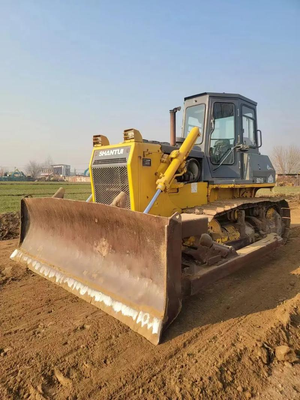
The inspection methods, procedures and precautions for bulldozers
The bulldozer is the main machine type for earthwork transportation, site leveling, roadbed filling, and mining stripping, etc.