

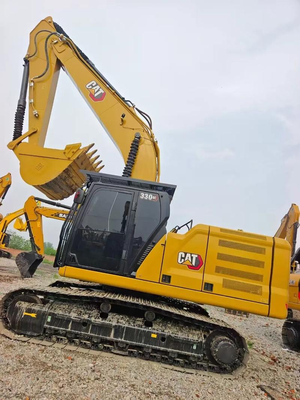
The inspection methods, procedures and precautions for excavators
Excavators are the main models used in earthwork and rock excavation projects, as well as in mining and municipal construction. Their technical condition directly affects the project progress, fuel economy, and construction safety. In scenarios such as new machine delivery and acceptance, second-hand machine transactions, asset inventory for financial leasing, and factory inspection for major overhauls, a systematic third-party inspection covering structural components, power units, hydraulic systems, and working devices is a core means to avoid transaction disputes and ensure asset value. From the perspective of third-party inspection and factory inspection, this article comprehensively analyzes the technical key points of excavator inspection.
I. Overview of Inspection Methods
Based on the tonnage level of the excavator, the power type (diesel/electric) and the purpose of the commission, the inspection usually employs the following methods in combination:
Static full inspection: When the vehicle is stationary, conduct a detailed inspection and measurement of the vehicle's exterior, structural components, covering parts, chassis, tracks, working devices, hydraulic components, pipe line bundles, and driver's cabin instruments.
Dynamic performance test: In a safe site or on-site conditions, verify the engine's starting, acceleration, idle performance, as well as the smoothness, speed and power of compound actions such as walking, turning, boom, bucket arm, and bucket.
Special inspection of hydraulic system: Through instrument monitoring, the working pressure, overflow pressure and pilot pressure of each circuit are measured, the settlement amount of the hydraulic cylinder is measured, the hydraulic oil sample is taken for analysis, and the health condition of the hydraulic system is evaluated.
Function and safety device verification: Test each of the safety and auxiliary functions such as instrument alarms, lights, horns, cameras, limit switches, emergency shutdown, fire prevention systems, etc.
Document and label traceability: Verify the consistency between the entire machine label, engine label, hydraulic pump/motor label, frame number (PIN code), certificate of conformity, and consistency documents. Confirm the authenticity and traceability of the equipment identity and factory parameters.
"Static full inspection + dynamic performance testing + functional verification" constitute the basic inspection package; for medium-sized equipment or high-value transactions, it is recommended to add special hydraulic system testing and oil analysis to conduct a thorough assessment of the actual operating conditions of the equipment.
II. Inspection Process
1. Data Collection and Preparation for Inspection
The client provides a list of the excavators to be inspected, specifying the brand, model, tonnage, working hours, configuration (standard boom/extended boom, crushing hammer piping, quick-change joints, etc.), emission stage and applicable standards (such as GB/T 9139, JG/T 59, etc.). Based on this information, the inspection party prepares the inspection equipment: tape measure, vernier caliper, paint film thickness gauge, hardness tester, hydraulic pressure gauge set, infrared thermometer, noise meter, oil sample bottle, endoscope (if the cylinder interior needs to be inspected) and so on.
2. Site and Condition Confirmation
The inspection site should be a solid and flat surface with sufficient space for rotation and walking operations. The equipment should have completed preheating, and the engine water temperature and hydraulic oil temperature should reach the working temperature. Check that the oil levels of the engine oil, hydraulic oil, coolant, and final drive gear oil are within the scale range. The battery voltage is sufficient, and there is no abnormality during startup. The inspector should wear a safety helmet, reflective vest, and anti-shock shoes. Mark out a safe operation area and set up warning signs.
3. Identity and Label Verification - Review of Equipment "Registration Information"
Frame Number (PIN Code): The steel stamping number on the main body of the frame. Compare it one by one with the certificate of conformity and the nameplate. Make a photocopy or take a high-resolution photo for archiving. Check for any signs of grinding, welding repair, or re-stamping.
Machine nameplate: Verify the manufacturer, model, factory serial number, manufacturing date, overall working quality, engine power, etc. of the machine.
Engine nameplate: Verify the engine model, serial number, power, and emission stage against the overall machine nameplate and technical manual.
Hydraulic main pump/main valve nameplate: Record the model and serial number to determine if it is an original factory part.
Any number that is unclear, re-bolted or has incorrect information should be immediately upgraded to a serious non-compliance item and recorded.
4. Inspection of the vehicle's exterior and structural components - Is the framework "damaged beyond repair"?
Panel and paint surface: Check for any obvious collision or repair marks on the hood, side doors, counterweight blocks, etc. Use a paint film thickness gauge to measure the coating thickness at key areas and determine if there are any钣金 repair or repainting to conceal the damage.
Frame and slewing platform: Carefully inspect the weld seams of the main frame and slewing platform for any cracks or signs of re-welding. Focus on checking the areas around the slewing bearing seat ring, the root of the boom support, and other areas with concentrated forces.
Cab and ROPS/FOPS structure: The cab glass has no cracks, the door operation is normal, and the sealing rubber strips are intact. The anti-rollover/anti-falling object protection structure (if equipped) must not have any welding cracks or deformations.
Weight counterweight: The fasteners are securely tightened without any looseness or missing parts. The appearance is free from cracks.
5. Inspection of the chassis and walking system - Inspection of the "joints" of the crawler mechanism
Track: Check the rubber tracks for cracks, delamination, and the extent of exposed steel wires; for steel tracks, inspect the wear on the chain links, pins, and sleeves, and measure the distance between the chain links and the tension.
Drive wheel and guide wheel: The tooth surface is in good condition with no broken teeth. The tension spring and adjustment mechanism of the guide wheel are functioning properly.
Supporting wheels and idler wheels: Check one by one whether the rotation of each wheel body is smooth, and whether there is any uneven wear or oil leakage (failure of the floating oil seal).
Final drive/walking motor: No oil leakage on the exterior, the connecting bolts are securely fastened, and the filling port/overflow port are clean and free of leakage.
6. Static inspection of the power system - heart and lungs
Engine appearance: The surface of the engine body shows no oil or water leakage, and the exhaust manifold has no cracks. Check the connection of the turbocharger piping, the appearance of the intercooler, and the intake hose for no aging or cracking.
Belts and tension wheels: The belt tension is normal, and the surface is free from cracks; there are no abnormal noises from the fan, water pump, and generator bearings.
Cooling system: The fins of the radiator and hydraulic oil cooler are clean, with no large areas of tilting or blockage, and there is no leakage in the pipelines.
Air filter: Open the filter housing and inspect the filter element condition. The degree of dust accumulation can serve as an indirect indicator of the severity of the working environment; there is no abnormal wear or dust on the inner wall of the intake pipe.
Fuel system: The exterior of the fuel tank shows no dents. The oil-water separator is regularly drained for inspection, and there is no leakage in the pipelines.
7. Static Inspection of Hydraulic System - The Source of Equipment's Power
Hydraulic oil tank: The oil level is within the scale range, and the breathing device is clean and unobstructed. Observe the color of the oil - dark brown and black indicates oxidation and deterioration, milky white indicates water ingress, and metallic flashes indicate abnormal wear.
Main pump/auxiliary pump: The pump housing shows no cracks or oil leakage. The regulator is in good condition and the pipe connections are securely fastened without any leakage.
Main control valve assembly: The connection surfaces of the valve body show no oil leakage, and the pilot oil pipes are neatly arranged without any damage or interference.
Hydraulic cylinder: Inspection of the exposed surfaces of the piston rods of the boom, bucket arm, and bucket cylinder - The chrome coating shows no severe scratches, dents, or pitting. The dust-proof sealing rings are intact, and there is no abnormal gap in the cylinder ear seat pin shaft.
Piping and joints: Each hydraulic hose is visually inspected one by one to check for aging cracks, bulges, or peeling of the outer layer. Special attention is paid to the interference and friction points between the hose and the vehicle body, as well as the arm. If the outer rubber is worn through, it is an item that requires replacement.
8. Inspection of structural components of the working device - bucket arm, boom, and bucket
Boom and bucket arm: Carefully inspect the main and secondary beam profiles for cracks, with particular attention to the heat affected zone of the welds, the edges of the reinforcing plates, and the areas around the pin shaft holes. Any suspected cracks should have the surface cleaned before further inspection (non-destructive testing such as PT/MT will be carried out upon customer request).
Shaft and copper sleeve/liner: Measure the radial clearance at each hinge point using a feeler gauge or micrometer. If the clearance exceeds the manufacturer's wear limit, it is recorded as a non-conforming item. Check whether the grease nipples are blocked or damaged during the dry oil lubrication inspection.
Bucket: Check for wear and loss of the bucket teeth, and ensure the tooth seats are intact; measure the degree of wear on the bucket bottom plate using a thickness gauge to determine the remaining thickness of the bottom plate; check for any deformation or tearing of the bucket side plates and guard plates. Verify the locking mechanism function of the quick-change connector.
9. Inspection of the cab and the operation control system
Seat and seat belt: The shock absorption mechanism of the seat is undamaged, and the seat belt retracts normally.
Operation handle and pedals: The left and right operation handles move smoothly and return to the middle position accurately. The walking pedal and the control lever of the bulldozer plate (if present) function properly.
Instrumentation and Alarm: During the power-on self-check, all indicator lights were illuminated normally; after startup, all data such as oil pressure, water temperature, charging voltage, hydraulic oil temperature, and engine speed were normal. The stopwatch function was operational, and the recorded hours were displayed.
Air conditioning and heating: The cooling and heating functions are normal, the air outlet mode switching is effective, and the filter is clean.
Monitoring and Assistance: The rearview camera provides clear images, and the reversing radar/visual function is normal (if equipped).
10. Dynamic Performance Test - Verification of Strength
On the safety site, execute the following after the hydraulic oil temperature rises above 50℃:
Engine operation test: Cold start and hot start were conducted each once. The start-up time was normal, and the idle speed was stable without any fluctuation. During rapid acceleration, the response was sensitive, and the exhaust smoke color was normal (no black smoke, no blue smoke). The rated speed reached the specified value, and there was no abnormal vibration or abnormal noise.
Travel performance: The high and low speed gears can be switched smoothly. Straight-line travel is free from severe deviation (allowable minor yaw but the deviation amount needs to be recorded). The turning on the spot is flexible without any abnormal resistance.
Turning performance: The turning operation starts and stops smoothly without any shock. The turning braking is effective. There is no abnormal noise or jamming in the turning support ring (listen throughout for any "clicking" sound and record it).
Operation of the working device:
The arm lifting, bucket retraction and digging/unloading actions are smooth without any crawling, shaking or out-of-control phenomena.
When each action reaches its extreme position, the relief valve operates with a clear sound and the system pressure remains stable.
Compound action coordination: Simultaneously operate the boom lifting + bucket disengagement + bucket opening, and observe the matching state of the actions.
Sagging measurement (under rated load): Raise the boom to its maximum height, fully extend the dipper stick, and lower the bucket into position (or attach the rated load). After the engine is turned off, mark the position of the cylinder piston rods, leave them stationary for the specified period of time (usually 5 minutes), measure the sagging amount of each cylinder, and compare it with the manufacturer's standards to determine the degree of hydraulic cylinder leakage.
11. Safety and Electrical System Inspection
Lights: The working lights, cab lights, driving lights (if present), hazard warning lights are functioning properly, and the lamp covers are undamaged.
喇叭与警报:The horn volume and the functions of the walking alarm/rotation alarm (if any) are all functioning properly.
Emergency shutdown: Pull the emergency shutdown lever or press the emergency stop button. The engine will immediately shut down.
Fire prevention system: If equipped with an automatic fire extinguishing device, check that the pressure gauge pointer is in the green zone and the temperature sensing trigger line is undamaged.
Battery: The terminals are securely fastened without severe corrosion, and the main power switch functions properly.
12. Analysis of Oil Product Condition (Recommended as Needed)
For high-value equipment or major transactions, it is recommended to collect samples of hydraulic oil, engine oil, and final drive gear oil, and send them to the laboratory for physical and chemical indicators as well as elemental spectral analysis. The oil report can reveal:
The content of worn-out metals (such as iron, copper, aluminum, etc.) inside the hydraulic system is measured to determine if there is abnormal wear of the pumps, valves, and cylinders.
Engine wear trend (silicon content indicates the sealing performance of the intake system, iron/chromium indicates the wear of cylinder liner and piston rings);
The degree of deterioration of the oil itself.
This is the "killer feature" of professional inspection, which can expose many hidden major faults in advance.
13. Report Output
Summarize all the inspection item records, imaging materials, measurement data and detailed photos of defect locations, and form the "Third-Party Excavator Inspection Report" which includes photos, PIN codes, measurement values, and classification of non-conformities. Deliver this report to the client. Clearly mark "Major Defects", "General Defects" and "Items for Observation" to provide a solid basis for equipment handover, price negotiation or dispute resolution.
III. Important Notes
Safety - The Red Line of Life under High-Pressure Hydraulic and Heavy Structural Components
The entire process of the excavator inspection involves the combination of high-pressure hydraulic oil (often above 30 MPa), large moving parts and lifting risks. Inspection personnel must not stay or pass beneath the lifted working device, and must not enter the rotation radius when the machine is in operation.
When checking the pressure of the hydraulic system, the pressure measuring connector must be compatible. The pressure measuring hose is of high-pressure grade. Connect slowly and drain the fluid to prevent injury from high-pressure oil.
Dynamic testing must be conducted in a completely isolated state within the operation area. The driver must have the operating qualification for the corresponding model, and the observer's position must be within the driver's line of sight and ensure safety.
Structural cracks are the fatal flaws of high-value equipment.
Once cracks are detected in the welds of the boom, bucket arm, and frame, the value of the equipment will be significantly reduced. The inspector must carefully examine each major weld with a flashlight's strong light. If necessary, the welds should be cleaned and then assisted with a magnifying glass. Any suspicious cracks must not be dismissed as "just paint cracking"; they must be recorded and further handling requested.
Structural components that have been repaired by welding in the past must have their welding process quality and residual deformation evaluated. The rating must be lowered and photos must be taken for archiving.
Hydraulic settlement and internal leakage - Concealed but fatal chronic diseases
Excessive settlement of the hydraulic cylinder indicates that the main control valve or the sealing elements of the cylinder are leaking, which will result in insufficient movement, loss of accuracy and a sharp increase in energy consumption. This must be measured in practice. It is not allowed to make a subjective judgment based merely on the "appearance of being okay" of the movement. Under conditions without standard weights, a simple reference test for load settlement can be conducted by hanging a fixed object on the bucket or pushing down the boom (be careful) to apply a load.
The number of hours and the degree of wear must be logically consistent.
The displayed working hours should be compared with the wear of the steering wheel/handle, the wear of the pedal rubber, the wear of the chain links of the tracks, the degree of seat collapse, and the oil leakage condition of the engine. If the display shows only 2000 hours but the bottom plate of the bucket is severely worn, the seat is collapsed, etc., it should be highly suspected that the timer has been replaced or adjusted manually. This should be noted in the report as "The displayed hours do not match the actual wear condition", and it should not be accepted.
Installation marks of fixtures and pipelines
Check whether any attachments such as breaker hammers, hydraulic shears, or wood-grabbing devices have been installed. The reserved interfaces for high-pressure pipelines, the increase in metal debris in the return oil filter, and the wear of quick couplings on the boom auxiliary pipelines may all indicate that the equipment has been engaged in high-intensity impact operations (such as crushing). This will significantly affect the assessment of the main pump and the overall machine's lifespan. If any of these signs are present, the hydraulic system should be given particular attention for inspection.
Oil sample collection - Low-cost deep insight
The cost of oil analysis is not high, yet it can reveal hidden faults through elemental analysis. In third-party inspections, if the contract terms or customer budget permit, it is strongly recommended to take three oil samples (hydraulic oil, engine oil, and final drive oil), and attach the laboratory analysis report to the report, which will greatly enhance the professional persuasiveness of the report.
Standardization of Photography Archives
The PIN code, engine plate, and pump valve plate must be independently and clearly photographed and archived. For each defect item, a corresponding photo must be provided, and the readings using measuring tools (such as using a caliper to measure the wear of the track link section, or using a steel ruler along the edge to measure the settlement of the oil cylinder and take a photo) must be recorded. Ensure that each determination can be restored in the image data, so that the report can withstand subsequent review and possible arbitration.
Conclusion
An excavator is a typical heavy asset equipment. Its technical condition assessment is like a "deep physical examination" - one must look through the paint to see the framework, measure the pressure through its movements, and read the wear through the oil. The value of third-party inspection and factory inspection lies in using standardized procedures, instrument-based measurements, and professional judgments to make the true condition of the equipment transparent, quantifiable, and traceable. This rigor is not only a powerful tool to ensure fair transactions, but also a cornerstone to safeguard the safety of every construction site worker.
分享这个商品
The inspection methods, procedures and precautions for excavators
Excavators are the main models used in earthwork and rock excavation projects, as well as in mining and municipal construction.