
The inspection methods, procedures and precautions of seeders
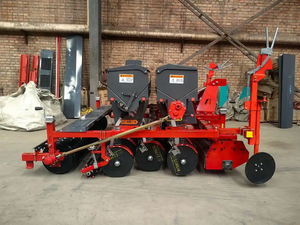
The seeder is a key piece of equipment for the cultivation of field crops such as wheat, corn, soybeans, peanuts and cotton. It integrates multiple functions including furrow opening, seed drainage, fertilization, soil covering and soil compaction. The quality of its operation - whether the sowing depth is consistent, whether the row spacing is standard, whether the sowing is even, and whether there is any missed or repeated sowing - directly determines the emergence rate of crops, population structure and final yield. "Good seedlings mean half the harvest." Any deviation in sowing quality will be continuously magnified throughout the entire growth period of the crop and cannot be fully compensated for through later management. In scenarios such as the delivery and acceptance of new machines, verification of agricultural machinery subsidies, second-hand transactions, asset inspection of leasing service teams, and pre-sowing season maintenance and inspection, a systematic inspection covering seed conveyors, furrow openers, fertilization devices, transmission systems, and sowing rate control is a fundamental requirement for ensuring sowing quality and the value of agricultural machinery assets.
I. Overview of Inspection Methods
According to the type of seeder (row seeder/hole seeder/precision seeder), power form (traction type/suspended type/self-propelled type), seed arrangement principle (mechanical type/pneumatic type), number of rows of operation and the entrusted requirements, the following methods are comprehensively applied for inspection:
Static full inspection: The seeder is left to rest, and each item of the frame, seed and fertilizer box, seed distributor, furrow opener, soil covering and pressing device, transmission system, ground wheel/depth limiting wheel, hydraulic system, etc. is visually inspected one by one, and measured by hand with measuring tools.
Bench operation test: Lift the seeder so that the ground wheels are suspended, and drive the ground wheels to rotate manually or with power to verify the working conditions of the seed and fertilizer dispensers, and check the consistency of the displacement of each row and the operation of the transmission chain.
Field trial sowing test (as needed) : Conduct short-distance trial sowing in the prepared field, manually dig holes/dig soil to check the sowing depth, row spacing, plant spacing (hole sowing) and the number of grains per hole, and comprehensively evaluate the sowing quality.
Seeding rate calibration: Set the seeding rate per mu according to agronomic requirements, and verify the consistency between the indicated value of the seeding rate adjustment mechanism and the actual seeding rate through bench tests or theoretical calculations.
Document and nameplate traceability: Verify the consistency of the nameplate of the entire machine, the nameplate of key components with the certificate of conformity and the promotion appraisal certificate (if subsidies are involved).
The third-party inspection is based on the execution package of "static full inspection + bench operation test + broadcast quantity calibration". When there are high-value transactions or disputes over sowing quality, it is recommended to superimpose field trial sowing tests.
Ii. Inspection of the entire process
1. Data collection and inspection preparation
The client provides a list of seeders to be inspected, clearly stating the manufacturer, model, number of operation rows, row spacing range, seed arrangement principle (such as external groove wheel type/pit hole wheel type/air suction type/air blowing type, etc.), power requirements for matching, fertilization function (with/without), factory serial number, and applicable standards (such as GB/T 20865, JB/T 6274, etc.). The inspection party prepares: tape measure, vernier caliper, steel ruler, electronic scale (accuracy 0.1g), stopwatch, tachometer, sowing depth measuring ruler, level, seed sample, etc.
2. Confirmation of the venue and safety status
Static inspection and bench testing are carried out on a hard and flat ground. Field trial sowing must be carried out in the land that has been prepared and is ready for sowing. The soil moisture condition and the quality of land preparation are representative. When conducting bench tests, when driving the ground wheels, it is necessary to keep fingers and clothing away from rotating parts. Inspectors wear safety helmets, reflective vests and anti-crush shoes.
3. Identity and nameplate verification
Whole machine nameplate: Verify the manufacturer, model, factory serial number, manufacturing date, number of operation lines, working width, and matching power, etc.
Seed discharger nameplate/marking: Confirmation of the model and specification of key components of the seed discharger (such as air-suction seed discharger discs).
Promotion appraisal certificate (Subsidy verification) : Verify that the model, enterprise and physical object are consistent, and the certificate is within its validity period.
4. Inspection of the frame and the hanging device
Frame: There is no deformation in the main beam and crossbeam, and no cracks in the welds. The traction frame of the traction seeder is not deformed, and the wear of the hanging pin holes is normal. The three-point suspension pin holes of the suspended seeder are not severely worn and match the size of the tractor for hanging.
Frame levelness: Place the seeder on a flat ground and use a level to check the horizontal and vertical levelness of the frame. Rack distortion will cause inconsistent grooving depths in each row.
Rower (if any) : The arm of the rower retracts and extends flexibly, the rower disc is intact, and the locking is reliable.
5. Inspection of seed and fertilizer boxes
The box bodies: The seed box and fertilizer box bodies are free from damage, rust and perforations. The lid of the box opens and closes normally and has good sealing performance. If the lid is not sealed tightly, rainwater will enter, causing the seeds to mold or the fertilizer to become compacted. The inner wall of the box is smooth without burrs, and there are no moldy lumps of residual seeds or fertilizers from the previous season.
Seed and fertilizer discharge outlets: There is no blockage at each outlet. The seed guiding pipes/fertilizer guiding pipes are in good condition, without aging, hardening, flattening, deformation, damage or holes. The inner wall of the pipe should be smooth, allowing the seeds to fall smoothly.
6. Seeder inspection - The heart of the seeder
The seeder is the assembly with the highest technical content of the seeder and the most direct impact on the quality of sowing.
External trough wheel type seed seeder (mainstream of row seeders)
The condition of the sprocket: The surface teeth and grooves of the outer sprocket should have clear edges and corners without severe wear - rounding the edges and corners will lead to unstable seed discharge volume and increased error between each stroke.
The gap between the blocking wheel/seed discharge tongue: The gap between the seed discharge tongue and the outer groove wheel should be uniform and adjustable. If the gap is too large, the small seeds will flow out uncontrollably by themselves; if it is too small, the seeds will be squeezed and damaged.
Displacement adjustment mechanism: The displacement adjustment handle/handwheel moves flexibly throughout the full range, and the scale indication is clear. The locking device is effective and the handle will not shift by itself due to vibration.
Grooved wheel-type seed seeder (hole sowing/precision sowing)
The condition of the socket (hole) : The socket (hole) on the socket wheel should be intact without any damage or blockage. The edge wear of the type hole in a flared shape will lead to poor filling and an increase in the rate of cavities.
Seed scraper/seed cleaning device: The wear state of the seed scraper brush or elastic seed scraper - Excessive wear will lead to re-sowing (multiple seeds per hole). The gap of the seed scraper should be within the range specified by the manufacturer.
Pneumatic seed conveyor (precision seeder)
Seed discharge tray: For the air-suction type seed discharge tray, each of the seed suction holes should be inspected one by one with a fine needle or visually to ensure there is no blockage. The surface of the plate is flat without deformation or scratches. The type holes of the air-blowing seed tray must also be intact.
Airway system: The fan (or tractor PTO-driven fan) is operating normally, there is no damage or air leakage in the air ducts, and all joints are well sealed. The barometer/vacuum gauge is functioning properly, and the readings are within the normal working range. Air leakage in the air path will lead to poor seed suction and a sharp increase in hole rate, which is the most common fault of pneumatic seeders.
Seed cleaning and unloading: The gap between the seed cleaning knife/unloading knife and the seed tray is within the standard value, and the installation position is correct.
7. Furrow opener Inspection - Ensuring Consistency of Sowing Depth
Type identification and inspection of furrow openers: Hoe and shovel type - Wear of the shovel tip and sharpness of the shovel blade. Excessive wear will lead to difficulty in soil insertion and insufficient sowing depth. Double-disc type - The two discs rotate flexibly. The wear on the disc edges is measured with a caliper. The disc spacing is normal and the bearings are not loose. Arrow shovel type - The tip of the shovel is intact.
Consistency of trenching depth: The installation heights of all trenchers should be consistent. Use a ruler or level to check the lowest points of each trencher across rows. Excessive deviation in installation height will result in inconsistent seeding depths in each row.
The trenching depth adjustment mechanism: The spring pressure adjustment or the depth-limiting wheel adjustment mechanism functions normally, is fully adjustable throughout the range and has reliable locking.
Line spacing: Use a tape measure to measure the distance between adjacent trenchers line by line. The deviation from the nominal line spacing (such as 15cm, 20cm, 25cm, etc.) should be within the standard allowable range. Inaccurate row spacing will directly affect the seeding rate per mu and population density.
8. Inspection of fertilization equipment (if equipped)
Fertilizer discharger: Condition check of fertilizer discharger type (external channel wheel/star wheel/auger type). Fertilizer is corrosive to metals, and rust and jamming of the fertilizer discharger are common problems. The fertilizer discharge volume adjustment mechanism is flexible.
Fertilizer pipe and fertilizer furrow opener: The fertilizer pipe is free from blockage and damage. The fertilizer furrow opener should be placed in front of or on the side of the sowing furrow opener, with correct relative positions. The distance between seeds and fertilizers should ensure that seeds and fertilizers do not come into direct contact (to prevent seedling burning), and the side spacing is usually ≥5cm.
Fertilizer application rate calibration: It is carried out simultaneously with seed allocation rate calibration to verify that the fertilizer application rate per mu is consistent with agronomic requirements.
9. Inspection of soil covering and compaction devices
Soil cover device: Complete soil cover chain/soil cover plate/soil cover disc, without deformation or damage. The Angle and pressure of the soil cover device are adjustable, which can cover wet soil over the seed furrows.
The roller: The roller rotates flexibly, and there is no severe wear or soil adhesion on the wheel surface. The pressure regulating spring/screw for suppression is functioning normally. Insufficient pressure from the pressing wheel will cause the seeds to not be in close contact with the soil, affecting germination.
10. Inspection of the transmission system
Ground wheel/drive wheel: The ground wheel is the power source for seed and fertilizer discharge of the seeder. The tire pressure (inflatable) or rim condition of the ground wheels is normal. The ground wheels rotate smoothly without any jamming. Ground wheel slippage will lead to a lower seeding rate - wear of the ground wheel diameter, insufficient air pressure or lack of grip in soft soil will all increase the slippage rate.
Drive chain/belt: The tension of the drive chain from the ground to the seed arrangement shaft is appropriate. The wear of the chain links is inspected, and there is no severe wear on the tooth surface of the sprocket. Inspection of aging cracks in drive belts.
Seed arrangement shaft: The seed arrangement shaft rotates flexibly, and there is no looseness in each bearing housing. All the seed dispensers on the seed discharge shaft should rotate synchronously without any relative misalignment.
11. Hydraulic system inspection (if equipped, such as folding large seeders)
There is no leakage in the hydraulic cylinder and pipelines of the folding mechanism.
The hydraulic folding action is smooth and the locking device is reliable.
12. Bench operation and broadcast calibration
Lift the seeder so that the ground wheels are suspended, and add an appropriate amount of seeds to the seed box.
Operation test: Manually or power rotate the ground wheel to simulate the sowing operation. Observation
Check whether the seed discharge of each seed dispenser is normal and if there is any blockage.
Whether the seeds fall continuously and evenly at the outlets of each seed guide tube.
Check whether the transmission chain operates smoothly and if there are any teeth skipping.
There is no abnormal noise from the seed dispenser.
Broadcast quantity calibration (key)
Set the seeding rate adjustment handle to the corresponding scale according to agronomic requirements.
Measure the diameter of the ground wheel and calculate the working area corresponding to the N turns (e.g., 20 turns) of the ground wheel.
Rotate the ground wheel N times, collect the seeds with containers at the outlet of each seed guide tube, and weigh them respectively.
Consistency of displacement in each row: Calculate the average value of displacement in each row. The deviation of each row should not exceed ±5% (higher requirements for precision seeding machines). A significantly lower displacement in a certain row indicates that the seed disperser in that line is clogged or has an abnormal gap.
Total displacement calibration: The sum of displacements in each row should be compared with the theoretical set broadcast volume. If the deviation exceeds ±5%, the adjustment handle needs to be readjusts and remeasured.
Calibration of fertilizer discharge volume (if equipped) : The method is the same as that for seed discharge. Pay attention to the difference in fertilizer fluidity.
13. Field trial sowing test (as needed)
Conduct short-distance trial sowing in the fields that have been prepared and are ready for sowing:
Sowing depth inspection: Cut open the soil profile on the sowing row and use a sowing depth measuring ruler to measure the depth at which the seeds are located. Take multi-point measurements and compare them with the set sowing depth (such as 3-5cm for wheat and 5-7cm for corn). The deviation should not exceed ±1cm.
Row spacing check: Measure the distance between adjacent sowing rows, which should be consistent with the nominal row spacing.
Plant spacing/hole spacing inspection (hole sowing/precision sowing) : Remove the covering soil, measure the distance between adjacent holes or plants, and calculate the qualified rate of plant spacing.
Number of seeds per hole (hole sowing) : Dig each hole one by one and count the number of seeds per hole. Compare it with the agronomic requirements (such as 1-2 seeds per hole for corn), and calculate the rate of qualified holes.
Hole rate and reseeding rate: Randomly select no less than 100 holes and count the number of holes (without seeds) and reseeding (with the number of seeds exceeding the set value). If the vacancy rate and replay rate exceed the standard, it indicates a problem with the seed dispenser or the gas path.
Seed and fertilizer spacing: On the integrated fertilizer and sowing machine, open up the soil profile to check the relative position of seeds and fertilizer particles, and confirm that the spacing meets the requirements to avoid fertilizer damage and seed burning.
14. Report output
Summarize all inspection items and measurement data (row spacing, sowing depth, row displacement, hole rate, etc.) to form the "Third-Party Seeder Inspection Report". The report must include the broadcast volume calibration data table and the consistency analysis of each row's displacement. Where the verification of agricultural machinery subsidies is involved, the verification record of the promotion appraisal certificate must be attached.
Iii. Precautions
Seed dispenser - The "Heart" of sowing accuracy
For seeders of wheat, soybeans and other crops with external grooved wheel type seed conveyors, the wear of the grooves and corners is the most concealed precision killer. After wear, the actual displacement of the sprocket decreases at the same scale, and the displacement fluctuation between each stroke increases. When inspecting, use a caliper to measure the outer diameter of the sprocket and compare it with the specifications of the new product. When the sprocket is severely worn, the broadcast quantity adjustment will lose its linear regularity and calibration will be difficult.
The direct cause of the increase in the cavitation rate is the clogging of the suction holes in the air-suction type seed dispenser. When inspecting, each plate and each hole must be checked one by one. When on-site conditions permit, the fan can be connected for operation, and a thin piece of paper can be brought close to the suction hole to test whether the adsorption force is uniform.
The residual seeds from the previous season or the powder of the seed coating agent after chemical treatment inside the seed dispenser may affect the smoothness of seed discharge. Before inspection, the interior of the seed discharge device should be required to be cleaned.
Consistency of sowing depth - the foundation for uniform germination
The most common mechanical cause of inconsistent sowing depth is the inconsistent installation height of each row of trenchers. The reasons include: different degrees of wear on the tip of the trencher's shovel, distortion and deformation of the frame, and unevenness on both sides after the three-point suspension is connected. When conducting the inspection, a level must be used to check the levelness of the frame on a flat ground, and the lowest points of each trencher should be measured across rows with a ruler.
Improper pressure adjustment of the depth-limiting wheel/depth-limiting device - excessive pressure will increase the sowing depth (especially in soft soil), while insufficient pressure will result in insufficient sowing depth. When conducting the inspection, it should be confirmed that the adjustment spring or screw functions normally and the locking is reliable.
Ground wheel slip rate - a hidden cause of insufficient sowing volume
The seeder is driven by ground wheels for seed placement. In soft or moist soil, the sliding rate of the ground wheels increases, which will result in the actual seeding amount being lower than the calibrated value on the bench. When conducting the inspection, the tire pressure of the ground wheels (for inflatable tires) or the wear of the grip teeth (for iron wheels) should be checked. Insufficient air pressure is the main cause of increased slip rate.
The diameter of the ground wheel has decreased due to long-term wear, which will also lead to a lower actual broadcasting volume. The diameter of the ground wheel can be measured with a tape measure and compared with the nominal value.
Seed and fertilizer spacing - the control line for fertilizer damage and seed burning
The direct cause of burning seedlings, missing seedlings and broken ridges is that seeds and fertilizers are in the same furrow or too close to each other. When conducting the inspection, it is necessary to dig the soil on site to confirm the spatial positional relationship between the fertilizer furrow opener and the sowing furrow opener. The depth of fertilization should usually be more than 5cm deeper than the sowing depth, or the lateral spacing should not be less than 5cm.
The state of the seed guide tube - a link that is easily overlooked
Aging, hardening, bending or an unsmooth inner wall of the seed guide tube will cause the seeds to fall poorly, get stuck or change their falling trajectory, resulting in variations in plant spacing. Especially for the plastic corrugated seed guide tubes that have been used for many years, the inner wall friction increases after aging. When conducting the inspection, the integrity of each seed guide tube must be checked one by one. Those that are aged or brittle should be recommended for replacement.
The calibration of broadcast volume must be carried out strictly
The calibration of seeding quantity cannot be based solely on theoretical calculation; it is necessary to conduct actual seed scheduling and weighing. When calibrating the bench, the rotational speed of the ground wheels should simulate the field operation speed. Both too fast and too slow speeds will affect the filling rate of the seed seeder.
The seeds used for calibration should be consistent with the actual sown varieties - the thousand-grain weight and fluidity of different varieties vary significantly. If soybeans are sown after calibration with wheat, the actual sowing amount will inevitably deviate.
Key points of the photo archive
The nameplate of the entire machine, close-up of the model of the seed disperser, close-up of the wear of the tip of the furrow opener, the suction hole status of the air-suction seed disperser tray, the calibration of the bench (photos of each row of seed disperser weighing), the cross-sectional photos of the field trial sowing and soil removal to check the sowing depth, and the cross-sectional photos of the seed and fertilizer spacing all need to be independently and clearly archived.
分享这个商品
The inspection methods, procedures and precautions of seeders
The seeder is a key piece of equipment for the cultivation of field crops such as wheat, corn, soybeans, peanuts and cotton