

Used Excavator Inspection: What Paperwork & Wear Patterns Really Tell You
A visual walk-around catches only the most obvious problems. The true condition of a used excavator is often hidden in its paperwork and the way components have worn. This guide focuses on document verification and wear pattern analysis—skills every buyer needs before committing.
1. Paperwork – The Most Overlooked Inspection Step
Service records – Request complete maintenance history. Look for regular engine oil, hydraulic oil, and filter changes at intervals specified by the manufacturer. Gaps of more than 500 hours without a record are red flags.
Hour meter integrity – Compare the dashboard reading with service records. Hours should increase steadily between entries. A sudden drop means odometer tampering. On modern machines, a diagnostic scan can read hours stored in the engine ECU and main controller—discrepancies confirm fraud.
Ownership history – Multiple short-term owners often indicate a problem machine. Rental or lease fleet machines may have been abused despite regular dealer servicing.
Warranty status – Some components (emissions systems, frame) may still be under manufacturer warranty. Verify transferability to the new owner.
2. Wear Pattern Analysis – Reading the Machine’s History
Undercarriage wear – Uneven track link wear (one side more worn than the other) suggests operation on sloping ground or excessive counter-rotation. Severely hooked sprockets indicate poor track tension maintenance.
Bucket teeth and cutting edge – Teeth worn down to the adapters mean the machine has been used in abrasive materials (sand, rock) without timely replacement. A bent cutting edge suggests impact damage.
Pin and bushing play – Measure movement at each pivot point. Excessive play in the bucket linkage points to lack of greasing. Grease starvation accelerates wear exponentially.
Boom and arm – Cracks that have been welded and re-welded in the same area indicate chronic overloading or poor original design. Multiple repairs are worse than one proper repair.
3. Hydraulic System Subtle Signs
Oil colour and smell – Dip a clean stick into the hydraulic tank. Dark brown or black oil with a burnt smell means overheating and oxidation. Milky oil indicates water contamination (failed seals or improper storage).
Cylinder chrome – Pitting or scoring on cylinder rods is caused by stone chips or corrosion. New seals will fail quickly on damaged rods.
Cycle times variation – Run the machine at idle and full throttle. If cycle times do not decrease significantly with higher RPM, the hydraulic pump is worn.
Pilot system response – A delay between joystick movement and attachment response suggests worn pilot valves or low pilot pressure.
4. Engine Clues Beyond Starting
Blow-by measurement – With the engine at operating temperature, remove the oil filler cap. Place a piece of paper over the opening. If it blows away immediately, excessive blow-by indicates worn piston rings.
Coolant condition – Open the radiator cap (only when cool). Oily sheen or fuel smell means internal leakage (head gasket or cracked head). Rusty coolant indicates neglected maintenance.
Turbocharger play – With the engine off, remove the intake hose and gently rock the compressor wheel. Any radial play or contact with the housing means turbo failure is imminent.
5. Structural & Slew Ring Inspection
Slew ring grease – Grease leaking from the seal is normal in small amounts. However, grease mixed with metal particles (use a magnet) indicates internal wear. Excessive vertical play (lift the track and measure movement at the track frame) confirms a worn slew ring.
Main frame cracks – Clean and inspect the area around the slew ring mounting bolts and the track frame attachments. Hairline cracks often start near bolt holes.
6. Fluid Analysis – The Ultimate Verification
For any serious purchase, send oil samples to a laboratory:
-
Engine oil – High iron, chromium, or lead indicates internal wear. High silicon suggests dirt ingress.
-
Hydraulic oil – ISO particle count reveals contamination levels. High water content degrades pump life.
-
Coolant – Combustion gases in the coolant confirm a leaking head gasket.
Fluid analysis provides objective evidence and can be used in price negotiations.
7. Common Seller Deceptions & How to Uncover Them
| Deception | Inspection Method |
|---|---|
| Hour meter rollback | Compare with ECU hours; check service records |
| Repainted frame cracks | Measure paint thickness; look for masking lines |
| Thick hydraulic oil to mask noise | Warm machine fully; noise returns at operating temperature |
| Stop-leak in radiator | Inspect coolant for sealer residue |
| Worn tracks flipped | Measure pin boss height; flipped tracks still show internal wear |
8. Third-Party Certification – The Smart Buyer’s Choice
Given the many ways to hide defects, an independent inspection and certification service is strongly recommended. A professional verification report should include:
-
Documentation analysis – Gaps in service, ownership changes, and tampering indicators.
-
Wear measurements – Pin play, track sag, sprocket hooking, and cylinder drift data.
-
Fluid analysis results – Laboratory report on oil condition.
-
Diagnostic scan – ECU hours, fault codes, and operating history.
-
Photographic evidence – Time-stamped images of all critical areas.
-
Final classification – “Well-maintained”, “Fair”, “Repairs needed”, or “Do not buy”.
Summary Table: Quick Reference
| Area | What to Check | Acceptable | Red Flag |
|---|---|---|---|
| Service records | Regular intervals | Every 250-500 hrs | Gaps >1000 hrs |
| Hour meter | Dashboard vs ECU | Within 5% | >10% discrepancy |
| Track sag | Distance | 20-40mm | >60mm |
| Cylinder drift | Drop in 5 min | <10mm | >25mm |
| Blow-by | Paper test | Light vapour | Blows paper away |
| Slew ring play | Vertical movement | <3mm | >8mm |
Conclusion
A reliable used excavator purchase depends on reading between the lines—of maintenance records, wear patterns, and fluid analysis. Physical appearance can be deceiving, but paperwork and wear behaviour rarely lie. By combining document verification with systematic inspection and independent certification, buyers can avoid machines with hidden rebuild costs. The cost of a professional inspection is minimal compared to a $20,000 hydraulic pump failure. For more expert verification guidance, stay tuned.
分享这个商品
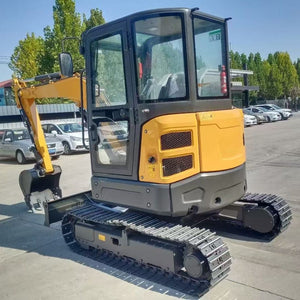
Used Excavator Inspection: What Paperwork & Wear Patterns Really Tell
A visual walk-around catches only the most obvious problems. The true condition of a used excavator is often hidden in its paperwork and the way components have worn.