

Analysis of the Inspection and Quality Control of Denim Fabric and the Causes of Garment Distortion: From Weft Deviation and Weft Arc to the Entire Process of Inspection and Certification
I. Key Indicators for Garment Distortion: Weft and Warp Directional Change Rate
1.1 Criteria for Change Rate
In fabric inspection, the change rate before and after washing in the warp and weft directions is the core indicator for determining whether a garment will distort:
Safety range: The rate of change before and after washing should be controlled within 2%, and there should be no significant distortion in the finished garment.
Risk range: If the rate of change exceeds 3%, a significant distortion will occur.
1.2 Control Requirements for Different Products
Fabric for pants vs fabric for clothes: The rate of change for the fabric of pants should be controlled to be smaller than that of the fabric for clothes.
Long pants vs Shorts: The variation rate of the materials used for long pants should be controlled to be smaller than that of shorts.
Material length: The longer the material, the more strictly the variation rate needs to be controlled.
II. Correct Understanding of Weft Skew and Weft Arc
2.1 Morphological Changes During Weaving
During the weaving process, the warp and weft yarns are interwoven in a vertical direction on the loom. However, after the fabric is taken off the loom, the weft yarns and the warp yarns present a certain inclined angle, forming a parabolic shape. This change involves two key factors:
Deviation of latitude:
The angle between the warp yarn and the weft yarn has changed from 90 degrees to a smaller angle.
This is what is commonly referred to as the oblique latitude phenomenon, and it is clearly visible.
Attention is paid to the issue of weft deviation during the production process.
Winding Arc:
The stress acting on the warp yarn in the straight direction during the changing process is not uniform.
It is usually larger in the middle and smaller on both sides.
The entire warp yarn presents an inclined arc shape, which is commonly referred to as the "warp arc phenomenon".
It is often overlooked in actual production.
2.2 The True Causes of Garment Distortion
The root cause of garment distortion lies in the combined effect of warp deviation and warp curvature. It is worth noting that:
The phenomenon of latitude skew is more intuitive and more widespread than the phenomenon of latitude arc.
In actual production, the importance attached to纬斜 (weaving deviation) is much greater than that of纬弧 (weaving arc).
However, it is often the case that the problem causing the distortion of the garment is the warping of the weft rather than the warping of the warp.
This is mainly due to the insufficient attention paid to the phenomenon of the weft arc in the production process.
III. Correct Inspection Methods for Fabrics
When inspectors are inspecting denim fabric, they need to master the correct inspection methods in order to accurately determine whether the fabric will cause the garment to distort.
3.1 Misconceptions of Traditional Inspection Methods
Many practitioners believe that to determine whether a fabric will cause distortion, one should look at the slant value or slope. However, the truly correct standard is not the slant value or slope; rather, it is the rate of change in the fabric before and after washing in both the warp and weft directions.
3.2 Correct Inspection Steps
Step 1: Determine the measurement points
Take three measurement points - left, middle and right - along the weft direction on the fabric surface.
The left and right points can be determined respectively by positioning them on the left and right sides of the edge.
The midpoint should be as close as possible to the highest point of the latitude arc.
If the highest point of the arc is too far to one side, it is recommended to add a measurement point.
Step 2: Calculate the rate of change
When using the midpoint or the highest point of the meridian arc as the measurement reference point, the obtained data will be the most accurate.
The maximum rate of change measured at each test point is the most accurate data for evaluating whether the fabric is distorted.
3.3 Limitations of Traditional Methods
The traditional method of two test points from one end to the other can only provide accurate data when there is no latitude arc.
Once warping occurs on the fabric surface, the results of traditional tests lose their accuracy and reference value.
IV. Test Method for Warp Skewness
In fabric inspection, the test for warp skewness is an important step in evaluating fabric quality. The standard test method is as follows:
Draw a line perpendicular to the edge of the fabric.
Take one end of this line as the starting point.
Draw a line according to the weft direction pattern of the fabric.
Measure the distance between the endpoints of these two lines on the other side of the fabric (let's call it L)
Three ways to represent oblique latitude:
Angle: The size of the angle formed by two lines
Length: The length of L
Percentage: The length of L divided by the width of the fabric panel.
V. The Relationship Between Fabric Inspection and Garment Quality
5.1 Importance of Inspection
Fabric inspection is the first step in quality control of the finished garment. By accurately measuring the rate of change in the warp and weft directions, inspectors can identify fabrics that may cause the garment to distort before production, thus avoiding subsequent quality issues.
5.2 Focus Areas of Factory Inspection Audit
During the factory inspection audit of suppliers, the following aspects should be given priority attention:
The process control capability during the fabric weaving process
Detection equipment and records for oblique latitude and arc
Control of the post-treatment processes of the fabric (such as shrinkage reduction and shaping)
The professional qualifications and training records of the inspectors
5.3 Association of Product Certification
For export garments, the quality of the fabric directly affects whether the products can meet the certification requirements of the target market. For instance:
EU market: Must comply with REACH regulations, and the variation rate of the fabric needs to be controlled within a safe range.
US market: Must comply with ASTM standards. Dimensional stability after washing is an important test item.
Chinese market: Must comply with relevant standards such as GB/T 22700 "Washing-Processed Clothing" and others
VI. Quality Control Recommendations
6.1 Supplier-side Control
During the weaving process, strict control over warping deviation and warping curvature should be implemented. After the fabric is taken off the loom, the process parameters should be measured and adjusted promptly.
The post-finishing process should fully eliminate the potential stress in the fabric and ensure that the rate of change in both the warp and weft directions remains within the safe range.
Establish a fabric quality traceability file to record the test data of each batch of fabrics.
6.2 Inspection Terminal Control
The inspectors should be proficient in the correct methods for measuring warp slant and warp arc.
The focus should be on the rate of change of the highest point of the arc, rather than relying solely on the data between points.
For fabrics with a rate of change exceeding 3%, it is necessary to promptly notify the customer and suggest that they refuse to accept them.
6.3 Control of the Garment Production Process
Pre-shrink the fabric before cutting to further stabilize the size
In the sewing process, pay attention to tension control to avoid introducing additional stress.
After the garments are washed, samples are taken for measurement to check the degree of distortion, and to verify whether the fabric selection is correct.
分享这个商品
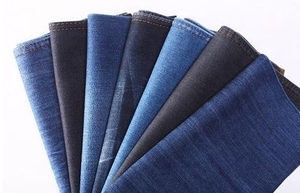
Analysis of the Inspection and Quality Control of Denim Fabric and the
From Weft Deviation and Weft Arc to the Entire Process of Inspection and Certification