

Children’s Product Inspection Guide: Why Recalls Happen and How to Prevent Them
A friend of mine has been in cross-border e-commerce for six years. Last year, he shipped a batch of children’s water cups to the US. The decorative bear ears on the straw lid were prone to detaching—small parts that could enter an infant’s mouth and cause choking. 24,000 cups were recalled by the CPSC. Product value plus warehousing and destruction costs wiped out half a year’s profit.
This is not an isolated case. In the first three quarters of 2025, the US CPSC issued 298 product recalls. Chinese products accounted for 216 of them (72.5%). Children’s products and toys were the number one recall category, at 25%. The EU market is equally severe: notifications for Chinese-made toys increased by 11.5% year-on-year, with safety risks trending upward.
Why does every recall seem to come “out of nowhere”? The problem starts at the source—many cross-border sellers have almost zero quality control over the production process.
1. Real Cases That Make Inspectors’ Hearts Race
I have done many inspections for children’s products. Some scenes remain vivid.
Case 1: Small Parts Detach, 36,000 Plush Toys Recalled
In April 2026, the US CPSC recalled a “Warm Hug Bear” plush toy because the zipper pull on the side pocket could easily detach and be swallowed by a child, causing choking. The recall affected 36,000 units. The product had been sold on Amazon US for three months before it was discovered.
Did the factory not check the zipper’s firmness before shipment? Most likely they did, but using the standard of “it feels fine when I pull it by hand.” The US ASTM F963 standard for small parts on children’s toys requires: products for 0–36 months must withstand 45N of tensile force; products for ages 3+ must withstand 70N. A difference of 1N is the gap between passing and being recalled.
Case 2: 102,000 Teething Toys Pose Choking Risk
In May of this year, more than 102,000 Tiyol children’s teething toys sold on Amazon were recalled. The silicone pull cord exceeded the length limit and the ends could easily detach to form small parts, failing to comply with ASTM F963 toy safety standards. The cord or detached parts could enter a child’s throat and block the airway. This product sold from 2022 to 2026 and only triggered a recall after 11 choking incident reports were accumulated.
Teething toys are used by very young infants who are teething. The design stage should consider all possible misuse scenarios—children will bite, pull, and chew. But problems often arise when the factory’s mold drawings meet parameters, yet mass production deforms the product.
Case 3: Phthalates Exceed Limits, Entire Batch Destroyed
Germany once notified a Chinese-made children’s slipper whose DEHP content exceeded REACH regulation limits. The product was required to be recalled from end users, banned from sale, and completely withdrawn from the market. The importer was also held responsible. DEHP is an endocrine disruptor with potential harm to children’s reproductive system development. However, the product packaging had no relevant warning labels.
Europe and the US are rapidly tightening chemical controls. The EU Toy Directive requires testing for 19 heavy metals. US CPSIA requires total lead ≤100ppm and 6 phthalates (6P) ≤0.1%. Amazon and other platforms have tightened to 8P testing.
These cases share one thing: problems occurred at the most basic level of physical and chemical safety, yet were largely ignored before shipment.
2. Three Dimensions I Focus on in Children’s Product Inspection
After more than a decade in supply chain quality management, I have summarized a “three-layer defense” logic for children’s product inspection.
Layer 1: Physical and Mechanical Properties—Lock Down “Small Parts”
Small part detachment is the number one cause of recalls for children’s products. Among Chinese-made toys notified in the EU in 2025, choking hazards from small parts ranked first.
In practice, we focus on:
- Any part a child can put in their mouth must undergo torque and tensile testing. Small parts on products for ages 0–3 must withstand 45N (about 4.5 kg force) without detaching.
- Button battery compartments must meet child-resistant (CR) requirements. Children cannot open them by hand; adult tools or special operations are required.
- Magnetic parts must meet anti-detachment and low magnetic force safety standards. Swallowing strong magnets can cause intestinal perforation.
- Packaging plastic bags must be ≥0.038mm thick. Thinner plastic films can cover the mouth and nose, posing a suffocation risk.
Layer 2: Chemical Safety—The Most Hidden “Invisible Killer”
Chemical exceedances are more hidden than physical damage—completely invisible to the eye. Every inspection, when we see the material reports provided by the factory, we ask a few questions: Does the batch on the report match the batch being produced? Were coatings and substrates tested separately? Are phthalates tested according to the regulatory 6P or the platform 8P?
Amazon has tightened phthalate requirements for plastic toys to 8P, higher than the federal CPSIA mandatory standard. If the factory only did 6P testing, it will likely fail platform review. During inspection, we require verification that the sample batch on the test report matches the production batch. If they do not match, the report is considered invalid.
Layer 3: Labeling and Instructions—The Easiest Details to Get Wrong
Many cross-border sellers do not value product labeling, thinking it is “a small matter.” But during Amazon TIC audits, age labeling and warning statements are mandatory checks: toys for children under 3 must not have detachable small parts; toys containing small parts must be labeled “Choking Hazard—Not for children under 3 years”; all children’s products sold in the US require a CPC certificate, and the product information on the certificate must exactly match the Amazon backend.
I have seen too many cases where a single missing word in a warning statement or a wrong age year caused an entire batch to be rejected by Amazon.
3. Three Common Pitfalls Cross-Border Sellers Fall Into
Based on frontline inspection experience, I have summarized three common misconceptions cross-border sellers have in children’s product quality inspection.
Pitfall 1: Only Looking at Certificates, Not the Actual Product
Many sellers have an EN71 or ASTM F963 test report and think they are safe. But a report only proves that the submitted sample passed. It cannot guarantee that every product in the entire batch is compliant. During mass production, mold wear, inconsistent worker operations, and raw material batch variations can all cause quality fluctuations. This is why pre-shipment inspection is more critical than a lab test report—a report only proves the submitted sample is qualified; inspection ensures batch production consistency.
Pitfall 2: Ignoring Packaging and Transport
In one inspection, we found that the product itself passed all tensile tests, but after transport overseas, customers complained about massive packaging damage. Investigation revealed: the outer carton used three-layer corrugated paper, and after stacking, the bottom layer deformed severely, causing products to crush each other. Packaging strength issues do not affect product safety certification, but in actual sales they directly impact customer experience and return rates.
Pitfall 3: Thinking “Having Certification Is Enough”
CE certificates and CPC certificates are not passports in themselves. The test report on which the certificate is based is the key. Some sellers use non-CPSC-accepted labs for testing, only to find that Amazon does not recognize the report. Others “share certificates”—using one CPC certificate for different product models—and get delisted immediately after listing.
4. Frequently Asked Questions
Q1: How Many Samples Are Usually Drawn for Children’s Toy Inspection?
AQL sampling is the industry-standard method. Different product types and different severity levels have different acceptance levels. In pre-shipment inspection, we determine the sampling plan based on order quantity and production batch. Critical safety items (such as small part tensile force and sharp edges) must undergo 100% inspection, not sampling.
Q2: What Is the Difference Between Pre-Shipment Inspection and a Lab Test Report?
A lab test report is used to prove that the product design meets standards. Pre-shipment inspection is used to confirm the consistency of mass production quality. They are not substitutes but complements. Lab testing is usually done once during development; pre-shipment inspection must be done for every batch.
Q3: Does Amazon FBA Have Special Requirements for Children’s Product Inspection?
Amazon FBA does not check product safety quality upon inbound. But once a safety hazard is discovered during sales or a CPSC spot check finds non-compliance, the direct consequences are listing removal, inventory freeze, and even store closure. We have seen clients whose entire brand’s products were placed under focused review because of one product recall. We recommend all Amazon sellers do a pre-shipment pre-check simulating platform review, focusing on age labeling, warning statements, and CPC certificate information consistency.
Q4: What If the Factory Does Not Cooperate with Pre-Shipment Inspection?
Factories usually refuse third-party inspection for two reasons: they lack confidence in their own quality, or they worry about delaying delivery. The countermeasure is to clearly stipulate in the procurement contract that “the buyer has the right to commission a third-party agency for product inspection before shipment,” and that batches failing inspection are the seller’s responsibility to rework or remake. Write quality control clauses into the contract, and the factory’s attitude will completely change.
Conclusion: Quality Inspection for Children’s Products Is a Bottom Line, Not Just a Business Issue
After more than a decade on the inspection frontline, I am increasingly convinced of one thing: quality inspection for children’s products is not just a commercial issue—it is a bottom-line issue.
Cross-border sellers must invest real money in product quality. Lab tests that should be done cannot be skipped. Pre-shipment inspections that should be done cannot be missed for any batch. Treating quality inspection as a cost rather than an investment will eventually lead to higher costs.
Digital inspection platforms help companies significantly shorten inspection cycles, improve efficiency, and make every inspection data-verifiable and report-traceable.
If you need a children’s product inspection plan that covers physical safety, chemical compliance, and labeling requirements, contact us to get a customized solution.
分享这个商品
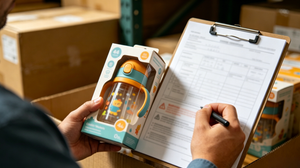
Children’s Product Inspection Guide: Why Recalls Happen and How to Pre
CPSC recalls in 2025: 72.5% of recalled products were made in China, with children’s items the top category. Learn the 3 inspection dimensions and 3 common pitfalls every cross-border seller must avoid.