

Comprehensive Analysis of Inspection and Certification Standards for Household Gas Cooking Appliances: A Guide for Full Process Quality Control from Appearance to Energy Efficiency
I. Appearance Inspection Standards
When the inspector conducts the appearance inspection of the gas stove, the following requirements must be followed:
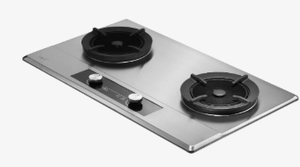
The appearance of the stove should be smooth and shiny, with uniform color and a firm coating.
There shall be no obvious blemishes, scratches, or other defects.
The warpage of the stove panel should be less than 5mm.
Criteria for judgment: Anything that fails to meet the above requirements will be regarded as an appearance defect and will be recorded according to the defect classification system.
II. Operational Performance Inspection Standards
The operational performance directly affects the user experience. During the inspection process, the following aspects should be given particular attention:
Do not press the knob against the stove panel during operation.
The knob operation should be flexible and reliable.
The wind door adjustment should be reliable and without any jamming.
Judgment criteria: If the operation is not smooth or the wind door adjustment fails, it is judged as unqualified.
III. Gas System Air Tightness Inspection Standards
Air tightness is the core item for the safety certification of gas appliances. The inspectors must strictly adhere to the standards:
Valve tightness: From the gas inlet to the burner valve, at an air pressure of 4.2 kPa, the leakage must be zero.
Air tightness of the fire hole: From the gas inlet to the fire hole, when ignited with 0-1 gas, there should be no leakage.
Criteria for judgment: Any leakage is considered a fatal defect and the entire batch will be rejected.
IV. Energy Efficiency Grade Inspection Standards
Energy efficiency grade is an important performance indicator for gas cookers and also a key basis for energy efficiency certification:
Stove type 1st efficiency level 2nd efficiency level 3rd efficiency level
Desktop ≥68% ≥64% ≥60%
Embedded ≥65% ≥61% ≥57%
During inspection, it is necessary to verify whether the labeled efficiency level of the product is consistent with the measured value, and confirm whether it meets the certification requirements.
V. Inspection Standards for Ignition Devices
The reliability of the ignition device directly affects the user experience. The inspection methods are as follows:
Perform continuous ignition for 10 times, and there should be more than 8 successful ignitions.
Must not be invalid for two consecutive times
No detonation phenomenon
Criteria for judgment: If the ignition success rate fails to meet the standard or there is an explosion, it is deemed as unqualified.
VI. Inspection Standards for Combustion Conditions
Combustion conditions are the core content of the performance inspection of gas stoves. The inspector needs to check the following items:
Flame transmission: Each fire hole should transmit the flame normally.
Li Yan: The flame should not escape from the fire hole.
Shutoff: No abnormal shutoff occurred.
Flame uniformity: The height of the flames from each fire hole is consistent.
Quenching: The flame is extinguished and retracts back into the burner interior.
Combustion noise: Within the standard limit.
Engine shutdown noise: Within the standard limit.
CO concentration in dry flue gas: ≤ 0.05% (in accordance with national standards)
Black smoke: No visible black smoke
Contact with yellow flame: Allow a slight yellow flame but do not allow it to touch the bottom of the pot.
Burning stability of the low-fire burner: The low fire should burn stably.
Criteria for judgment: If any one item fails to meet the standards, it will be regarded as an unqualified combustion condition.
VII. Sampling and Decision Rules
1. Sampling Plan
Determine the sampling quantity and acceptance level based on the AQL (Acceptable Quality Limit) standard.
For key items such as air tightness and energy efficiency, it is recommended to adopt a zero-defect sampling plan.
2. Defect Classification
Defect Category Definition Judgment Criteria
Fatal Defect Gas leakage, explosion, CO concentration exceeding standard Zero tolerance. Any discovery leads to the entire batch being judged as non-conforming.
Major Defect Energy efficiency not meeting standards, ignition failure, abnormal combustion conditions, operation malfunction Judged according to AQL standards
Minor Defect Slight scratches, warpage exceeding standard (<5mm), appearance defects Judged according to AQL standards
3. Inspection Report
All inspection results must be recorded in the formal inspection report.
Including air tightness test data, actual energy efficiency values, ignition success rate, CO concentration, etc.
Clearly define the conclusion and recommendations
VIII. Linkage between Factory Audit and Certification
1. Supplier Capability Assessment
During the factory audit, gas stove suppliers are required to conduct a key assessment of:
Gas system airtightness testing equipment and process
Energy efficiency testing laboratory capabilities and calibration records
Durability Test Record of Ignition Device
Burning burner production process and quality control
Qualifications and Training of Inspectors
2. Product Certification Requirements
Gas cookers need to meet the corresponding certification standards when entering different markets:
Target market Certification requirements Inspection focus
Chinese market CCC certification, GB 16410 "Household Gas Stoves" Air tightness, CO concentration, energy efficiency grade, flameout protection
European market CE mark, EN 30-1-1, Gas Appliance Regulation (EU) 2016/426 Heat efficiency, emissions, safety
Other markets Local gas appliance certification Comply with local gas sources and standards
During inspection, it is necessary to verify the consistency between the product label and the certification certificate, and confirm that safety components such as the flameout protection device have been certified.
3. Continuous improvement
Any quality issues identified during the inspection should be promptly reported to the supplier.
Repetitive issues need to be followed up and rectified through factory inspections.
Establish a quality traceability record to support product certification audits
Regularly update the inspection standards to adapt to the changes in regulations in the target market.
分享这个商品
Comprehensive Analysis of Inspection and Certification Standards for H
A Guide for Full Process Quality Control from Appearance to Energy Efficiency