

Container Loading Supervision: The Last Quality Gate Before Your Goods Go to Sea
In cross-border trade and supply chain management, many procurement teams put all their energy into factory production, fabric workmanship, and repeated sample approvals—only to lose everything at the last step. The bulk cargo may pass final inspection at the factory, but when it reaches an overseas warehouse or the end consumer, problems appear: crush damage, moisture, uneven weight distribution, or customs delays caused by loading issues.
For the buyer, the real high-risk ocean voyage begins the moment goods are stuffed into a steel container at the factory. Container loading supervision exists to lock down this final line of defense.
What Role Does Container Loading Supervision Play in the Supply Chain?
In our daily inspection projects, we often see this situation: the product itself has no quality problem, and the cartons meet contract requirements. But because the factory is rushing to ship or trying to save container space, workers stack goods carelessly, put heavy items on top of light ones, or mix incompatible products. The result is a delivery that arrives in poor condition.
Container loading supervision is not just counting cartons. It is an on-site verification of shipping compliance, space utilization, and cargo protection.
According to ISO standards for container transport, cargo stability and moisture/vibration protection directly determine the success of a long ocean voyage. During weeks at sea, containers experience ship motion, temperature changes, and multiple lifts. If stacking is not scientific, even the best individual product can deform under pressure. For cross-border sellers and overseas brands, professional container loading supervision blocks hidden costs caused by loading violations before the goods leave the country.
There is often serious information asymmetry between buyers and factories. Factories care about whether the goods can be loaded into the container so they can settle payment. Buyers care about whether the goods can arrive at the overseas warehouse intact. This natural difference in position makes independent third-party loading supervision an indispensable balancer in the cross-border supply chain.
Standard On-Site Process for Container Loading Supervision
Proper container loading supervision is not just standing by while workers move boxes. It includes a set of strict on-site actions. In our inspection tasks, we usually require inspectors to follow these core steps:
1. Empty Container Inspection and Safety Assessment
Before loading, the container must be fully inspected. Focus on damage, holes, severe rust, odor, and internal moisture. If the empty container itself has a leak risk, even perfect inner cartons can suffer water damage at sea. Inspectors must also verify that the container number matches the booking order to prevent customs document mismatches caused by picking up the wrong container.
2. Quantity Counting and Outer Carton Verification
Inspectors randomly check outer carton shipping marks, barcodes, and gross/net weights on site. They verify that the actual loading quantity matches the packing list and the final inspection report, preventing short shipment, wrong shipment, or mixed-in defective products. For LCL or mixed-category orders, barcode verification at this stage is especially critical.
3. Cargo Stacking and Protection Supervision
Loading logic differs greatly by product category. For example, fragile items and heavy machinery must never be mixed on the same layer. The compression strength of lower cartons must support the total weight above. Inspectors also check whether air bags, wooden braces, or moisture-proof desiccants are added. Heavy on bottom, light on top; large on bottom, small on top—these are basic physical principles, but in real factory loading, workers often put heavy cartons on top of light, bulky goods to save effort.
4. Container Locking and Seal Confirmation
After all cargo is loaded and the doors are closed, the container must be checked for proper closure. The inspector or a buyer-designated representative applies a seal meeting ISO 17712 standards. The seal number is accurately recorded to ensure the container is not opened during transport. Seal number verification and documentation are important legal evidence for dividing responsibility among supply chain parties.
Common Factory Loading Mistakes
In practice, some suppliers use seemingly harmless but risky practices to reduce logistics costs or speed up shipment. Many teams lack on-site supervision experience and overlook these hidden details:
1. Overloading and Uneven Weight Distribution Caused by Space Squeezing
To fit more cargo, factories often ignore container weight limits or pile all heavy goods on one side, causing a shift in the center of gravity during the voyage. This not only violates shipping line rules but can also cause rollovers or containers falling into the sea in rough weather. Some factories reduce the use of wooden braces and strapping to save money, leading to large-scale cargo collapse during transport.
2. Desiccant Configuration That Is Just for Show
During weeks at sea, temperature changes create significant container rain. If the factory does not scientifically calculate and place enough calcium chloride desiccants based on cargo volume and route climate, goods can become moldy by the time the container is opened. In many textile and footwear projects, we found that factories casually throw in two low-quality desiccant bags, which cannot handle the hot and humid conditions of crossing the equator.
3. Rough Handling and Missing Protection
Workers may use hand hooks that pierce outer cartons, or throw heavy goods from heights. This causes structural damage inside the product. Such hidden damage may not be visible during factory inspection, but after a long journey, it turns into large-scale complaints and returns.
When facing these supply chain abnormalities, it is hard for buyers to reconstruct the truth from a few blurry photos provided by the factory afterward. By introducing third-party professional video inspection, on-site inspection data can be synchronized in real time to a digital management platform. Procurement managers do not need to travel—they can view inspection progress, loading photos, and exception feedback on their mobile devices, making timely business decisions on whether to release the shipment or require rework.
How Digital Tools Enable Full Transparency in Container Loading Supervision
Traditional inspection models often suffer from delayed information, paper reports that can be altered, and non-traceable inspection processes. As global supply chains move toward digitalization and transparency, companies’ demands have shifted from “finding problems afterward” to “intervening in risks in real time.”
A supply chain quality control and digital inspection service provider can use an “Internet + QC” model to move traditional container loading supervision online. Inspectors at the loading site upload empty container photos, loading progress, exception tags, and seal numbers in real time via mobile devices. The back-end system automatically generates an inspection data package with timestamps and geographic location.
For foreign trade procurement managers, this digital model brings significant efficiency improvements. In the past, paper inspection reports took three to five days. Now, through a digital platform, structured online reports can be viewed within hours after supervision ends. Companies can not only track the shipment status of each batch in real time but also accumulate inspection and loading supervision data into a supplier quality record, providing objective data support for supplier performance evaluation and admission/elimination.
Move Quality Risks Forward, and the Supply Chain Becomes More Controllable
Every link in the cross-border supply chain is full of uncertainty. Container loading supervision, as the last checkpoint before goods go to sea, is worth far more than simple physical loading supervision. It tests a company’s ability to manage risks in advance and its respect for global logistics rules.
Rather than facing rejection, claims, and high rework costs after goods arrive at the overseas warehouse, it is better to station professional strength at the factory loading node. Through scientific standards, strict on-site execution, and digital management tools, companies can effectively reduce ocean damage rates, ensure delivery cycles, and truly achieve efficient supply chain operations.
If you are facing supply chain pain points such as difficulty in remote inspection, opaque factory loading, or high overseas warehouse complaint rates, please contact us anytime. We will tailor a professional, efficient, and transparent third-party final production inspection and container loading supervision solution to help your products go to sea safely.
分享这个商品
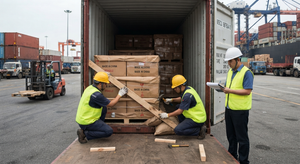
container-loading-supervision-guide
Container loading supervision is the final risk control step before export. Learn the standard process, common factory mistakes, and how digital supervision keeps your shipment safe.