

Detailed Analysis of Inspection and Certification for Electric Rice Cookers: Classification, Specifications, Performance Testing and Quality Control Guidelines
I. Overview
The electric rice cooker is one of the indispensable appliances for modernizing household chores. Its quality directly affects safety during use, cooking efficiency, and user experience. Therefore, it is crucial to conduct strict inspections, factory audits, tests, and certifications for the electric rice cooker. Professional third-party inspection agencies can provide comprehensive quality control services to ensure that the products meet domestic and international standards.
II. Classification and Structural Characteristics
(1) Classification by Heating Method
Indirect Heating Electric Rice Cooker
The structure is divided into three layers: inner pot, outer pot, and pot body. The inner pot holds the food, the outer pot houses the heating elements, temperature controller, and timer (sealed and fixed), and the outermost layer is the pot body (for safety protection and decoration).
Advantages: The food is heated evenly, the hardness on the top and bottom is consistent, and the inner pot can be removed for easy cleaning.
Disadvantages: The structure is complex and it is time-consuming and energy-consuming.
Direct heating electric rice cooker
The heating element directly heats the inner pot, which is highly efficient, time-saving and energy-saving.
Disadvantage: The cooked food tends to be inconsistent in texture, being either too soft or too hard in different parts.
(2) Classification by structural form
Combined type: The pot body and the electric heating base have no tight connection. They can be easily removed, facilitating cleaning and movement.
Integral type: The electric heating element is fixed at the bottom of the pot, forming a single unit. According to the number of pot layers, it is classified as single-layer, double-layer and triple-layer.
(3) Classification by Control Method
Thermal preservation type: Press the switch when cooking, and the power will automatically cut off once the rice is cooked; when the temperature drops below 65℃, the preservation switch will be activated, and it will be deactivated again when the temperature rises to 65℃, alternating between preservation.
Timed start with heat preservation: You can choose any time within 12 hours to start cooking, and the food will automatically remain warm after it's cooked.
Computer-controlled type: It is controlled by computer programs, with a high degree of automation.
(4) Main Materials and Components
Cooking pot material: Ceramic, enamel, aluminum alloy, stainless steel, etc. The inner pot is usually coated with polytetrafluoroethylene to prevent scorching and facilitate cleaning.
Heating elements: Electric heating tube type heating plate (with good insulation, corrosion resistance, and long lifespan) and P.T.C. element heating plate (automatically temperature-controlled, without open flame, and highly safe).
Temperature control element: bimetallic strip or magnetic material (the latter is safer and more reliable).
III. Specifications
The specifications of the electric rice cooker are classified according to the power of the heating element. The common rated voltage is 220V. The corresponding relationship between power, inner pot capacity and rice cooking quantity is as follows:
Rated Power (W) Inner Pot Capacity (L) Amount of Rice to Cook (kg)
350 2.0 0.6
500 3.0 1.0
650 4.0 1.4
900 5.5 1.9
1250 7.0 2.5
1600 8.5 3.1
2000 10.5 3.8
IV. Inspection Items and Standards
The inspection of the electric rice cooker mainly follows GB4706.6-95 "Safety of Household and Similar Appliances - Special Requirements for Automatic Rice Cookers" and JB/T8308-95 "Automatic Rice Cookers". During the inspection process, the inspector should carry out the following tests item by item:
Electrical insulation performance
The live parts should be able to withstand a 50Hz AC voltage (1500V in cold state, 1000V in hot state) for 1 minute without breakdown or arcing between the live parts and the metal casing.
The hot-state insulation resistance is ≥ 1 MΩ.
2. Thermal cycling test
After being placed in a constant temperature and humidity chamber (without condensation) at a temperature of 40 ± 2℃ and a relative humidity of 95 ± 3% for 48 hours:
The tidal insulation resistance is ≥ 0.5 MΩ.
Tidal pressure resistance: AC 1000V, 1 minute, no breakdown or flashover.
3. Grounding Resistance
The resistance from the end of the grounding wire to the exposed metal casing is ≤ 0.2Ω.
4. Temperature Control Performance
The temperature control element should activate when the cooking temperature is within the range of 103 ± 2℃.
The automatic insulation element should activate when the meal cools down to 65 ± 5℃ after it is cooked.
The insulation component can still function properly after being exposed to the working temperature for 1000 hours.
5. Thermal Efficiency
During indoor testing at an ambient air temperature of 23 ± 5℃, the thermal efficiency is ≥ 70% (according to the standard method).
6. Lifespan
When used under the rated voltage, the lifespan is ≥ 1000 hours.
7. Leakage Current
Cold-state leakage current ≤ 0.5mA, Wet-state leakage current ≤ 1mA.
8. Other Requirements
The power deviation, power cord length, cross-sectional area, color, etc. should comply with the standards.
The appearance quality, electroplated parts, paint coating, and surface quality of the enamel casing also need to be inspected.
V. Packaging, Storage and Certification
Packaging: The rice cooker is placed in a cardboard box, with shock-absorbing foam materials on the top and bottom; the accessories are placed in a plastic bag and placed inside the cooker; multiple cardboard boxes are packed into a large corrugated cardboard box, which is tightly fastened with straps and has specified markings. Each rice cooker must have a product certificate and user manual.
Storage and Transportation: During transportation, the cartons should be handled with care. The warehouse should be well-ventilated and free from corrosive gases.
During the inspection process, it is necessary to check whether the packaging is intact, the accessories are complete, and the labels are correct. At the same time, the factory inspection should focus on the quality management system of the production enterprise, the production environment, the calibration records of the testing equipment, and the qualifications of the inspection personnel. Finally, the products should obtain relevant certifications (such as CCC, CE, etc.) to ensure compliance with the requirements for market entry in the target market.
分享这个商品
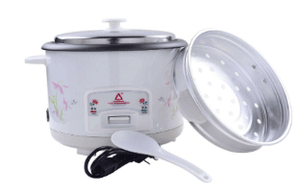
Detailed Analysis of Inspection and Certification for Electric Rice Co
Detailed Analysis of Inspection and Certification for Electric Rice Cookers: Classification, Specifications, Performance Testing and Quality Control Guidelines