

Detailed Analysis of Inspection and Certification Standards for Wok Products: A Quality Control Guide from Appearance to Performance
The wok is an essential cooking tool in our daily life and is closely related to a healthy lifestyle. Every wok must undergo a series of strict product inspection and certification before it can enter the consumer market. This article details the inspection items of woks, covering aspects such as appearance, size, performance, and packaging, providing professional references for inspectors, purchasers, and manufacturers. These standards are also important bases for supplier factory audits and product certifications.
I. Appearance Inspection Standards
During the appearance inspection of the wok, the inspector needs to check each item as follows:
There are no surface cracks, protrusions, pores, scratches, burrs, odors, dirt or other undesirable phenomena.
The inner surface of the pot is allowed to have no more than 3 pores. The distance between each pair of pores should be ≥ 10cm. The area of each pore should be ≤ 0.3mm² and the depth should be ≤ 0.1mm. The maximum visible distance should be ≤ 40cm.
The inner and outer surfaces of the pot must be coated with edible oil, and the oil should be heated to 280℃ to be poured into the pot. Sand holes are not allowed, and there should be no rust, dirt, or oil residue.
The bottom of the pot is flat and fits well with the microcrystalline glass plate, without any shaking.
The handle is firmly fastened and should not be loose.
Criteria for judgment: If any of the above conditions is not met, it will be regarded as an unqualified appearance and will be recorded under the defect category.
II. Dimension Inspection Standards
The inspector shall conduct dimension inspection using measuring tools:
Size Requirements:
Bottom diameter of the pot: d ± 4mm
Bottom of the pot height: H ± 1mm
Diameter of the pot body: D ± 1mm
Edge thickness of the pot: ≥ 1.3mm
At the same time, conduct an inspection by comparing with the sample provided for the seal.
Weight requirements: To be carried out in accordance with the technical drawings or technical agreements.
Judgment criteria: If the size or weight exceeds the tolerance range, it is deemed as unqualified.
III. Performance Inspection Standards
Performance inspection is the core part of the stove certification process. The inspectors need to conduct the following tests:
Leakage test: There is no leakage at the riveted joints.
Handle strength test: Fill the pot with 90% water. Hold the handle with your hand for 2 minutes. No detachment or loosening of the screws is allowed at the handle area.
Drop test: The frying pan is dropped from a certain height onto a level and flat cement (or floor tile) surface. No cracks or splits are allowed (the specific height can be参照客户标准参照)。
Life test: Fill the wok with water and place it on the induction cooker. Continuously heat it for 300 hours. No cracks or water leakage is allowed (random inspections will be conducted every three months).
Criteria for judgment: If any one of the performance tests fails to meet the standards, it will be regarded as unqualified.
IV. Inspection Standards for Markings and Packaging
Transportation and Packaging: Reliable transportation, reasonable packaging, and clear markings. Measures should be taken to prevent damage or breakage caused by improper transportation or packaging. Separate the products with special paper sheets. The products should be stored in a well-ventilated, dry, and cool warehouse.
First sample submission: The supplier is required to provide proof of inspection for all the above items (such as third-party inspection reports or certification certificates).
Batch packaging identification: Each batch of products must be marked on the packaging box with the product name, quantity, production batch number, manufacturer and product qualification certificate.
Food hygiene compliance: Must meet the requirements of food hygiene laws (such as the GB 4806 series standards).
V. Linkage between Factory Audit and Certification
1. Supplier Capability Assessment (Key Point of Factory Audit)
During the factory audit, the supplier of frying pans needs to focus on the following assessment:
Procurement channels for raw materials (such as stainless steel, aluminum alloy, coatings, etc.) and material certification documents
The process control capabilities for operations such as stamping, stretching, and riveting
Temperature control and recording of the oiling and baking equipment
Equipping and calibration of testing equipment (such as calipers, thickness gauges, drop test benches, life testing machines, etc.)
Qualifications and Training of Inspectors
2. Product Certification Requirements
For wok products to enter different markets, they must comply with the corresponding certification standards:
Target Market Certification Requirements Inspection Focus
Chinese Market GB 4806 "Food Safety National Standard - Metal Materials and Products for Food Contact" Heavy metal migration amount, hygiene safety
European Market LFGB certification, REACH regulations, EU 10/2011 Food contact safety, harmful substance limit
American Market FDA certification, California 65 proposal Lead, cadmium, etc. heavy metal limit
During inspection, it is necessary to verify the consistency between the product label and the certification certificate, and confirm that the coating, metal materials, etc. meet the food contact safety requirements.
3. Continuous improvement
Any quality issues discovered during the inspection should be promptly reported to the supplier.
Repetitive issues need to be followed up and rectified through factory inspections.
Establish a quality traceability record to support product certification audits
VI. Sampling and Decision Rules
1. Sampling Plan
Determine the sampling quantity and acceptance level based on the AQL (Acceptable Quality Limit) standard.
Performance tests (such as handle strength and lifespan experiments) are recommended to be conducted at a specific test level.
2. Defect Classification
Defect Category Definition Judgment Criteria
Fatal Defect Leaking, handle detachment, cracking, excessive heavy metal content Zero tolerance. Any defect found will result in the entire batch being deemed non-compliant.
Major Defect Sizing deviation, sanding exceeding standard, obvious appearance defects, incorrect packaging labels Judged according to AQL standards
Minor Defect Slight scratches, minor packaging damage Judged according to AQL standards
3. Inspection Report
All inspection results must be recorded in the formal inspection report.
Including appearance photos, actual size measurement data, and performance test records
Clearly define the conclusion and recommendations
分享这个商品
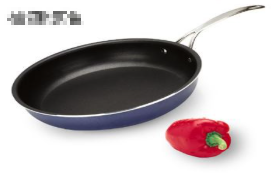
Detailed Analysis of Inspection and Certification Standards for Wok Pr
Detailed Analysis of Inspection and Certification Standards for Wok Products: A Quality Control Guide from Appearance to Performance