

Full Analysis of Inspection and Testing Standards for Electromagnetic Cookers and Certification: A Quality Control Guide from Function Testing to Safety Certification
I. Objective
To standardize the inspection and verification standards for electromagnetic cookers, ensuring that every product manufactured meets the quality requirements and safety standards, and providing technical basis for subsequent factory audits and product certifications.
II. Scope of Application
Electromagnetic cookers with CE certification
For other electromagnetic cookers (OEM, new models), if there are no specific standards, they shall be inspected in accordance with this standard.
III. Inspection Items and Standards
1. Function Test - Full Inspection
Testing Instruments/Tools: Stable Voltage Power Supply (capacity greater than 2KVA)
Test method: Under the rated voltage, conduct the basic functions of the electric cooker according to the standards on the attached page.
Criteria for judgment: The function must be correct and there should be no any operational abnormalities.
Inspection nature: The inspector is required to conduct a functional inspection on each product.
2. Power Test - Full Inspection
Test Equipment/Tools: Voltage Stabilizer (capacity greater than 2KVA), Rubber-handled Screwdriver (head size Ф2.5mm - Ф3mm, head length greater than 15mm, Phillips head), Standard Pan (bottom Ф200mm, material Q235A, bottom thickness 0.8 - 1mm)
Testing method:
At the rated voltage, test and adjust the power to the range of the rated power minus 10% (for example, 1600W should be adjusted to 1450W - 1600W)
To test the second power level, it should be ±10% of the nominal power.
Criteria for judgment: The power deviation must be within the specified range and there should be no defective products.
Inspection nature: Full inspection to ensure that the power of each product complies with the specifications.
3. Cookware Inspection - Full Inspection
Testing Instruments/Tools: Stable power supply (capacity greater than 2KVA), one set of inspection tools with diameter of Ф80mm and another set with diameter of Ф120mm
Testing method:
Turn on the device at the rated voltage
When the 80mm inspection tool is placed at any position on the ceramic plate, the induction cooker cannot heat up.
When the F120mm inspection tool is placed at any position on the ceramic plate, the induction cooker can heat it.
Criteria for judgment: It must meet the requirements of not heating the small pot and heating the large pot. No defective products are allowed.
Inspection nature: Full inspection. This is a key item in the safety certification process.
4. Temperature Test - Sampling Inspection
Testing Instruments/Tools: Stable Voltage Power Supply (capacity greater than 2KVA), Standard Pot, 25 ± 5℃ Environment
Test method: Under the rated voltage, add 50% oil (with the oil level approximately 100mm) in a standard pot and conduct the following tests:
Each section's insulation temperature
Measure the oil temperature under any level of heat (with a protection temperature of 260℃)
Judgment criteria: Error tolerance is ±20℃
Testing nature: Conduct tests according to the sampling plan
5. Low Voltage Test - Full Inspection
Test Equipment/Tools: Voltage Stabilization Power Supply (Capacity greater than 2KVA)
Test method: Set the voltage to 165V, and then follow the attached page's standards to test the basic functions of the electric cooker.
Criteria for determination: It can operate normally under low voltage conditions.
Testing nature: Full-scale testing, to verify the stability of the product during grid fluctuations
6. High Voltage Test - Full Inspection
Test Equipment/Tools: Voltage Stabilization Power Supply (Capacity greater than 2KVA)
Test method: Set the voltage to 265V, and then follow the attached page's standards to test the basic functions of the electric cooker.
Criteria for determination: It can operate normally for more than 2 hours under high voltage conditions.
Inspection nature: Full inspection
7. Aging Test - Full inspection in the first batch, followed by spot checks for defective items
Test Method: Under the rated mains voltage, boil water for 1 hour at the 2nd speed and the highest speed respectively.
Criteria for judgment: The induction cooker must not have any defects or abnormalities.
Inspection nature: Full inspection in the initial stage, and the sampling frequency will be adjusted based on the quality performance in subsequent stages.
8. Deterioration Test - Full Inspection
Test Method: Without power supply, with the longer side of the induction cooker as the axis, lift it by 30° and drop it freely three times.
Criteria for judgment: After the test is completed, conduct an on-site power-on inspection. There must be no defects or abnormalities.
Inspection nature: Full inspection, to verify the structural strength of the product
9. Regular Testing - Sampling Inspection
Testing Method:
Under the rated voltage, test the accuracy of the timing shutdown time.
Test the automatic shutdown function for 2 hours (during the test, the cookware cannot be moved and the settings cannot be changed)
One-minute automatic shutdown function without a pot
Judgment criteria: Timing accuracy ±3%
Testing nature: Sampling inspection
10. Stall Fan Test - Sampling Inspection
Test Method: Operate the fan at maximum power under the rated voltage, with the fan blocked.
Criteria for judgment: The induction cooker can be shut down or turned off, but it must not pose any risks such as combustion.
Testing nature: Sampling inspection, which is a key item in the safety certification process.
11. Pot transfer test - Sampling inspection
Test method: Work at the maximum power under the rated mains voltage. Move the pot 100mm away from the heating surface, then place it back and repeat this process 50 times.
Criteria for judgment: No defects or abnormalities should exist after the test is completed.
Testing nature: Sampling inspection
12. Power plug insertion and removal test - Sampling inspection
Test method: Operate under the rated mains voltage. Insert and remove the power plug at a rate of more than 50 times per minute for 50 times.
Criteria for judgment: No defects or abnormalities should exist after the test is completed.
Testing nature: Sampling inspection, verifying the durability of the plug
13. Test of single-side lifting of cookware - Sampling inspection
Test method: Operate under the rated mains voltage. Lift one side of the cookware by 6-8mm, and boil water at maximum power for 1 hour.
Criteria for judgment: No defects or abnormalities should exist after the test is completed.
Testing nature: Sampling inspection
14. Dry Heating Test - Sampling Inspection
Test Method: Operate under the rated mains voltage. Place an empty pot on the maximum heat setting and let it dry heat.
Criteria for judgment: The induction cooker can be shut down or turned off, but there should be no malfunctions or abnormalities after the test.
Testing nature: Sampling inspection, which is a key item in the safety certification process.
15. 300g Oil Boiling Test - Sampling Inspection
Test Method: Operate under the rated voltage of the power supply. Use a standard cooking pot and add 300g of cooking oil. Heat at maximum power.
Criteria for judgment: No defects or abnormalities should exist after the test is completed.
Testing nature: Sampling inspection
16. Appearance Inspection - Full Inspection
Inspection Criteria: Follow the general standards.
Criteria for judgment: The surface should be free from scratches, deformations, stains, or any other appearance defects.
Inspection nature: Full inspection. The inspectors conduct visual checks on each unit.
17. Packaging inspection and others - Full inspection
Inspection standard: Follow the general standards.
Criteria for judgment: The packaging is intact, the labels are correct, and all accessories are complete.
Inspection nature: Full inspection
IV. Sampling Plan and Judgment Rules
Test Item Testing Type Sampling/Inspection Method
Function Test Full Inspection 100% Inspection
Power Test Full Inspection 100% Inspection
Cookware Inspection Full Inspection 100% Inspection
Low Voltage Test Full Inspection 100% Inspection
High Voltage Test Full Inspection 100% Inspection
Lateral Drop Test Full Inspection 100% Inspection
Appearance Inspection Full Inspection 100% Inspection
Packaging Inspection Full Inspection 100% Inspection
Aging Test First Batch Full Inspection + Sampling Inspection Adjusted according to quality performance
Other Test Items Sampling Executed according to AQL Sampling Plan
Defect Classification:
Critical defects: such as failure of safety protection, non-shutdown during dry burning, fire hazards, etc., zero tolerance.
Main defects: such as functional abnormalities, power deviation exceeding the standard, and obvious appearance defects.
Minor defect: Minor appearance blemish, does not affect usage
V. Linkage between Factory Audit and Certification
1. Supplier Capability Assessment
During the factory audit, the supplier of induction cookers needs to focus on the following assessment:
The degree of automation of the production line and the quality control capability
Equipment for testing and calibration records (such as power stabilizing power supply, temperature tester, etc.)
Qualifications and training records of inspectors
Non-conforming Product Handling and Improvement Mechanism
Batch management capability of security certification products
2. Product Certification Requirements
Electromagnetic cookers need to meet the corresponding certification standards when entering different markets:
Target Market Certification Requirements Inspection Focus
Chinese Market CCC certification, GB 4706.1 Safety performance, electromagnetic compatibility
European Market CE mark, EMC directive, LVD directive Electromagnetic compatibility, low voltage safety
American Market UL certification, FCC standards Safety performance, electromagnetic radiation
Other Markets CB certification (IEC standards) International mutual recognition
During inspection, it is necessary to verify the consistency between the product labels and the certification certificates to ensure that each product complies with the regulatory requirements of the target market.
3. Continuous improvement
Any quality issues discovered during the inspection should be promptly reported to the supplier.
Repetitive issues need to be followed up and rectified through factory inspections.
Establish a quality traceability record to support product certification audits
分享这个商品
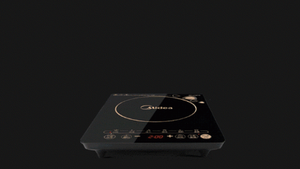
A Quality Control Guide from Function Testing to Safety Certification
A Quality Control Guide from Function Testing to Safety Certification