

Inspection methods, procedures and precautions for cranes
Crane is an indispensable lifting equipment in fields such as construction engineering, logistics hoisting, and municipal maintenance. Its safety risk level ranks first among various construction machinery - incidents such as wire rope breakage, boom bending, slewing bearing failure, and leg subsidence are all major causes of significant casualties and property losses. In scenarios such as new machine delivery, second-hand machine transactions, inspection of leased equipment upon lease termination, and annual mandatory inspections, a systematic third-party inspection covering structural components, amplitude lifting, slewing system, safety devices, and hydraulic and electrical systems is the core barrier for protecting the value of equipment assets and ensuring the safety of operation personnel.
I. Overview of Inspection Methods
Depending on the type of crane (crane truck/vehicle-mounted crane/track-mounted crane), lifting tonnage, boom type (extendable boom/truss boom), and the purpose of the commissioning, inspections typically employ the following methods in combination:
Static full inspection: When the vehicle is stationary, conduct a detailed visual inspection, hand touch examination, and measurement using measuring tools for all components such as the vehicle's exterior, chassis frame, leg support system, slewing bearing, boom, steel wire rope, hook, pulley system, hydraulic pipelines, and electrical system.
Dynamic performance test: Conduct tests of lifting, slewing, telescoping, rotation, and leg retraction/retraction on a safe site to verify the smoothness, speed and control response of each working mechanism's movement.
Load test: Using standard weights or substitute objects, it verifies the lifting capacity, structural stiffness and effectiveness of safety devices of the crane under rated load and partial load. This is the most crucial and indispensable part of testing the crane.
Special verification of safety devices: Trigger and test the functions of each safety device such as torque limiter, over-pull protection, over-discharge protection, amplitude limit, and leg interlock.
Document and nameplate traceability: Verify the consistency and validity of information such as the main machine nameplate, chassis nameplate, boom nameplate, wire rope certificate, safety device inspection report, and special equipment usage registration certificate.
The third-party inspection is carried out based on the core execution package of "static full inspection + dynamic performance test + safety device verification + load test". This is the bottom line for the inspection of the crane and cannot be omitted.
II. Inspection Process
1. Data Collection and Preparation for Inspection
The client provides a list of the machines to be inspected, specifying the brand and model, maximum rated lifting capacity, boom form and number of sections, leg type (H type/X type/Frog type), counterweight configuration, manufacturing year, working hours, applicable standards (such as GB/T 3811, GB 6067.1, TSG Q7015, etc.). The inspector prepares: tape measure, thickness gauge, vernier caliper, feeler gauge, wire rope diameter gauge, level, infrared thermometer, pressure gauge set, sound level meter, weights or known-weight counterweights, walkie-talkie, etc.
2. Confirmation of Venue and Safety Conditions
The loading test site must be solid and flat. The bearing capacity of the foundation beneath the outriggers must meet the requirements for the maximum outrigger reaction force. If necessary, steel plates or roadbed boxes should be laid to expand the bearing area. The radius of the test site should be no less than the maximum working radius of the crane plus the safety margin. There should be no overhead cables above the site. A warning line should be set up in the inspection area, and non-inspection personnel are strictly prohibited from entering. Inspectors should wear safety helmets, reflective vests, and anti-shock shoes. The lifting commander and the test driver must hold valid special equipment operation certificates, and a unified command signal should be established.
3. Identity and Label Verification
Machine nameplate: Verify the manufacturer, model, factory serial number, manufacturing date, rated lifting capacity, working range, etc.
Chassis VIN code: The VIN code of the frame of the truck crane chassis is compared with the certificate of conformity and the driving license to check for any grinding or tampering.
Lifting arm nameplate: The nameplate information on each telescopic arm or truss arm is consistent with that of the entire machine.
Main component nameplates: Rotation support, lifting mechanism, luffing cylinder (or luffing winch), counterweight blocks, etc. Record of nameplate parameters.
Wire rope certificate: Information such as wire rope manufacturer, model, diameter, tensile strength grade, breaking force, etc., must be confirmed to be within the valid usage period and have compliant traceability documents.
Special equipment procedures: Verify whether the "Special Equipment Use Registration Certificate" and the "Periodic Inspection Report" are within their validity periods (if applicable). Any missing nameplates, mismatched serial numbers, or expired procedures must be upgraded to serious non-conformities.
4. Inspection of the chassis and leg system - The foundation of stability
Chassis frame: Conduct a comprehensive inspection of the main beam from front to back. Focus on checking for cracks or performing welding repairs in the areas where the slewing bearings are installed, the leg connection areas, and the counterweight suspension areas. Also, check the fastening of the connecting bolts between the auxiliary beam (if present) and the main beam.
Legs: Check for any deformation, cracking or signs of welding repair in the H-shaped/X-shaped leg box structure. Ensure that the telescopic cylinders (or screws) of the legs operate smoothly. Confirm that the mechanical locking pins/screws can be reliably inserted when the legs are fully extended. Verify that the hydraulic locking function is effective. The connecting pin shaft of the leg foot plate is in good condition. There is no leakage in the vertical leg cylinder and the coating of the piston rod is undamaged.
Level gauge and leg status indicator: The level gauge in the cab functions properly, and the indicator light/display screen for the leg extension is consistent with the actual situation.
Suspension system: Steel spring / air-oil suspension mode. Whether the rear axle suspension locking device (if any) is effective during heavy load operation.
5. Rotation system inspection - The core assembly that supports the rotation
Swing support: Check the connecting bolts between the swing support seat ring and the upper and lower vehicle frames. Use tapping or torque marking to check for looseness. The appearance of the gear ring shows no severe wear or broken teeth. The sealing strip shows no aging or detachment, and the lubricating oil shows no leakage. During the swing support's rotation, listen throughout for any "clicking" abnormal sounds. If there are any abnormal sounds, record and issue a warning.
Rotation mechanism: The appearance of the rotation motor/减速器 shows no oil leakage, and the brake function is effective (there is no slipping after the rotation stops).
Center rotary joint: The hydraulic center rotary joint shows no leakage, and the electrical slip ring (if present) functions properly without any signal interruption.
6. Inspection of Boom and Extension/Traveling System - Power Arm
Arm appearance: The surface of each section of the boom housing shows no collision dents, rust, or obvious deformation. The weld heat affected zone of the telescopic boom is the key inspection area. Use a strong light flashlight to closely examine for cracks, especially at the edges of the reinforcing plates, the welds of the slider seat, and the welding points between the arm head and the arm tail.
Extension mechanism: The extension and retraction of the telescopic cylinder (or rope-pulling system) is smooth. The sequence of each section of the arm extending and retracting is correct, without crawling or shaking. The gap between the sliding block and the wear-resistant pad is measured using a feeler gauge from the tail end when the arm body is retracted, and the wear amount is recorded. There are no abnormal wear grooves in the contact area between the outer surface of the arm body and the sliding block.
Lifting mechanism: Check the clearance of the ear seat pin of the lifting cylinder. Ensure there is no leakage during the full stroke of the cylinder. The balance valve functions properly (when the operating valve is in the middle position, the boom should be able to stop reliably and there should be no obvious downward movement on its own). If it is a lifting winch type, then check the steel wire rope and the brake according to the lifting winch standards.
7. Hoisting system and wire rope/hook inspection - Lifeline
Lifting winch: Inspection of the fixing bolts of the winch frame. The lifting reducer shows no oil leakage and operates without abnormal noise. The brake opens and closes sensitively, and the wear of the friction plates is within the allowable range (measuring the opening gap with a feeler gauge is necessary when necessary).
Steel wire rope: This is one of the components with the highest safety relevance in the inspection of the crane. The diameter of the steel wire rope is measured at multiple points along its entire length using a diameter gauge. The wear shall not exceed 7% of the nominal diameter (general standard, refer to GB/T 5972). Defects such as broken wires, broken strands, rust, twisting, flattening, and rope core extrusion are inspected section by section. If the number of broken wires in one lay length of the steel wire rope reaches the scrapping standard, it must be replaced immediately. The rope end fixation (wedge joint, pressure plate, alloy casting) is firm and reliable. The steel wire rope is neatly arranged on the drum without any disorder or compression.
Pulley system: All pulleys rotate flexibly. The wear of the rope grooves is measured using a template or caliper. If it reaches the scrap standard (typically, the groove bottom wear exceeds 25% of the wire rope diameter), it must be recorded as a serious defect. The anti-detachment rope device of the pulleys is complete and effective.
Hook: The surface of the hook shows no cracks or splits. The deformation of the opening degree is measured using a caliper, and it must not exceed 15% of the original size. The hook rotates flexibly, and the anti-detachment safety latch spring has effective elasticity and is properly closed. The screw thread of the hook handle and the nut show no damage or looseness.
8. Inspection of Hydraulic and Electrical Systems
Hydraulic system: The main hydraulic pump, the control valve groups for each working mechanism, and the pilot control system show no leakage. Each hydraulic hose is inspected one by one for aging, cracking, bulging. The interference and friction points between the hose and the arm body, the frame are particularly checked. The oil tank level and the state of the oil are inspected (in accordance with the standards of the previous chapter). During and after the load test, all joints are rechecked. New leaks are strictly prohibited.
Electrical system: Functions of the instrument panel, indicator lights, and display screens in the driver's cab. The appearance of the boom length/angle sensors is intact. The main unit of the torque limiter has no fault codes. The wiring harness is neatly arranged without any risk of damage or short circuit.
Lights and alarms: The working lights, outline lights, turning warning lights, and the buzzer/vibration alarm function are all functioning properly.
9. Special verification of safety devices - Every protection measure must be tested in reality.
This is the most crucial aspect of the crane inspection. Each item must be tested "trigger-wise", and it is not acceptable to judge solely based on the appearance.
Torque Limiter: During the load test, gradually increase the amplitude until the limit amplitude corresponding to the rated lifting capacity is reached, to verify whether the torque limiter gives an early alarm (sound and light) and whether it automatically cuts off the upward movement in the dangerous direction when the load reaches 110% of the rated load (or the system set value). Record the actual load and amplitude at the triggering point.
Overwind protection (lifting height limiter): Slowly raise the hook to the top of the boom, and verify whether the overwind protection can automatically cut off the lifting power and issue an alarm when the hook is at the specified distance from the top of the boom. The function is normal after resetting.
Over-release protection (reduction depth limiter): If equipped, when the hook is lowered to a position where the remaining steel wire rope on the drum is no less than 3 turns (as per the design specification), an alarm should be triggered and the descent should be stopped.
Amplitude limiter: At the extreme positions of the telescopic arm fully extended or fully retracted, as well as at the upper and lower limit positions of the luffing movement, the limiter should trigger protection.
Leg interlock protection: In the event that any of the vertical legs is not fully extended and is not bearing weight, when operating the boom extension, slewing, rotation or lifting (when exceeding the stable envelope range), the safety system should issue an alarm or cut off the dangerous direction of movement. This must be verified under multiple operating conditions.
Emergency Stop: Press the emergency stop buttons for boarding and alighting. The corresponding power source (engine or motor) should stop, and all actions should cease.
10. Dynamic Performance and Load Testing - The Major Test
No-load test run (performed before the load test):
All the actions such as lifting, lowering, slewing, telescoping, and rotating can be operated in both full-speed and slow-motion modes. In both cases, they must be executed smoothly without any shock, vibration, or abnormal noise.
Coordination tests for compound actions (such as lifting + rotation, luffing + telescoping).
The outriggers were retracted and extended twice to ensure that the movement and locking were reliable.
Rated load test:
At the selected working range, lift the corresponding rated load of the heavy object (standard weights or calibrated substitute weights), and hover about 200mm above the ground.
Inspect the structure of the crane: Observe that the deflection of the boom is within the normal range, and the frame and legs show no obvious elastic deformation causing the feet to lift off the ground.
Carry out lifting, rotation, slewing and other operations to verify that the braking is reliable and that the load does not slide.
Hover for more than 5 minutes, measure the descent of the hook/loaded object, and evaluate the pressure retention performance of the lifting brake and the hydraulic balance valve.
Static load test (as per the contract, usually 1.25 times the rated load):
After ensuring adequate safety conditions and confirmation from all parties, slowly lift the load at 1.25 times the rated capacity, raising it 100-200mm off the ground, and hover there for at least 10 minutes.
The purpose is to verify the structural strength and stability. During this period, no one is allowed to be under the load or in the area prone to overturning.
After unloading, immediately recheck whether there is any permanent deformation or weld cracks in the main structural components such as the boom, slewing bearing, legs, and frame.
This is a destructive risk test. It must be carried out by experienced test drivers under strict supervision, and an emergency response plan must be prepared.
Dynamic load test (as per the contract, usually 1.1 times the rated load):
Lift 1.1 times the rated load, perform lifting, rotation, slewing and other operations, and verify the dynamic braking performance of each mechanism.
After completion, review each system.
11. Comprehensive re-inspection after the test
After the load test is completed, a comprehensive re-inspection must be conducted on the following areas:
All weld seams of the structural components, especially those at the connections of the boom, legs, and slewing bearings.
Check for any new leaks in all hydraulic connectors and cylinder seals.
Are there any new broken wires or deformations in the steel wire rope?
Has there been any change in the opening size of the hook?
Leg locking mechanism status.
12. Report Output
Summarize all inspection records, load test reports, safety device test data, and image materials to form the "Third-party Crane Inspection Report". The report must clearly indicate the results (qualified/不合格/untested) of each item of the rated load test and safety device verification. Unqualified items must be accompanied by photo evidence. The report should also record the names and certificate numbers of the crane commanders and test operators involved in the inspection, reflecting the compliance of the entire inspection process.
III. Important Notes
Safety is the highest principle for evaluating operations.
If the inspection of the crane is incorrect, the consequence will be the destruction of the machine and the loss of human lives. The following points represent the safety baseline:
Before conducting any load test, it is necessary to confirm the ground's bearing capacity and determine whether auxiliary pads are needed by calculating the maximum reaction force of the legs. This judgment cannot be made based on intuition; it requires data support.
Inspectors are strictly prohibited from standing below the lifted object, below the swing plane of the crane arm, or within the dangerous fan-shaped area prone to overturning.
The torque limiter and over-pull protection must be initially verified under no-load or low-load conditions before conducting the large-load test. It is strictly prohibited to perform overload tests when the protection device has not been confirmed to be effective.
When any abnormal noise, structural deformation signs or hydraulic pipe rupture precursors occur in the crane, the commander must immediately issue a stop command, slowly reduce the load and conduct an inspection. It is strictly prohibited to continue testing with the equipment in a faulty state.
The scrapping of steel wire ropes must be strictly carried out.
Steel wire ropes are the "last line of defense" for lifting safety. During inspections, if any of the conditions stipulated in GB/T 5972 (such as reaching the standard for broken wires within a twist length, diameter reduction exceeding 7%, rope core extrusion, severe rusting, knotting, etc.) are found, the rope must be judged as unqualified and replacement should be recommended immediately. This judgment is not influenced by subjective perceptions of "seemingly still usable". At the same time, the daily lubrication condition of the steel wire rope also needs to be included in the observation items. Steel wire ropes that are dry and rusted tend to have a significantly shortened lifespan.
Structural component cracks are a "major flaw" in the value of the equipment.
Cracks in the boom, slewing bearing seat ring, leg box, and the connection area of the frame are all fatal defects for a crane. During the inspection, all key weld seams must be scanned slowly with strong light. Any suspected cracks should be noted in the report with the location, direction and length of the crack, and surface testing (PT/MT) confirmation should be recommended. For the repaired structural components that have been welded, the repair records (welding process, welding qualification, inspection report) must be traced; otherwise, the assessment must be downgraded.
Safety devices are "invisible protectors".
During the inspection of the crane, the failure of any safety device (especially the torque limiter, over-pull protection, and leg interlock) is a major and decisive hazard. In reality, the direct cause of many crane overturning accidents is the short-circuiting or failure of the torque limiter. When third-party inspectors verify these protections, they must witness the alarm being triggered and confirm that the action is automatically cut off. They cannot just rely on the on-site personnel's statement of "This is fine".
Compliance with special equipment regulations cannot be bypassed.
Crane trucks and truck-mounted cranes with a rated lifting capacity of equal to or greater than a certain tonnage are classified as special equipment and are subject to the jurisdiction of the "Special Equipment Safety Law". During the inspection process, not only the condition of the equipment itself needs to be checked, but also the validity of the "Special Equipment Use Registration Certificate" and the "Periodic Inspection Report" must be verified. If the equipment is used without a license or if the inspection is overdue, this should be clearly identified as a major management defect in the report and the legal risks should be warned.
分享这个商品
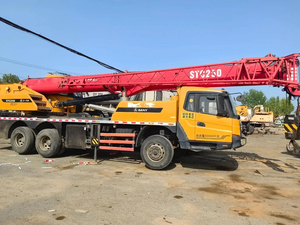
Inspection methods, procedures and precautions for cranes
Crane is an indispensable lifting equipment in fields such as construction engineering, logistics hoisting, and municipal maintenance