

Inspection methods, procedures and precautions for oil tankers
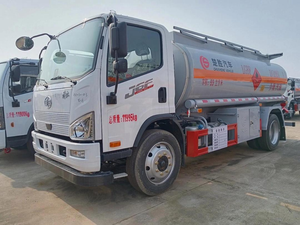
Tank trucks are the core equipment for the road transportation of hazardous chemicals. The transported media include gasoline and diesel, alcohols, acidic and alkaline liquids, asphalt, liquefied gases, etc. The consequences of accidents such as leakage, overturning, fire and explosion are extremely serious. In scenarios such as new vehicle procurement and delivery, batch capacity approval and factory inspection, second-hand vehicle transactions, and regular inspection cooperation of tank bodies, a comprehensive deep inspection covering the tank body itself, safety accessories, loading and unloading systems, static electricity dissipation and chassis integration is the core defense line for ensuring public safety, avoiding environmental risks and asset losses.
I. Overview of Inspection Methods
Based on the transportation medium of the tanker (atmospheric pressure/pressurized, normal temperature/heated), the tank structure (single tank/ multi-tanks, independent tank/ tanker semi-trailer), and the client's requirements, the inspection usually employs the following methods in combination:
Static full inspection: The vehicle is left stationary. The chassis frame, tank body appearance, tank weld seams, internal structure of the tank (accessible through manholes for inspection), pipeline valves, safety accessories, static grounding, electrical system, etc. are inspected item by item through visual inspection, touch measurement with hands, and measurement with measuring tools.
Dynamic road test: Conduct driving, steering and braking tests on a safe enclosed road to evaluate the chassis performance and the reliability of the tank fixation under full load and empty load conditions.
Tank body special tests: These include tank body airtightness/pressure test (per standard cycle or as stipulated in the contract), breathing valve/ emergency release device function test, loading and unloading pump/ pipeline circulation test, heating system function verification, etc.
Verification of safety device functions: Trigger and test each of the emergency shut-off valves (undersea valves), oil vapor recovery system, overflow prevention system, static grounding straps, fire extinguishing equipment, etc., as safety devices and accessories.
Document and label traceability: Verify the vehicle label, tank label, tank inspection report, safety accessory inspection certificate, hazardous materials transportation qualification documents, etc., to ensure compliance and traceability of the identity.
The third-party inspection is carried out based on a core execution package consisting of "static full inspection + dynamic road test + tank-specific testing + safety device verification + in-depth review of documents". Among these, the integrity of the tank and the functionality tests of its safety accessories are of the utmost importance and must not be omitted.
II. Inspection Process
1. Data Collection and Preparation for Inspection
The client provides a list of the oil tankers to be inspected, specifying the brand and model, chassis type, tank material (carbon steel/aluminum alloy/stainless steel), designed volume, number of compartments, transportation medium (UN number), design pressure (atmospheric pressure/low pressure), heating method (insulation layer/steam coil/electric heating), and applicable standards (GB 18564.1/2, GB 13392, etc.). The inspection party prepares: tape measure, thickness gauge (ultrasonic type), coating thickness gauge, flashlight (preferably explosion-proof type), combustible gas detector, explosion-proof walkie-talkie, pressure gauge set, thermometer, etc.
2. Confirmation of Venue and Safety Conditions
The inspection site for oil tankers should be selected in an open area with good ventilation, far away from fire sources, heat sources, and residential areas. Before the inspection, it is necessary to confirm that the medium inside the tank has been completely discharged, the steam chamber cleaning and replacement have been qualified (if the tank is opened and entered into the chamber), and open flame and open fire operations are strictly prohibited. A clear warning line should be set up in the inspection area, and at least 2 intact fire extinguishers should be equipped. Inspectors should wear anti-static work clothes, anti-slip shoes, safety helmets, and when entering the tank for inspection, they should be equipped with gas masks, safety ropes, and have a dedicated person for supervision. The restricted space operation procedures should be strictly followed.
3. Identity and Label Verification
Vehicle nameplate: Verify that the chassis VIN code is consistent with the certificate of conformity and driving license. Record the driving mode, curb weight, and maximum allowable total weight.
Tank body label: The tank body must have an independent label, which should include: manufacturer, tank model, factory serial number, design pressure, design temperature, volume, filling medium and corresponding UN number, maximum allowable filling quantity, and manufacturing date. It should be compared one by one with the "Tank Inspection Certificate" (for non-pressure tank vehicles) or the "Registration Certificate for the Use of Mobile Pressure Vessels" (for pressure-bearing tank vehicles).
Safety accessory nameplates: Each independent safety accessory such as subsea valves, breathing valves, emergency relief devices, and level gauges has its own nameplate and calibration label. The calibration validity period should be verified.
Document consistency: Verify the valid tank inspection reports, safety accessory calibration reports, and hazardous goods road transportation licenses (if applicable). Any missing nameplates, inconsistent information, or expired inspections must be upgraded to serious non-conformities.
4. Inspection of the tank's appearance and structural integrity - the core of intrinsic safety
External inspection of the tank body: Inspect the surface of the tank body in detail on each surface. Record the location and measure the size of dents, scratches, and pitting corrosion pits - corrosion pits with a depth exceeding 10% of the wall thickness are considered key observation items. The damaged areas of the insulation layer should be removed to inspect the condition of the inner tank skin.
Weld inspection: All longitudinal circumferential welds of the tank body, welds of the manhole flanges, welding points of the partition plates, root welds of the wave-damping plates, and welds connecting the tank body and the base frame, should all be inspected with a flashlight's strong light, to look for cracks, incomplete fusion, undercutting and other defects. Any suspected cracks must have the surface cleaned before further judgment (it is recommended to conduct PT/MT flaw detection if necessary).
Inspection inside the tank (through manhole): Key points to check:
Is there any cracking or detachment in the welding of the wave-blocking plate (wave-damping plate)?
Is the partition board leaking (especially for multi-bin tanks, the mutual leakage between the tank walls is a major hazard)?
Deposits at the bottom of the tank and the corrosion condition;
The integrity of the inner coating/liner, including the absence of bubbles and peeling (which may accelerate corrosion).
Before entering the tank, oxygen and combustible gas detection must be conducted to ensure compliance and continuous ventilation.
Wall thickness measurement: Use a calibrated ultrasonic thickness gauge to conduct multi-point thickness measurements at various grid points on the tank body, head, and bottom sections. Record the minimum value. If the wall thickness reduction exceeds the designed corrosion margin or the standard allowable value, it is determined as unqualified.
Connection between the tank body and the chassis: Inspection of the fastening of the connecting bolts/U-shaped bolts between the tank base and the auxiliary beam, and between the auxiliary beam and the main frame. Check whether the buffer pad wood/gel block is intact and not fallen off to prevent the tank body from shifting.
5. Inspection of piping and valve systems for loading and unloading
Pipeline handling: The pipelines are neatly arranged, without severe deformation or cracks. The connecting bolts of the flanges are complete and securely fastened, and there are no leakage traces on the gaskets.
Subsea Valve (Emergency Shut-off Valve): This is the most critical emergency safety device for the oil tanker. The inspection procedures include: manual operation of the valve, with smooth operation; remote testing of the pneumatic/hydraulic emergency shut-off function, with response time meeting the requirements; the appearance of the fusible plug (if equipped) is intact; confirm that the emergency shut-off button is functional at the front, rear of the vehicle, and in the remote control position. Any slow closure, internal leakage, external leakage, or failure of the remote function will be judged as a serious non-compliance.
Control valve / Ball valve: The opening and closing of the loading and unloading valves in each compartment is smooth and there is no leakage. The valve numbers and the markings on the nameplates correspond to the compartments.
Oil vapor recovery valve and pipeline: The gas phase pipe interface of the oil vapor recovery system, as well as the appearance of the vacuum valve/respirator valve, are in good condition. Connectivity test (if possible).
Heating system (if applicable): The integrity of steam coils / electric heating / insulation layers. Conduct a steam test (if conditions permit) to check for no leaks in the piping.
6. Special Inspection of Safety Accessories - The Lifeline Network for Hazardous Materials Transportation
Breathing valve / Vacuum pressure relief valve: The breathing valve function of the atmospheric pressure tanker directly affects transportation safety. Check or conduct online tests to ensure that the opening pressure/vacuum degree of the valve is within the designed range. The valve body is free of blockages and corrosion, and the dust filter is in good condition.
Emergency relief device: The sealing sealant of the emergency relief manhole cover or safety valve is intact, the spring shows no severe rust, and the action pressure calibration value is within the valid period.
Level gauge/level sensor: The level gauge displays clearly without any leakage; the anti-overflow probe/ sensor is in good condition and has been tested in conjunction with the control system - when simulating a high liquid level, it should trigger an audible and visual alarm and automatically shut down the loading/unloading pump or valve.
Static electricity dissipation device:
The copper strips/编织 wires for the equipotential connection between the tank body and the chassis are firmly connected at both ends, without any breakage.
The conductive rubber drag belt at the rear of the vehicle must be properly lowered and effective. The grounding resistance should be measured (in accordance with the contractual standards, usually no more than 5Ω).
The dedicated static grounding clips and wires for loading and unloading operations are in good condition.
Fire extinguishing equipment: The fire extinguishers are within their validity period, the pressure gauge is in the green zone, the fixing brackets are secure, and the quantity and specifications comply with the regulations.
Explosion-proof electrical equipment: The explosion-proof marks and grades of electrical equipment (pump motors, level sensors, junction boxes) in hazardous areas correspond to the transported medium. The appearance is intact and the sealing is tight.
7. Inspection of Chassis and Power Transmission System
Following the general inspection procedures for heavy vehicles, conduct static and road tests on the following systems:
Engine: Startup, idle speed, acceleration, smoke color, and inspection of three leaks.
Transmission/drive axle: Smooth shifting, no oil leakage from the housing.
Steering system: Check the free rotation range of the steering wheel, as well as the looseness of the steering gear and the ball joints of the tie rod.
Brake system: Air circuit drying tank, drainage of air storage cylinder, pipeline sealing; Focus on checking brake pads wear and ABS function. For vehicles transporting flammable or explosive media, whether an effective spark extinguisher is installed on the exhaust pipe and whether it is not facing the tank or the loading/unloading area.
Suspension system: The condition of the coil springs or air suspension is good, and the horse bolts are securely fastened.
Tires: Measurement of tread depth, abnormal excessive wear records; Rim has no deformation or cracks.
8. Inspection of the cab and the operation control system
The dashboard alarm indicator function, especially for the liquid level alarms and emergency cut-off indications related to the tank.
Power take-off switch and interlock protection (to prevent the power take-off from engaging and driving the loading/unloading pump during operation).
Control the valve indications, pump start/stop, and emergency cut-off buttons on the loading/unloading control panel.
Video surveillance system (if equipped): Images from the loading/unloading ports and the rear cameras are clear.
9. Dynamic Road Test
It is carried out under no-load or the legally permitted half-load conditions. Evaluation of starting, shifting gears, acceleration, steering and braking performance.
During the passage of bumpy sections, listen for any abnormal impact sounds between the tank body and the underframe to verify the reliability of the tank body's fixation.
After the road test, immediately recheck whether the connecting bolts of the tank base and the pipe joints are loose or have any new leaks.
10. Tank airtightness/pressure test (per demand or on a regular basis)
According to standards such as GB 18564, for normal pressure tank vehicles, after regular inspections or major repairs, an airtightness or water pressure test must be conducted. During third-party inspections, if the client requests or if it has been close to the inspection cycle since the last inspection, it is recommended to arrange this:
Air tightness test: Introduce the specified pressure of compressed air into the tank (generally 1.0 times the design pressure, for a pressure vessel, approximately 0.036 MPa). Maintain the pressure for no less than the specified time. Apply soapy water to all welds, flanges, manholes, and valve interfaces. If no bubbles are formed, it is considered qualified. The accuracy and range of the pressure gauge must comply with the specifications.
Hydraulic test: Fill the tank with water and apply pressure to the specified value (usually 1.5 times the design pressure). During the holding pressure period, there must be no leakage or visible deformation.
This test is of high risk and must be carried out by qualified inspection institutions or personnel under strict safety supervision.
11. Report Output
Summarize all the inspection item records, imaging data, and measurement data (such as wall thickness, static electricity resistance, pressure retention test records for gas tightness, etc.), mark the qualified items, observation items, and unqualified items. Form a "Third-party Oil Tanker Inspection Report" that includes photos of the tank body nameplate, a grid diagram for wall thickness measurement, test records of safety accessories, and gas tightness test records (if applicable), and deliver it to the client.
III. Important Notes
Dangerous Goods - Safety has no room for any trial and error.
The entire inspection process must be smoke-free. Personnel entering the inspection area are not allowed to carry lighters or mobile phones (non-explosion-proof type). Mobile phones must be turned off. All electronic devices should be explosion-proof or used after confirming that the gas concentration in the environment is safe.
If it is necessary to open the tank and conduct an inspection inside, the entire confined space operation procedure of "isolation - replacement - detection - approval - supervision" must be carried out. The oxygen content should be between 19.5% and 23.5%, and the concentration of flammable gas should be lower than 10% of the lower explosive limit (or in accordance with relevant standards). Personnel entering the tank must wear isolated or long-tube respirators, fasten safety ropes, and there must be a dedicated person supervising outside the tank, with a rescue tripod prepared.
The airtightness/pressure test must not use oxygen or flammable gases as the test medium. The test area must be isolated and no one unrelated to the test should be present.
The corrosion of the tank body and the thinning of its wall thickness are like "invisible time bombs"
After an oil tanker has been in use for many years, factors such as water accumulation at the bottom of the tank and corrosion of the medium can cause the tank walls to gradually thin from the inside out. It is difficult to detect this just by looking at the exterior. Once the reading of the thickness measuring instrument shows significant regional thinning, regardless of how good the appearance is, it must be determined as unqualified or to be scrapped within a time limit. This is the part where third-party inspection best demonstrates professional predictive ability.
The function of the underwater valve must be witnessed with one's own eyes.
The underwater valve is the last line of defense for the safety of oil tanker transportation - in case of a rupture of the loading and unloading pipe or a vehicle rollover, it must automatically or remotely cut off the outlet of the tank. The inspector must personally witness the remote operation, confirm the closing time of the valve with their own eyes, and check whether there is any leakage after the valve is closed. This test cannot accept any form of "oral confirmation".
The electrostatic discharge device must be tested.
The main cause of many oil tanker fire accidents is the discharge of static electricity accumulation. The anti-static grounding tape appears to be grounded, but after the rubber ages and hardens, it actually hangs above the road surface, or the connection line has broken and is not properly connected. The grounding tape must be pulled up by hand to confirm that it is in contact with the ground, and the grounding resistance should be measured using a multimeter or a dedicated resistance tester. Those that do not meet the standards will all be judged as不合格.
Document compliance - Qualifications are the legal prerequisite for operation
The inspection of oil tankers not only focuses on the technical condition, but also on compliance with operational regulations. The inspector must clearly state in the report:
Is the "Container Inspection Certificate" or "Registration Certificate for Use" within its validity period?
Is the safety accessory inspection report complete and valid?
For special scenarios such as railways and water-land combined transportation, are the relevant approval procedures in place?
If there are any loopholes at the document level, even if the equipment is in good physical condition, there will still be risks of suspension and legal issues.
Photographic Archives and Traceability
The tank body nameplate, wall thickness measurement points and readings, subsea valve model and nameplate, grounding status of the static electricity strap, pressure gauge readings for the airtightness test (with time markings), the condition of the wave dampers inside the tank, all suspected defect areas of the welds, all must be clearly photographed and attached as an appendix to the report. For the testing process of any safety devices, it is recommended to record it in video format to ensure that the key operations can withstand the technical investigation after an accident.
Conclusion
Tanker inspection is one of the most dangerous and complex areas in third-party inspection services, with the highest risk level, the broadest liability boundary, and the strictest regulatory constraints. From the loosening of an equipotential connection bolt, to a tiny crack in a tank bottom weld seam, to a sluggish closure of an underwater valve - every "minor issue" has the potential to turn into a catastrophic event on a crowded road. The value of third-party inspection lies in treating every detail with a "zero-tolerance" standard. Through instrument-based detection, process-based testing, and impartial judgment, it builds a safety barrier composed of data and expertise for the road transportation of hazardous goods. What is delivered is not only a report, but also a heavy commitment to public safety.
分享这个商品
Inspection methods, procedures and precautions for oil tankers
Tank trucks are the core equipment for the road transportation of hazardous chemicals. The transported media include gasoline and diesel, alcohols,