

CE Certification: The Key to Unlocking the European Market through Safety Inspection
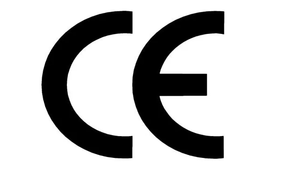
The CE marking is a mandatory safety certification mark for products entering the European Economic Area (EEA) market and is regarded as the "passport" for manufacturers to open and enter the European market. CE stands for "European Conformity" (ConFORMITÉ EUROPÉENNE). Products with the CE marking indicate that they comply with the health, safety and environmental protection requirements of EU laws and can be freely circulated within the EU member states without the need to meet the separate regulations of each country.
The core of CE certification: conformity assessment based on product inspection
The certification process is based on comprehensive testing and inspection of the product to ensure it meets the specific requirements of EU directives and harmonized standards (EN standards). The core steps are as follows:
Determine the applicable directives and inspection standards: Clearly identify the EU directives to which the product belongs and the corresponding harmonized standards, as these will serve as the basis for subsequent testing and inspection.
Assess product compliance requirements: Based on the directive and standards, determine the detailed technical specifications and safety requirements that the product must meet.
Determine the necessity of Notified Body involvement: For certain high-risk products (such as medical devices and pressure equipment), inspection and certification must be carried out by a Notified Body (NB) designated by the European Union.
Conduct product testing and compliance inspection: Send samples to qualified laboratories for testing and obtain inspection reports that prove their compliance. This report is the cornerstone of the certification application.
Compile technical documents: Draft and keep technical documents containing detailed information on product design, manufacturing, operation and compliance proof, etc., for inspection by market regulatory authorities.
Sign the declaration of conformity and affix the CE mark: After ensuring the product's compliance, the manufacturer signs the EU Declaration of Conformity (EC Declaration of Conformity) and affixes the CE mark to the product.
The key link in certification: Third-party inspection and testing
Products must undergo strict testing and inspection by professional laboratories in accordance with EU harmonized standards, and issue compliant inspection reports. For products that require the intervention of a notified body, this report must be submitted to the NB institution for final review before obtaining authoritative certification. Although the inspection institution itself does not directly issue CE certificates, the inspection certificate it issues is the basis for completing the entire certification process.
Analysis of CE Mark and Certificate Types
Marking usage regulations: The CE marking must be clearly and durably affixed to the product itself, packaging, instruction manual or warranty card, and must not be confused with other markings.
Main certificate types: In the Chinese market, enterprises mainly come into contact with the following three types of documents related to CE certification:
Declaration of Conformity (DOC): This is a self-declaration document issued by the manufacturer independently, stating that the product complies with the requirements of the European Union. Usually, it is not mandatory for a third-party institution to be involved in inspection and certification, but its validity may be questioned by the purchaser or the customs of the importing country.
Certificate of Conformity (VOC): This is a certificate issued by a third-party testing or certification body after completing product inspection, based on technical documents such as test reports (TCF). Manufacturers usually still need to sign the DOC at the same time. Its market acceptance is higher than that of the DOC.
EU Conformity Certificate (COC/EC Attestation): This is an authoritative certification issued by a notified body (NB) of the European Union for high-risk products. It enjoys the highest market recognition and authority and there is no dispute over its validity.
How to Choose Certification and Inspection Institutions
Although institutions like TÜV have high profiles, there are numerous notified bodies and compliant testing laboratories recognized by the EU. The core of CE certification lies in the conformity inspection of product safety rather than the brand of the institution. When making a choice, one should focus on the qualifications and inspection capabilities of the institution in specific product fields rather than blindly pursuing high-priced institutions. Professional certification service agencies can assist enterprises in connecting with appropriate testing laboratories and certification channels.
Typical CE Certification Application Process
Contact the certification service provider: Put forward the certification requirements.
Provide materials and confirm the plan: Submit product materials, and the service agency will confirm the standards to be inspected, the certification path and the cost.
Sign the agreement and send samples for inspection: Sign the service agreement and send the samples to the designated laboratory for testing and inspection.
Completion of inspection and obtaining certification: The laboratory completes the testing and issues the report, assists in the subsequent review (if necessary), and ultimately obtains the CE certification qualification and affixes the CE mark. The authenticity of the certificate can be verified through official channels.
Summary
CE certification is an important means to prove that products comply with EU safety regulations through standardized inspection and certification processes. The key to successfully obtaining certification lies in completing product inspections in accordance with the correct standards and preparing complete technical documents. For manufacturers, understanding the differences in the validity of different types of certificates and choosing professional inspection and certification partners are crucial for efficient and compliant entry into the European market.
分享这个商品
CE Certification: The Key to Unlocking the European Market through Saf
The CE marking is a mandatory safety certification mark for products entering the European Economic Area (EEA) market and is regarded as the "passport"