
Fabric inspection
Cotton canvas is an environmentally friendly thick fabric made of natural cotton yarn, without dyeing or bleaching. It has the characteristics of tough texture, good air permeability, and natural non-irritation. Its natural color retains the natural color of cotton fiber, which is off-white or light yellow, reflecting a natural and simple style. It is widely used in bags, canvas shoes, home decoration, handicrafts and clothing accessories. Cotton canvas is deeply loved by environmental protection and handicraft enthusiasts for its high strength, wear resistance, washable and reusable characteristics. The fabric structure is mostly plain or twill, and the thickness can be selected in a variety of ways according to the purpose. It can meet functional needs and has good plasticity and decorative effects. Because it has not been chemically dyed and finished, cotton canvas is more environmentally friendly and safe, suitable for making baby products and skin-friendly home products, and is the preferred material for consumers who pursue a natural and healthy lifestyle.


Cotton canvas inspection requirements
Grading rules
The grades of cotton natural canvas are divided into superior grade, first grade and second grade, and those below second grade are substandard.
The quality of a product includes internal quality and external quality. Internal quality is evaluated by criticism, and external quality is evaluated by matching. The lowest of these two factors is selected.
The grade of the cloth is used as the grade of the cloth.
The length of the cotton canvas after being bales shall be determined according to the sales contract between the supplier and the buyer.
Note: Usually each piece of cloth is measured as 40m.
Intrinsic quality
The intrinsic quality rating of cotton canvas is specified in Table 1.
 Appearance quality
Appearance quality requirements
The appearance quality rating regulations are as per Table 2.
 The total score allowed for defects on each piece of cloth
The total allowable score for each piece of cloth is calculated according to formula (1) and rounded to the nearest digit according to GB/T 8170.

 If the sum of all defect scores in a piece of cloth exceeds the allowable total score, it will be downgraded.
Provisions for handling fabric defects
Cut edges of 0.5 cm or more, holes of 1 cm or more, rotten edges of 1 cm or more, loose edges, unconnected shuttles, or cracks of 2 cm or more.
The six major defects of skipped flowers should be cut off in the weaving factory.
Metal debris woven into the fabric should be removed at the weaving factory.
Any defects that can be repaired in the weaving factory should be repaired before leaving the factory.
Provisions on false cutting and splicing
The defects of false cutting should be rated as 4 points or 3 points as unrepairable defects, and each section of cloth after false cutting should be first-class product.
If the user allows false cutting and splicing, false cutting and splicing can be implemented. False cutting should not exceed 2 places for double joints, and 3 joints and more
The above should not exceed 3 places.
The total amount of false cutting and splicing should not exceed 20%, of which the splicing rate should not exceed 10%.
The false cut position should be clearly marked.
Cotton canvas inspection test and testing methods
Density shall be in accordance with FZ/T10003. Density deviation rate shall be calculated according to formula (2) and rounded to one decimal place in accordance with GB/T8170.
 The determination of the pulp-free dry mass per unit area shall be carried out in accordance with FZ/T10026. The deviation rate of the pulp-free dry mass per unit area shall be calculated according to formula (3) and rounded to one decimal place in accordance with GB/T8170.
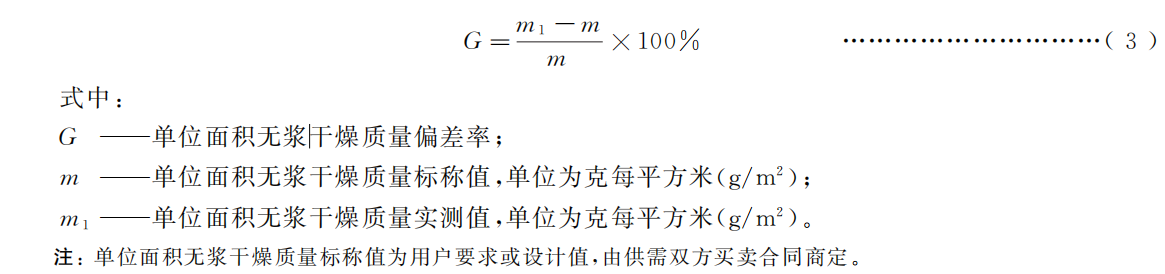 The breaking strength determination is carried out in accordance with FZ/T10003, and the breaking strength design value is carried out in accordance with FZ/T10025. The breaking strength deviation rate is calculated according to formula (4) and rounded to one decimal place in accordance with GB/T8170.

 The inspection of cotton nep impurity defect rate and cotton nep defect rate shall be carried out in accordance with FZ/T10006.
Width and length measurements are carried out in accordance with FZ/T10003. Width deviation rate is calculated according to formula (5) and rounded to one decimal place in accordance with GB/T8170.

Share this product
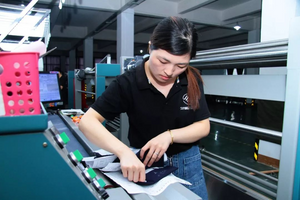
Fabric inspection
Cotton canvas is an environmentally friendly thick fabric made of natural cotton yarn, without dyeing or bleaching. It has the characteristics of tough texture, good air permeability, and natural non-irritation. Its natural color retains the natural color of cotton fiber, which is off-white or light yellow, reflecting a natural and simple style. It is widely used in bags, canvas shoes, home decoration, handicrafts and clothing accessories.