

A Comprehensive Guide to Inspection and Certification of Leather Goods Products
Opening the wardrobe, a dazzling array of bags is the dream of many girls. As one of the high-end products, leather products have strict standards in the processes of inspection, factory inspection, testing and certification. The following are the main quality control points for leather goods (bags).
I. Appearance and Technical Requirements (Core of Inspection)
During the appearance inspection of leather goods, the inspector should check the following items one by one:
Bag shape: Full and upright in form, with natural and smooth arcs, and smooth adhesion. The folded corners are symmetrical without any sharp corners, neat and clean. The materials used in all parts have the same color and feel. The leather surface should be free from damage, obvious stains or black spots, no staining, and must not have any obvious scratches, bumps or depressions. Blemishes must not be covered with edge oil. The brand label is clear and upright. The decorative accessories are installed smoothly, firmly and symmetrically, with no obvious visible defects.
Hardware: All parts of the hardware have uniform colors, correct shapes and colors. No rust spots, discoloration, poor electroplating, oxidation or scratches. The hardware installation must be firm and the functional accessories must fulfill their functions.
Zipper: Correct color and model, no misalignment or missing teeth, straight stitching, and consistent margins. The arc position is naturally smooth and round without wrinkles, and the pulling and closing are smooth. The color of the zipper fabric should match the main material (unless otherwise specified). The chain window and zipper leather strips have no sharp corners.
Oil edge: The color is basically consistent with the main material (except for special requirements), smooth and even, without marks, no delamination, no overlapping, no overflow, and clean and tidy. The edge oil color matches the main or auxiliary materials. The oil edge is smooth and flexible, adhering closely without cracking or peeling.
Sewing lines: The lines are neat, the lines are straight, the stitches are even, and the tightness of the surface lines and bottom lines is consistent. The surface lines have a three-dimensional effect, and there are no paper white spots at the bottom line needle positions. It is strictly prohibited to jump wires, break wires, have too many duplicate wires, or form beads and knots. Pin size density: 7-8 pins per inch.
Inner lining: The inner lining is sewn firmly without any notches or loose threads. The softness and hardness of the front and rear panels and the bottom support are moderate. The bottom support is flat and smooth, with no glue marks or creases. There must be no overturning, reversing or freezing of the vehicle. The inner fabric should be clearly distinguished from the bottom surface, and there should be no color difference in the same bag. The inner pocket and the inner circumference of the leather bag should fit closely, neither too large nor too small. The opening of the inner pocket (mobile phone pocket, business communication bag) needs to be reinforced with the sewing line to prevent opening. The light-colored lining fabric must not show glue marks or other impurities.
Inner mark: Clear graphics and text, with the hardware marks placed upright.
The above appearance inspection items are the basis for goods inspection and also the reference for evaluating the factory's technological level and incoming material control during factory inspection.
Ii. Requirements for Functional and Load-bearing Parts (Performance Inspection and Certification)
Hardware function: All hardware does not break or fall off under normal use and functions normally.
Zipper function: Smooth opening and closing, firm pull head and pull ring.
Magnetic buckle function: Sufficient magnetic force, no abnormality after repeated opening and closing tests.
Reinforcement of force-bearing parts: The connection positions such as shoulder straps, handles, back straps, ears, business bags, bag openings, inner chain Windows, and other force-bearing parts need to be re-needled, and high-quality reinforcing materials should be selected.
Load-bearing capacity: Under normal use, the handle, shoulder strap, hook and ear do not fall off or break, and the bag body does not deform or crack. When conducting the test, pull hard. If there is any breakage, it is considered unqualified. When conducting the inspection, the back and bag of 300mm and 400mm and above specifications should be loaded with 4kg and 5kg respectively. The inspector or developer should work with the factory technicians to solve the problem, which should be signed and confirmed by the production supervisor.
Edge bone: The edge bone bag has no broken bones or eating bones. For edge bags, pay attention to whether the bag opening, the burst opening and the end part are cut flat.
These functional tests are important items in product certification that simulate daily use.
Iii. Testing Methods and Judgment Rules (Basis for Inspection and Certification)
Specification measurement: Use a meter stick (with a minimum scale of 1mm) for measurement.
Sensory inspection: Under natural light, visual inspection and touch are the main methods.
Sampling and AQL: A sampling inspection pass rate of ≥90% is considered qualified. If it is less than 90%, double the sampling for re-inspection. If it is still less than 90%, it will be judged as unqualified. It is recommended to follow the AQL standard.
Load test: If there is no breakage when pulled with force, it is qualified.
Important judgment: Any product that has defects that affect its basic usage functions is classified as an unqualified product. This rule should be incorporated into the certification process.
Iv. Association between Factory Audit and Certification
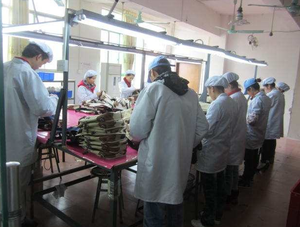
Supplier factory inspection: It is necessary to verify the leather material cutting, oil edge, sewing, hardware assembly and other processes of the leather goods manufacturing enterprise. Calibration records of inspection equipment (tensiometers, calipers, thickness gauges, etc.); Qualifications of inspection personnel; And the hazardous substance certification of raw materials (leather, oil edge materials, hardware) (such as REACH, hexavalent chromium, azo dyes, etc.).
Product certification: Exported leather goods must comply with the certification standards of the target market (such as EU REACH, US CPSIA, China GB 20400, etc.). When inspecting the goods, check the consistency between the product labels, tags and certifications.
Continuous improvement: For non-conformities identified during inspection (such as oil edge delamination, unsmooth zippers), a rectification report should be formed. Through factory inspection, a closed loop should be followed up, and a quality traceability file should be established.
Through the above inspection, testing, factory inspection and certification processes, it can be ensured that leather goods products fully meet the standards in terms of appearance, function, durability and chemical safety, and enhance brand reputation. For more inspection knowledge, please keep following this column.
Share this product
A Comprehensive Guide to Inspection and Certification of Leather Goods
A Comprehensive Guide to Inspection and Certification of Leather Goods Products