
Cross-Region Inspection Guide: Why Product Inspection Fails at a Distance — and How Digital QC Fixes It
A product is made in Suzhou, sold to a consumer in Guangzhou, but inspected at a factory thousands of miles away. This is the norm for scaled e-commerce expansion.
According to data released by the Guangzhou Internet Court in March 2025, from 2022 to 2024, the court accepted online transaction dispute cases with annual growth exceeding 50%. Among them, goods not matching descriptions accounted for 32.05%. The court noted in its analysis that while most platforms now offer inspection services, “inspection content and standards are not unified, inspection quality varies, and some inspection conclusions are incomplete, fail to clearly flag key issues, and cannot compare goods against the seller’s own description.”
Behind these problems, a significant share of disputes stem from an inability to determine responsibility—a direct consequence of broken evidence chains in cross-region, cross-stage inspection.
When the inspection agency and the merchant are thousands of miles apart, three questions emerge: Are the credentials reliable? Is the process compliant? Who is accountable when something goes wrong?
1. Three Pain Points: Why Is Cross-Region Inspection So Difficult?
1.1 Standards Are Not Unified: The Gap from “After-Sales Verification” to “Pre-Sale Authentication”
The first challenge in cross-region inspection is that “unified standards” can be executed very differently across regions.
In its judicial practice, the Guangzhou Internet Court found that although inspection services launched by second-hand trading platforms have addressed trust issues between buyers and sellers to some extent, “platform inspection content and standards are not unified, inspection quality varies, and some inspection conclusions are incomplete, fail to clearly flag key issues, and cannot compare goods against the seller’s own description.”
The court recommended that “industry associations and second-hand trading platforms can develop unified standards for second-hand goods inspection, improve certification of inspection bodies and standards for inspection content, and raise the standardization level of inspection and testing on second-hand trading platforms, so that inspection can better objectively reflect the condition of goods and avoid disputes.”
1.2 Process Opacity: Unseen Stages Carry High Risk
Merchants cannot supervise remote inspection in real time—this is the biggest risk in cross-region inspection. Most remote agencies provide only a “final report,” with no inspection video and no raw data. Whether the report is genuine depends entirely on the agency’s professional integrity.
In judicial practice, the opacity of remote inspection also creates challenges for case adjudication. In a series of cases heard by the Dengta City People’s Court in 2025, the applicant had sales contract disputes with seven online stores. Because the defendants were mostly out of town, the court innovated by using video links for inspection, completing the return of all goods the same day. For unreachable small shops, the court commissioned the local court to retrieve business registration information and added the operator as a person subject to enforcement.
This case shows: when remote inspection lacks transparent supervision, even courts need “video links” and “cross-province coordination” to secure evidence.
1.3 Hard to Trace for Enforcement: Cross-Region Complaints Take a Long Time
Even when problems are found, accountability remains difficult. Remote agencies and merchants belong to different regions and lack unified regulatory coordination. Merchants must file complaints across regions, and the process is complex and lengthy.
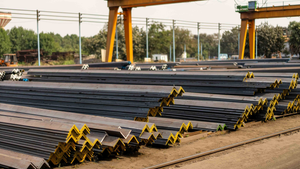
A cross-province steel quality dispute heard by the Tianjin Beichen District People’s Court is representative. The plaintiff, a Shanxi company, claimed that steel sold by the defendant, a Tianjin company, was substandard—but the steel was stored in Shanxi. The defendant refused to go to Shanxi to cooperate with inspection, while the plaintiff feared freight losses and evidence loss risks from shipping the steel to Tianjin. The case stalled. Eventually, after repeated communication, the judge got both parties to agree to “cross-province logistics inspection”: the plaintiff shipped the disputed steel to Tianjin, and the judge organized both parties to inspect at the logistics park and mediated on the spot.
The judge admitted: “Both sides were highly confrontational.” The difficulty of securing remote evidence is clear.
2. Industry Reference: Exploring More Advanced Quality Control
Facing this common cross-region challenge, the domestic e-commerce and quality inspection sectors have begun exploring more upstream, more authoritative, and more traceable quality control models, providing practical reference for the entire industry.
The industry widely recognizes that traditional sampling and after-the-fact verification can no longer meet the needs of cross-region, long-chain supply chains. Moving authoritative authentication upstream, full-volume verification, and one-item-one-report has become the key direction for improving product trust. Authoritative testing bodies with national credentials and nationwide or global service networks can complete standardized authentication directly at the warehousing and dispatch stages, reducing “goods not matching description” at the source and shifting from “after-sales dispute verification” to “pre-sale quality gatekeeping,” effectively lowering transaction disputes and enforcement costs.
The core value of this model lies in: using unified authoritative credentials, standardized inspection processes, and verifiable authentication reports to break geographic limits—so cross-region supply chains no longer suffer quality trust crises caused by “can’t see, can’t trust, can’t trace back.” It also sets an upgrade benchmark of “authoritative + upstream + traceable” for the third-party inspection industry.
3. Regulatory Innovation: Customs Breakthrough Practices
Beyond commercial inspection, the customs system is also using digital tools to solve cross-region supervision challenges. These innovations are directly relevant to third-party inspection services.
3.1 Remote Local Inspection: From “Must Be On Site” to “Online Interaction”
In November 2025, Zhongwei Customs, under Yinchuan Customs, conducted export origin inspection and quarantine operations via remote video link for 16.8 tons of cauliflower declared by Zhongwei Liuhe Vegetable Planting Co., Ltd. This marked the official landing of the remote local inspection model for import and export goods in Ningxia.
Zhongwei Customs relied on the customs local inspection system and the “Pocket Single Window” app to complete inspection instructions online in real time. The entire operation time was compressed to under 25 minutes, and the inspection cycle was shortened by four-fifths.
A manager at Liuhe Vegetable Company reported: “Now, through mobile remote video link, inspection can be completed in under an hour. It not only saves waiting time but also reduces vegetable freshness loss caused by waiting for inspection.”
Staff from the Yinchuan Customs Inspection Division estimate that under the remote local inspection model, logistics speed for export order companies improved by 7%.
3.2 The Smart Supervision Trend
The General Administration of Customs has clarified in business consultation responses that export goods should in principle “be inspected at the place of production,” but “the General Administration of Customs may designate inspection at other locations based on the needs of facilitating foreign trade and import and export commodity inspection work.” This provides policy space for cross-region, cross-location inspection.
These customs practices show: remote visual supervision has become an important direction for solving cross-region inspection challenges.
4. Breaking Through: Digital Solutions for Cross-Region Inspection
Combining the innovative practices of customs remote visual supervision, the industry has clearly pointed to one trend: authoritative credentials + transparent process + traceable data is the inevitable direction for cross-region inspection.
But for the vast majority of SMEs, building their own inspection system or bringing in an authoritative agency on-site is unrealistic. This is where digital inspection platforms come in.
4.1 Standardized Network: Credentials No Longer Vary by Location
Leading third-party quality control providers typically hold authoritative certifications such as ISO9001, ISO27001, CNAS 17020, and AQSIQ. According to the China National Accreditation Service for Conformity Assessment, ISO/IEC 17020 is the international accreditation criterion for inspection bodies. Obtaining this certification means the body’s inspection capability and quality management level meet international standards, and its inspection reports carry international credibility.
Such providers operate offices in 30+ countries and regions, including China, India, Vietnam, Bangladesh, Colombia, and Poland. All locations must meet CNAS 17020 certification standards, ensuring unified credentials and consistent inspection capability.
4.2 Full-Process Visibility: No More Black Box Operations
To address the “can’t see” pain point in remote inspection, digital platforms have developed order management systems that support GPS check-in, live video streaming, and blockchain evidence storage:
- Merchants view the inspection process in real time via mobile; inspectors must photograph factory gate check-in and record video of key stages.
- Inspection data (raw inspection records, video) uploads in real time and cannot be tampered with.
- Some platforms have also developed VR panoramic factory audits, achieving scenario-based supplier audits for the first time.
4.3 Digital Flow: No More Low-Efficiency Delays
Digital platforms use “electronic reports + system direct connection” to replace traditional paper courier:
- Reports sync to merchant systems in real time after generation, with no format conversion needed.
- Cross-border communication supports multilingual system interfaces, greatly reducing time-zone response delays.
4.4 From System to Technology: Complete Service Assurance
Leading providers have established complete service quality assurance systems:
- Inspector management: Pre-employment assessment and training, monthly KPI review.
- Risk protection: Liability insurance of up to RMB 2 million.
- Integrity management: Inspectors sign integrity declarations; 24-hour complaint hotline.
- Process control: Random audits counted in KPI, app GPS check-in, three-party evaluation after service.
The Key: Choosing the Right Digital Inspection Partner
The core difficulty of cross-region inspection is information asymmetry. From the Guangzhou Internet Court’s 32.05% goods-not-matching complaints, to the Dengta Court’s “video inspection + cross-province coordination,” from industry-level exploration of authoritative upstream full inspection, to Yinchuan Customs’ innovative remote inspection practice—these cases point to one conclusion: when merchants pay but “cannot see” the process, and the report becomes the only trust credential, blame-shifting becomes inevitable.
The direction is clear: unified standards, transparent processes, and traceable data are the quality infrastructure modern supply chains must complete.
Relying on a global inspection network across 30+ countries, authoritative certifications, full-process visibility, blockchain evidence storage, and real-time electronic reports, digital inspection platforms provide one-stop cross-region inspection solutions—making remote inspection truly supervisable, traceable, and accountable.
If you are facing cross-region inspection challenges—remote factories, opaque processes, or difficulty tracing responsibility—contact us to build a digital inspection plan that works across borders.
Share this product
Cross-Region Inspection Guide: Why Product Inspection Fails at a Dista
Chinese courts saw online transaction disputes rise over 50% annually, with 32.05% involving goods not matching descriptions. Here is why cross-region inspection breaks down — and how digital QC restores traceability.