

Detailed Analysis of Inspection and Certification Standards for Water Heater Products: A Comprehensive Quality Control Guide from Ignition Devices to Safety Protection
I. Inspection Standards for Electronic Ignition Devices
During the inspection of the ignition device, the inspector should pay attention to the following points:
Spark quality: The force should be sufficient, the spark should be bright and clear, and the sound should be loud and crisp. Only in this way can reliable ignition be ensured. If the spark is weak and the sound is low, one should first check if the battery has deteriorated; otherwise, it might be that the control circuit has poor contact or the component parameters have changed.
Ignition success rate: According to national standards, for 10 consecutive starts, the ignition should occur at least 8 times. During purchase or inspection, multiple tests can be conducted for observation. During the start-up process, there should be no explosion or combustion phenomenon.
Criteria for judgment: If the ignition success rate is lower than 80% or there is a detonation, it is deemed as unqualified.
II. Hot Water Output Inspection Standards
The hot water output is the core indicator of the performance of a water heater. The inspector should conduct the inspection according to the following methods:
Nominal meaning: The water output per minute indicated on the model refers to the water output at a temperature rise of 25℃ (for example, the water output when the temperature rises from 20℃ to 45℃).
National standard: The actual water output should be no less than 10% of the specified value to be considered qualified. That is, for a 8-liter water heater, the water output should reach 7.2 liters or more to be qualified.
Simple inspection method: After the water heater is operating normally, if you can feel the water is hot and the water output is large, then it is in good condition.
Temperature safety reminder: According to national standards, the maximum temperature rise of a water heater is 50℃. Generally, it is not advisable to allow the outlet water temperature to exceed 70℃. Using a reduced water flow to obtain hot water at a high temperature is likely to cause water pipes to scale and affect the performance of the water heater.
Judgment criteria: If the water output is less than 90% of the nominal value, it is judged as having poor performance.
III. Inspection Standards for Fire Extinguishing Protection Devices
The fire extinguishing protection device is a key item in the safety certification of water heaters. The inspectors must conduct a strict inspection:
National standards require that water heaters should have an ignition failure protection device. In case of an unexpected situation (such as strong wind or gas supply interruption), the water heater should be able to automatically close the intake valve.
Simple inspection method: For non-automatic water heaters, after lighting the constant flame, blow out the constant flame with your mouth. After a few seconds, you will hear the "click" sound indicating that the valve has closed.
Criteria for judgment: If the intake valve does not close automatically after the engine is shut off, it is a fatal defect and the entire batch should be rejected.
IV. Inspection Standards for Gas Water Heater Structure and Process
1. Structural Classification (Re-defined by New Standards)
Direct exhaust type water heaters produce CO and CO₂ during the combustion process, which are harmful to human health. Since 2000, the production of such heaters has been prohibited by the state, and the relevant standards have been deleted.
The new standard classifies gas water heaters into three categories: flue-type, forced exhaust-type, and balanced-type. During the inspection process, it is necessary to confirm that the product type complies with the current standards.
2. Supplementary Requirements for Electrical Control Section
With the advancement of technology, gas water heaters have incorporated electrical control components (such as automatic control, electrical safety, intelligent remote control, and strong exhaust ventilation through wired connections). The new standard has added relevant safety provisions.
During the inspection, it is necessary to check whether the electrical control functions are normal and whether the electrical safety meets the certification requirements.
3. Specifications for New-Type Water Heaters
The new standard has standardized the structure, performance requirements and testing methods for both heating-type and water-heating - heating dual-purpose water heaters.
The product model compilation method was simplified and redefined, and a schematic diagram was provided.
While standardizing the existing mature technologies, we also leave room for the development of new technologies.
V. Appearance and Structure Inspection Standards
During the inspection of the water heater's appearance, the inspector needs to check each item as follows:
Outer surface: The outer surface of the barrel is smooth and clean without any oil stains. There shall be no obvious scratches or dents. The number of scratch and dent areas on the entire outer surface shall not exceed 3:
Scratch: Length of the line is less than 50mm, and depth is less than 0.1mm.
Bruise: Diameter of the point < 4mm, Depth < 0.3mm
Stickers: All the stickers are correctly and neatly placed.
Foaming layer: There shall be no overflow edges, coarse pores, collapsed bubbles or separated bubbles.
Inner liner: The inner liner should be clean, without any remaining bubbles or other debris.
Vacuum tube hole: For the open-type inner and outer tank body straight hollow tube holes, there should be no obvious skewing phenomenon. The offset amount along the entire length of the vacuum tube should be less than 40mm.
Color spray coating: The coating color of the color spray type cylinder should be the same as the sample, and it should pass the weathering test, meeting the requirements of GB/T 1865-1997 "Paints and Varnishes - Artificial Climate Aging and Artificial Radiation Exposure".
Judgment criteria: If the values exceed the above limits, it is determined as an unqualified appearance or structure.
VI. Link between Factory Audit and Certification
1. Supplier Capability Assessment (Key Point of Factory Audit)
During the factory audit, water heater suppliers need to focus on assessing:
Quality control and inspection records of the ignition device production line
Calibration and maintenance of the hot water production rate testing equipment (flow meter, thermometer)
The simulation testing capability of the engine shutdown protection device
Safety certification certificate for electrical control components
Process control for key procedures such as foaming, coating, and inner liner welding
Qualifications and Training of Inspectors
2. Product Certification Requirements
For water heater products to enter different markets, they must comply with the corresponding certification standards:
Target market Certification requirements Inspection focus
Chinese market CCC certification, GB 6932 "Domestic Gas Rapid Water Heater" Ignition performance, hot water production rate, flameout protection, electrical safety
European market CE mark, Gas Appliance Regulation (GAR), ErP Energy Efficiency Directive Thermal efficiency, emissions, safety
American market ANSI Z21.10.1, CSA certification Carbon monoxide emissions, overheating protection
During inspection, it is necessary to verify the consistency between the product label and the certification certificate, and confirm that safety components such as the flameout protection device have obtained certification.
3. Continuous improvement
Any quality issues identified during the inspection should be promptly reported to the supplier.
Repetitive issues need to be followed up and rectified through factory inspections.
Establish a quality traceability record to support product certification audits
Regularly update the inspection standards to adapt to the changes in regulations in the target market.
VII. Sampling and Decision Rules
1. Sampling Plan
Determine the sampling quantity and acceptance level based on the AQL (Acceptable Quality Limit) standard.
For safety projects (such as fireout protection and electrical insulation), it is recommended to adopt a zero-defect sampling plan.
2. Defect Classification
Defect Category Definition Judgment Criteria
Fatal Defect Engine shutdown protection failure, detonation, gas leakage, electrical breakdown Zero tolerance. Any defect found will result in the entire batch being deemed non-conforming.
Major Defect Insufficient ignition success rate, insufficient hot water production, structural mismatch, severe appearance defects Judged according to AQL standards
Minor Defect Slight scratches, skewed stickers, packaging flaws Judged according to AQL standards
3. Inspection Report
All inspection results must be recorded in the formal inspection report.
Including ignition test videos/records, actual measured data of hot water production rate, test results of fireout protection, and photos of appearance defects
Clearly define the conclusion and recommendations
Share this product
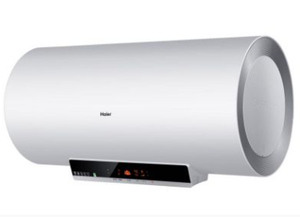
Detailed Analysis of Inspection and Certification Standards for Water
Detailed Analysis of Inspection and Certification Standards for Water Heater Products: A Comprehensive Quality Control Guide from Ignition Devices to Safety Protection