

Guidelines for Incoming Material Inspection, Quality Control and Certification of Stationery Products
To ensure that the quality of the raw materials for stationery products meets the requirements, the inspectors need to conduct a systematic assessment of the products based on unified inspection standards and certification norms. The following are the main inspection points for stationery products:
1. Packaging Inspection (Goods Inspection)
Check whether the products are packed and boxed in the prescribed quantities. No mixed versions, insufficient packing, or mixed packing is allowed. Padding paper and cushioning boards should be placed inside the packaging to ensure the products are flat and protected.
Check if a certificate of conformity is attached. The content should include the production date, shelf life, product name, specification, quantity, manufacturer, etc. The information on the certificate of conformity should be consistent with the certification mark.
II. Appearance Inspection (Product Inspection)
Verify that the product's color, style, and material are correct. The fonts and patterns should be clear, without misprints, omissions, or ink contamination.
Check for any deformation, damage, scratches, stains, fractures, notches, ruptures, dents, rust marks, burrs, etc. on the surface. The product must not have any non-functional sharp points or edges (these are key points in the safety inspection).
III. Structural Dimension Inspection (Verification)
Check the structural stability and assembly quality of the product, and ensure that all accessories are not loose (such as folder rivets, stapler connectors, pencil cases hinges, etc.).
Check whether the product size and model comply with the purchase and usage requirements. It is not allowed to exceed the general tolerance range. Dimension inspection is an important basis for verifying the process control capability of suppliers during the factory inspection.
IV. Actual Usage Testing (Performance Inspection)
Check whether the product functions meet the requirements. No situations that affect actual usage are allowed (such as pen writing breaks, uneven thread, ineffective eraser, loose folder, etc.). The results of the function inspection should be included in the certification report.
V. Drop Test (Reliability Test)
Drop the product from a height of 36 inches onto a rubber surface five times (front, back, top, one side, and any other direction), and check for any damage. This test simulates the impacts during transportation and usage, and is a key item in the inspection process.
VI. Ink Adhesion Test (Surface Coating Inspection)
Place an eraser vertically on the surface of the product's silk-screened area, apply a force of 1/2 to 1/4 pound, and rub in the same direction for 10 times. The surface should show no damage. This assesses the adhesion of the ink or coating, meeting the durability requirements stipulated in the certification.
VII. Tensile and Torque Testing (Assembly Strength Inspection)
This test is conducted to evaluate the assembly strength of the product. The tensile force requirement is 10 kilograms of force, and the torque requirement is 5 kilograms per centimeter (if not specified in the product specifications). After the test, the product shows no damage. This inspection can verify the stability of the production process and is also an indicator for assessing the assembly process during factory audits.
Summary: The inspection of stationery products needs to cover multiple aspects such as packaging, appearance, structure, function, reliability, adhesion and strength. Through systematic testing and referring to relevant certification standards (such as GB 21027 "General Requirements for Safety of Student Products"), enterprises can ensure consistent quality of incoming materials and reduce the risk of returns. At the same time, the factory inspection should verify whether the suppliers have the corresponding testing capabilities and calibration records, thereby establishing a complete quality traceability system.
Share this product
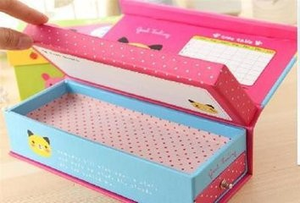
Guidelines for Incoming Material Inspection, Quality Control and Certi
Guidelines for Incoming Material Inspection, Quality Control and Certification of Stationery Products