
Inspection and the "Shinobi Gate" of Damage: How to Use Full-Chain Inspection and Certification to Break Through the Stalemate of After-sales Escalation?
Inspection and the "Shinobi Gate" of Damage: How to Use Full-Chain Inspection and Certification to Break Through the Stalemate of After-sales Escalation?
In e-commerce after-sales disputes, the core issue is the determination of the connection between the inspection process and the damage of the goods. Due to the absence of a traceability mechanism and unclear liability division, merchants, inspection agencies, and logistics providers often shift the blame onto each other, which not only damages the consumer's rights and interests but also leads to a chain reaction of declining brand reputation of the merchants and a decrease in industry trust. When a product goes from the factory to the hands of the consumers, it passes through multiple stages such as inspection, storage, and logistics. Any missing record at any point may turn the responsibility determination into an "unsolvable mystery".
I. Traceability Mechanism: Fragmentation in the Inspection and Testing Process
The current traceability system for product inspections in e-commerce has significant shortcomings and is unable to support the determination of responsibilities. This "fragmentation" is mainly manifested in three aspects:
One issue is that the inspection record lacks completeness. Most merchants only record the "inspection result (qualified/不合格)", but fail to record key details such as the inspection time, testing items, used equipment, and the qualifications of the inspectors. This makes it impossible to recreate the actual inspection scene. In a post-sale dispute, a consumer complained that the received household appliances had functional faults, but the merchant could only provide a label indicating "qualified", unable to prove that the function was tested during the inspection. Eventually, they found themselves in a passive position in the responsibility determination. A complete inspection certification should include: who conducted the inspection (inspector's certification number), what was used for the inspection (detector model), what was inspected (list of testing items), and what was found (original test data).
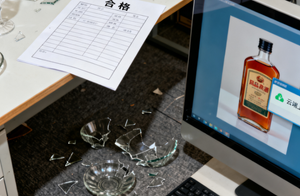
The second issue is the insufficient retention of inspection images. The photos and videos taken during the inspection mostly focus on "partial shots", failing to cover the entire product and key parts. Moreover, they were not uploaded to the cloud for evidence storage, making them prone to loss or tampering. For instance, a consumer received damaged glass tableware, but the merchant claimed there was no damage during the inspection, yet they could only provide a photo of the front of the tableware, unable to prove that there were no hidden cracks on the sides. In the absence of comprehensive factory-level image records, the determination of responsibility can only degenerate into a "name-calling battle".
The third issue is the discontinuity in the traceability of the logistics process. Most logistics companies only record the information about the receiving and dispatching of goods, but do not record the temperature and humidity conditions, as well as the vibration situations during the transportation process (for perishable and fragile items). They are unable to determine whether the damage to the goods occurred during the transportation stage. When the inspection report shows "qualified", but the goods received by consumers are "damaged", the missing part is precisely the monitoring data of the logistics process.
These "fragmented" records result in a lack of a complete chain of evidence when dealing with after-sales disputes, making it difficult to determine responsibility and thus hindering the resolution of the disputes.
II. Blaming Shift: A Multi-party "Scorched Earth" Battle Without Official Certification
The absence of a traceability mechanism directly leads to the "pass-the-buck" phenomenon in post-sale disputes. Merchants claim that the inspection agency "failed to detect the problem", arguing that the product already had hidden flaws during the inspection process; the inspection agency accuses the logistics party of "damage during transportation", insisting that the product was in good condition during inspection and the damage occurred during transportation; the logistics party then blames the consumer for "manually damaging the product", refusing to take responsibility. The three parties shift the blame onto each other, with no one taking the initiative to assume responsibility. Eventually, the conflict is passed on to the consumers.
The 2024 survey on e-commerce after-sales disputes shows that the average handling period for "inspection - logistics liability determination" disputes is 7 days, which is 3.5 times longer than that of ordinary disputes (2 days), and the consumer satisfaction rate is only 35%, far below the industry average (70%). What's more serious is that the shifting of responsibility will lead to "secondary disputes": due to the unresolved problems, consumers will file complaints with the platform or report to the regulatory authorities, causing the merchants to face platform penalties (such as deduction of points, reduction of ranking); if the consumers expose the issue on social platforms, it will also trigger negative public opinion.
In 2024, a cosmetics company was exposed by consumers on Xiaohongshu for its irresponsible handling of issues. Within three days, it lost 12,000 followers and saw a 30% drop in sales. This case demonstrates that without authoritative inspection and certification endorsements for after-sales handling, it not only fails to resolve disputes but may also lead to more serious brand crises.
III. Derived Issues: Loss of Consumer Trust and Damage to Industry Reputation
The long-standing problem of responsibility definition has led to a continuous decline in consumers' trust in e-commerce platforms. The 2024 e-commerce consumer survey shows that 42% of consumers stated that "they are afraid of being shirked of their responsibilities after purchase and thus dare not buy high-value goods (such as household appliances, luxury items) on e-commerce platforms"; 35% of consumers will permanently abandon the platform after experiencing a responsibility shirking dispute. The shift in consumption of high-value goods is particularly evident, with consumers more inclined to choose offline physical stores - where they can inspect the goods in person, have clear responsibility for after-sales service, and avoid getting trapped in the predicament of multiple shirking.
From an industry perspective, frequent disputes over responsibilities have also damaged the overall reputation of the e-commerce sector. A report from a retail industry indicates that in 2024, the sales of home appliances in the offline market increased by 12% year-on-year. Part of the reason for this is consumers' concerns about the definition of after-sales responsibilities in e-commerce. This loss of trust not only affects the operation of individual merchants but also hinders the sustainable development of the entire e-commerce industry.
What is more worthy of attention is that the e-commerce ecosystem lacking authoritative inspection and certification is falling into a vicious cycle of "bad money driving out good money". Honest merchants, due to the high cost of having complete inspection records, find themselves in the same passive position as those with "missing records" in disputes; while the merchants with actual quality problems are taking advantage of the loopholes in the traceability mechanism to evade responsibility. To break this deadlock, a standardized inspection system and authoritative inspection and certification must be introduced.
IV. Solution: Comprehensive Link Inspection and Certification to Rebuild the Trust System
To solve the problem of defining after-sales responsibilities, the key lies in establishing a "full-dimensional traceability + authoritative certification endorsement" quality control system.
4.1 Establish a comprehensive inspection and traceability system
A complete inspection and traceability system should achieve "full information recording + full scene evidence storage":
Detailed record: including the time and location of the inspection, the name of the inspector (with the qualification certification number), the model of the testing equipment (such as the color difference instrument number), and the test data (the original values rather than just "pass/fail").
Comprehensive evidence preservation: Capture the full view of the product (360° video), key parts (such as clothing seams, appliance interfaces), and detection process videos. Upload them to the cloud in real time (support permanent access), and simultaneously store them on the blockchain.
Logistics connection: Connect with the logistics system, synchronize temperature and humidity data as well as vibration data during transportation, and determine whether any damage to the goods occurred during the transportation process.
After introducing a comprehensive inspection and traceability system, a certain electronics retailer reduced the post-sale dispute resolution time from 7 days to 2 days, and increased consumer satisfaction from 35% to 80%. These figures indicate that when the inspection process is traceable and the inspection data can be verified, the issue of responsibility determination is no longer a problem.
4.2 The Preceding Value of Authorized Inspection and Certification
In October 2025, Vipin reached a deep cooperation agreement with China General Certification Corporation's Luxury Goods Appraisal Center - the appraisal experts from China General Certification Corporation were stationed in Vipin's warehouses to conduct 100% comprehensive inspections on high-end consumer goods, and gradually achieve full coverage of "one item, one appraisal, one report". This was the first time that a national-level third-party institution fully entered the self-owned warehouse of an e-commerce platform to realize the transformation from "post-sale verification" to "pre-sale appraisal" for high-end consumer goods.
The core value of this model lies in: replacing traditional random inspections with authoritative verification and certification, ensuring that every product has an "identity verification" upon leaving the factory. When the inspection reports are issued by authoritative institutions with qualifications such as CNAS and CMA, and when the inspection data is linked to the blockchain, the determination of responsibility will no longer rely on the conflicting statements of each party.
4.3 Technological Empowerment through Digital Inspection
The in-depth application of Internet of Things (IoT) technology is providing a fresh perspective for resolving the issue of liability determination. Through RFID tags and intelligent sensors, it is possible to achieve full tracking of the goods - recording key data such as wearing duration, washing frequency, transportation vibrations, temperature and humidity changes, etc. When consumers apply for returns, the platform can retrieve the IoT data package and accurately determine whether the goods have been actually used and at which stage the damage occurred.
The "Guiding Opinions on Improving the Quality of Products and Services on Online Trading Platforms" issued by the State Administration for Market Regulation and other departments clearly stipulates that in key product sectors, a "Product Digital Passport" program will be piloted. This aims to establish a mechanism where the production source is labeled, the platform verifies and displays the code, and consumers recognize and use the code. Through "code" identification of authenticity and tracing of the source, a full-chain traceability can be achieved. The core of this mechanism lies in binding inspection, inspection, and certification information with the products, so that each product has a traceable "digital file".
V. Future Outlook: Certification Standardization and Mutual Recognition Mechanism
From a longer-term perspective, resolving the issue of responsibility definition requires standardized efforts at the industry level.
First, the standards for inspection are unified. The Guangzhou Internet Court has suggested in its judicial practice that "industry associations, second-hand trading platforms, etc. can formulate unified norms for the inspection of second-hand goods, improve the certification of inspection institutions and the standards for inspection contents, and enhance the standardization level of inspection and verification by second-hand trading platforms." When the inspection standards are unified and the certification results are mutually recognized, the definition of responsibilities across regions and platforms will be clearer.
The second is mutual recognition of certification results. The State Administration for Market Regulation is promoting the strengthening of quality inspection and certification, and facilitating the sharing and mutual recognition of results. This means that an inspection report issued by an authoritative institution can have the same validity on different platforms and in different regions, avoiding duplicate inspections and standard conflicts.
Thirdly, international mutual recognition expansion. With the development of cross-border e-commerce, international mutual recognition of inspection and certification has become an inevitable trend. Inspection institutions with international recognition qualifications such as ISO/IEC 17020 can issue inspection reports that are recognized worldwide, providing quality endorsement for Chinese goods to go global.
Conclusion: Using authoritative inspection and certification to end the practice of shirking responsibility
The core of e-commerce after-sales disputes has never been the damage to the goods themselves, but rather the determination of responsibility after the damage. To break the deadlock of "multiple versions of the story" and shirking responsibility, the key lies in establishing a complete and traceable evidence chain - covering authoritative inspection reports, transparent inspection records, real-time logistics data, and reliable digital evidence.
From the "delivery traceability" requirements in judicial practice, to the "self-proving innocence" of IoT technology, from the exploration of "pre-sale full inspection" by national-level institutions, to the pilot program of "digital passport" at the policy level, all these signals point to one direction: By moving authoritative inspections forward, making the inspection process transparent, and using certification data to speak, it is possible to quickly restore the truth when disputes occur.
If you are currently facing difficulties in defining your after-sales liability and wish to build a trust barrier through digital inspection, authoritative testing, and system certification, please contact a professional third-party quality control agency to obtain a one-stop solution covering inspection, factory inspection, and certification.
Share this product
Inspection and the "Shinobi Gate" of Damage: How to Use Full-Chain Ins
Inspection and the "Shinobi Gate" of Damage: How to Use Full-Chain Inspection and Certification to Break Through the Stalemate of After-sales Escalation