
Inspection methods, procedures and precautions for dump trucks
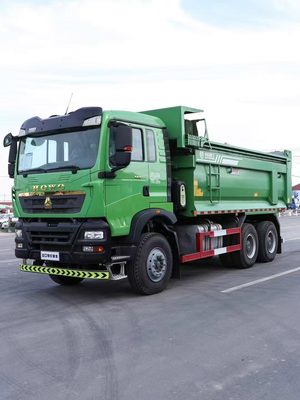
Dump trucks are the most harsh transportation equipment in construction projects and mining operations. The lifting system is the core feature that distinguishes dump trucks from other trucks, and it is also the assembly with the highest accident risk - during the lifting process, the vehicle may overturn, hydraulic pipes may burst, or the frame may break, which often leads to catastrophic consequences. The core of third-party inspection lies in making the hidden risks in three dimensions - lifting safety, structural integrity, and hydraulic health - explicit through instrumented measurement and standardized testing.
1. Structural inspection of the vehicle body and sub-frame - the "skeleton" of the dump truck
Quantitative diagnosis of the wear of the vehicle body floor
Measurement method: Use an ultrasonic thickness gauge to conduct grid-point measurements on the vehicle body floor (at least 3 measurement points in the front, middle, and rear, with more emphasis on the rear unloading impact area). Record the thickness value of each measurement point and mark the minimum value.
Judgment criteria: The original thickness of the floor is usually 8-16mm (depending on the vehicle model and material). When the minimum thickness reduces to 50%-60% of the original thickness, the anti-impact capacity of the floor has seriously deteriorated, and large pieces of materials may penetrate the floor during unloading. A reduction of more than 30% should be recorded as a warning and suggest local replacement or welding.
Hidden damage: The reinforcing ribs (bottom beams) on the back of the floor and the welding area are high-risk areas for cracks. When covered by dirt, it is necessary to require cleaning and inspection. Fine cracks at the root of the weld seam are precursors to the detachment of the floor.
Side panels and rear doors of the vehicle body
Bulging deformation of the side panel - Use a ruler to tightly press against the outer surface of the side panel and measure the maximum deformation. Bulging indicates that the side panel has previously endured excessive lateral pressure (such as uneven unloading or collision).
Hinge and door hook of the rear door - Measure the diameter of the hinge pin and the inner diameter of the bushing using a vernier caliper to calculate the gap. An excessive gap will cause the rear door to not close tightly and result in material leakage during transportation, and the rear door will swing and collide with the vehicle body during unloading.
Locking mechanism of the rear door - Function verification of mechanical lock hooks or hydraulic locking devices. Failure of the locking mechanism is a common reason for the rear door to automatically open during transportation.
Connection of the sub-frame and the main frame - The highest risk point hidden
U-shaped bolts / horsehair bolts - Conduct random inspections using a torque wrench according to the manufacturer's specified torque values (at least 30% of the total). Loose U-shaped bolts will cause relative displacement between the vehicle body and the chassis, and in severe cases, the vehicle body may dislocate during lifting or driving.
The main beam itself - Use a strong flashlight to inspect whether the sub-beam profile is distorted or cracked. Key areas: the welding area of the rear overturning support, the installation area of the lifting cylinder base, and the position of the pad or shock absorber block where the sub-beam connects to the main beam.
Check for displacement traces: Observe the paint surface at the connection point of the sub-beam and the main beam to see if there are friction marks caused by relative displacement. Any displacement traces indicate that the U-shaped bolts have loosened or the sub-beam has deformed.
2. Deep inspection of the lifting hydraulic system - The "heart" of the dump truck
On-site diagnosis of the lifting cylinder
Sequence of the inter-stage of multi-stage telescopic cylinders: During lifting, the cylinders of each stage should extend in the designed sequence (usually the large-diameter stage extends first, and then gradually transitions to the small-diameter stage). If there is skipping (the small-diameter stage extends first), it indicates that the seal of a certain stage is damaged or the inner wall of the cylinder tube is scratched. This cylinder needs major repair.
Chrome coating of the piston rod: Conduct sequential inspections of the exposed piston rod surface. Minor scratches (not obvious to the touch) can be recorded and observed; deep scratches (obvious to the touch) or pitting will damage the sealing element, causing leakage, and should be recorded and recommended for repair.
Leakage determination: After the lifting is held under pressure, the surface of the piston rod is only allowed to have a trace of oil film. Any obvious dripping or pooling of oil is determined as unqualified leakage.
Mid-stop holding pressure - The core test for lifting safety
Test method: Lift the vehicle body to 50%-70% of the height (avoiding the extreme position), and return the handle to the mid-stop position. Select a fixed reference point at the rear of the vehicle body and use a steel ruler to vertically measure the height from this point to the ground. Wait for 3 minutes, and record the height value every minute.
Criteria for judgment: The total settlement within 3 minutes should be within the manufacturer's specified range (generally, 3 minutes ≤ 10-15 mm is considered good, while > 30 mm is considered disqualification). Continuous rapid sinking indicates leakage in the control valve; slow and uniform sinking indicates leakage in the cylinder.
Safety warning: During the pressure retention test, no personnel are allowed to enter the undercarriage. Before the test, it is necessary to visually confirm that the weld seam of the lifting cylinder base is without fresh cracks, and the hydraulic pipeline is without bulges or severe aging.
Hydraulic pipelines and joints
Check the high-pressure hose one by one - the degree of rubber wear is the key. If the outer layer is torn but the steel wire layer is not exposed, it is recorded as an observation item; if the steel wire layer is exposed, it must be immediately determined as a mandatory replacement item.
Interference and friction points of the hose with the frame and auxiliary beam - this is the high-risk area for hose burst. Check if the hose fixing clamp is intact and if the hose is compressed or bent excessively.
After the lifting and pressure retention test, use leak detection spray to check for any micro air bubbles.
Hydraulic oil condition
Open the oil tank cover and observe the color and smell of the oil. Dark brown and burnt smell = long-term high-temperature oxidation of the oil; emulsified and white = water ingress; metallic flash = abnormal wear particles.
If possible, use an oil cleanliness detector for rapid screening. Poor cleanliness of the hydraulic oil is one of the main reasons for the stuck control valve and the damage of the cylinder seal.
Drive shaft and hydraulic pump
The engagement/disengagement of the drive shaft should be smooth without toothing noise. When the drive shaft is running, use a stethoscope or a long screwdriver to listen to the shell, and it should be stable without periodic impact noise.
Use an infrared thermometer to detect the temperature of the hydraulic pump housing. After the lifting test, the temperature should be consistent with other hydraulic components, and abnormal high temperature indicates severe internal leakage.
1. Key points of chassis and traveling system inspection
Braking system - the bottom line for safe driving
When the dump truck is heavily loaded and going downhill, the braking load is extremely large. The function of the airway drying tank must be effective - open the sewage valve of the air reservoir to discharge the water. If there is a large amount of water, it indicates that the drying tank is ineffective, which will cause the braking pipeline to freeze in winter or the valve components to rust and get stuck.
The thickness of the brake shoe is inspected through the observation hole or by removing the wheels. If the wear approaches the rivet or backing plate, it must be determined as不合格.
Road test at 30 km/h for emergency braking, the direction should be stable without deviation, and the braking marks should be basically symmetrical on both sides.
Suspension and tires
Check the fracture of the leaf spring one by one - excessive fracture of the leaf spring in overloaded vehicles is a common defect. Check the torque of the horse bolt by sampling.
Measure the depth of the tire tread at multiple points. Abnormal uneven wear on the driving wheel (single-sided wear step) indicates that the bridge shell is deformed or the bearing is loose.
2. Additional inspection for special structure vehicles
Front-mounted lifting type (single cylinder front-mounted lifting)
The connection weld seam between the lifting cylinder base and the front crossbeam of the frame is the area with the most stress concentration. It must be inspected with strong light from multiple angles, and any suspected cracks should be subjected to PT/MT flaw detection.
The ball joint connection between the lifting cylinder and the bottom of the vehicle - check the gap of the ball joint sleeve, excessive wear will cause the vehicle body to shake laterally during lifting.
Mid-mounted (double cylinder or T-type)
Synchronization of the double cylinders - during the lifting test, observe simultaneously on both sides of the vehicle body, and different elevation at the same time indicates a fault in the分流 valve or internal leakage in one cylinder.
T-type lifting mechanism's connecting rod hinge points, check the clearance of the pin shaft and sleeve one by one. Deformed connecting rod or excessive wear at the hinge point will cause geometric instability of the lifting, and in severe cases, the vehicle body will tip over.
The continuity of the side flip hinge shaft and the integrity of the weld seam of the support. Any crack in the weld seam of the side flip vehicle during lifting is a serious hazard.
The side flip limit device is in good condition to prevent excessive flipping of the vehicle body.
3. Safety red lines in inspection
During the lifting test: The undercarriage, the side flip direction, and the rear discharge direction are absolute no-go areas. The safety isolation radius should be no less than 1.5 times the diagonal length of the vehicle body.
When inspecting the undercarriage: It is necessary to use a rigid safety support to support the vehicle body, and it is strictly prohibited to support only with the hydraulic system or jacks. This is the most critical scenario for testing accidents.
Pre-test inspection before the test: Before any lifting test, a quick pre-inspection of the welds at the base of the lifting cylinder and the appearance of the high-pressure pipeline must be conducted. If there is any suspected risk of pipe rupture or weld cracking, depressurization treatment must be carried out first, and lifting must not be carried out rashly.
VI. Key points of photo archives
The reading of the thickness gauge on the floor of the vehicle body is superimposed with the grid point positions.
Close-up of the U-shaped bolts connecting the auxiliary beam and the main beam.
Multi-angle photos of the welds at the base of the lifting cylinder.
Photos of the measurement of the starting and ending heights during the mid-stop holding pressure test (the steel ruler reading is clearly visible).
Close-up of the wear degree of the hydraulic hose (the exposed steel wire layer must be shot with a macro lens).
Close-up photos of the hydraulic oil sample (the oil color is captured against a white background).
Photos of the braking marks during the road test.
Share this product
Inspection methods, procedures and precautions for dump trucks
Dump trucks are the most harsh transportation equipment in construction projects and mining operations.