

Inspection methods, procedures and precautions for engineering forklifts
Forklifts are the core equipment for material handling, and their safety and reliability directly affect the operational efficiency and personal safety. Whether it's the purchase and delivery of new vehicles, the inspection and verification of leased vehicles upon return, the trading of second-hand vehicles, or the on-site inspection of large-scale purchases, a systematic and rigorous third-party inspection standard is an important part in resolving disputes between buyers and sellers and ensuring the quality of assets. From the perspective of third-party inspection and factory inspection, this article comprehensively analyzes the inspection methodology and execution details of forklifts.
I. Overview of Inspection Methods
Based on the power source of the forklift (internal combustion engine/battery), the operating conditions and the requirements of the client, the inspection usually employs the following methods in combination:
Static comprehensive inspection: When the vehicle is stationary, conduct a detailed inspection of the exterior, structure, frame, forks, attachments, tires, instruments, pipelines, wiring harnesses, etc., by means of visual inspection, manual touch, and measurement tools.
Dynamic performance test: In the designated safety area, verify the smoothness and response characteristics of actions such as lifting, lowering, tilting, side movement (if any), driving, steering, braking, and climbing slopes.
Load simulation test: Using standard weights or simulated loads, verify the frame stiffness, lifting speed, settlement amount and stability of the forklift under the rated lifting capacity.
Function interlock verification: Test the functionality of each device such as instrument display, alarm indication, lights, horns, reverse warning, speed limit, and safety interlock one by one to ensure their effectiveness.
Document and label traceability: Verify the consistency of label parameters, vehicle frame number, engine number/motor number, certificate of conformity, and type test certificate, to ensure that the vehicle identity and the permitted parameters are genuine and valid.
In actual operation, the "static full inspection + dynamic performance test + functional verification" form the basic inspection package. When there are disputes or high-value transactions, additional load testing and file depth verification are carried out.
II. Inspection Process
1. Data Collection and Preparation
The client provides a list of the vehicles to be inspected, specifying the vehicle model, factory serial number, rated lifting capacity, load center distance, mast type (secondary/tertiary fully free, etc.), accessory configuration, power type and applicable standards (such as GB/T 10827, JB/T 3300, etc.). Based on this information, the inspection party prepares the inspection tools - tape measure, vernier caliper, feeler gauge, level, stopwatch, thickness gauge, battery tester, multimeter, test light, standard weights (if conditions permit), sound level meter, etc.
2. Site and Condition Confirmation
The inspection site should be a solid and flat hard surface with sufficient space for driving, steering and lifting operations. The vehicle should be at a normal operating temperature (after the internal combustion engine has been preheated), and the battery of the electric forklift should have a charge of more than 80%. The tire pressure or the condition of the solid tires should be normal, and the levels of fuel, hydraulic oil, brake fluid, and electrolyte should comply with the scale requirements. The inspector should wear a safety helmet, reflective vest, and anti-strike shoes, and set up warning isolation cones in the operation area.
3. Identity and Label Verification
Plate verification: Verify that the vehicle frame number (chassis number) is consistent with the certificate of conformity and the plate. Record the manufacturer, model, manufacturing date, rated lifting capacity, load center distance, vehicle weight, minimum turning radius, etc. parameters.
Power system check: For internal combustion forklifts, check the engine number; for battery-powered forklifts, check the serial numbers or nameplates of the traveling motor and pump motor. Ensure there are no signs of grinding or tampering.
Tool nameplates: Side shifters, Rotators, Paper roll holders, etc. Each tool has its own nameplate. Check the model and the applicable tonnage of the forklift.
4. Inspection of the vehicle's exterior and body structure
Painting and body panels: The paint surface shows no obvious color differences, peeling, or runnability; the gaps of body panels such as the hood, side doors, and counterweight iron are uniform, and there are no signs of collision repair.
Overhead guard and cab: The overhead guard shows no deformation, welding defects or cracks; the verticality of the pillars is visually normal. The closed cab glass has no cracks, and the sealing rubber strips of the doors and windows are in good condition.
Frame and fork frame: The steel plates of the inner and outer frames show no severe wear, cracks or deformation. The gap between the fork frame rollers and the guide rails is measured using a feeler gauge, and the longitudinal and lateral gap values are recorded.
Pliers: There are no cracks at the root and welding points of the pliers. The wear amount of the upper and lower surfaces of the pliers is measured using a caliper or thickness gauge, and compared with the "pliers wear and scrap standard" (usually recording an alert when it reaches 10% of the original thickness). The height difference between the left and right pliers tips must be within the allowable range.
Chain and lifting cylinder: The lifting chain has no broken wires or rust, and its tension is uniform; the outer walls of the lifting cylinder and the tilting cylinder show no scratches or leaks, and the plating on the piston rods has no磕碰 damage.
5. Static inspection of the power and transmission systems
Internal combustion forklift: The engine has no leakage problems (leaking oil, water, or gas), the belt condition, the appearance of the radiator, the cleanliness of the air filter. The exhaust muffler is undamaged.
Battery forklift: The exterior of the battery box shows no cracks or signs of leakage; the terminals of the battery connection lines are securely fastened without corrosion; the battery capacity indicator is normal. The appearance of the motor and controller is clean, the wire harness connectors are firmly connected, and there are no traces of overheating or burnt smell.
Transmission system: The drive axle housing shows no leakage. The gearbox (if present) appears dry. The tires (inflated/plyed/polyurethane) are evenly worn, with no severe tire scuffing or loose pieces.
6. Inspection of the cab and operation devices
Seat adjustment and seat belt (if present) are in good condition.
The steering wheel, control lever and pedals move freely without any jamming.
After ignition / power-on, all warning lights (such as oil pressure, charging, braking, fault lights, etc.) of the instrument assembly self-test were normal.
The timer is used for work scheduling, to record the number of working hours.
7. Function Check of Hydraulic and Braking Systems
Hydraulic oil level: The oil level in the tank is within the scale range, and the appearance of the oil shows no obvious emulsification or discoloration.
Piping: All hydraulic hoses and connectors are visually free of aging cracks, bulges, and leaks.
Parking brake: Free travel and reserve travel of the pedal, brake fluid level (if hydraulic braking is used).
Parking brake: Lever travel and locking effectiveness. Visual inspection of the brake cable or connecting mechanism shows no breakage.
8. Safety devices and electrical inspection of lighting systems
This is the "key part" of the forklift inspection, directly related to operational safety:
Lights: The functions and colors of the headlamps, turn signals, brake lights, reversing lights, and hazard warning lights are all normal.
Alarm and reverse parking warning sound: The volume is within the standard range, and the reverse parking warning sound is clearly distinguishable.
Safety interlock: Seat switch (to cut off movement or lifting after standing up), seat belt interlock (if equipped), limit alarm for the access of the roof support. Simulate each trigger one by one to confirm the system response.
Speed limit and overload alarm: According to the contract, check the function of the speed limiter or the response of the overload beeping indicator (if equipped).
Power failure device: Check the function of the emergency power-off switch for the battery-powered forklift. The plugs and sockets show no signs of overheating.
9. Dynamic Performance and Movement Test (Empty Load)
Carried out on a safe and flat surface:
Travel performance: The forward and reverse gears can be switched smoothly without any abnormal noise. The acceleration response is normal. On the slope (if the venue permits), it was verified that it can pass small slopes at low speed without slipping.
Steering system: The left and right extreme steering is smooth and effortless, without any jerking or abnormal noises; the free rotation range of the steering wheel is within the permitted limit.
Lifting and lowering: The mast operates smoothly and without crawling or shaking during full-height empty-load lifting and lowering. The full-travel time complies with the parameters of this model. Listen for any abnormal noises from the oil pump and the overflow valve.
The gantry is tilted: The forward and backward tilting movements are smooth and continuous. Once the limit is reached, the pressure is maintained without any automatic drift.
Side movement/auxiliary function: If present, verify the entire side movement process without any leakage or jamming.
10. Load test (per demand)
This is the core step for verifying the load-bearing capacity and stability of the forklift:
Rated load lifting: Load a standard weight to the rated lifting capacity, lift it to the highest position, then close the hydraulic control valve, and measure the settlement amount of the fork within 10 minutes (the standard usually stipulates that it should not exceed a certain value; for example, some standards require ≤ 100mm, which needs to be agreed upon in advance).
Truss stiffness and uneven loading: After the load is centered, visually check the distortion of the truss. There should be no obvious elastic deformation.
Walking and Braking: Walk at a low speed under the rated load. Test the braking distance and steering ease. During emergency braking, the load should not slip and the vehicle should not have a tendency to overturn. This must be carried out with safety measures in place to prevent vehicle overturning.
Overload test: If the contract specifies a 1.1/1.25 times dynamic load test requirement, conduct a careful verification within the designated area. Only perform short lifting to verify the structural strength, and do not conduct walking tests.
11. Exhaust emissions and noise (for internal combustion forklifts, as needed)
Exhaust smoke color: No visible black or blue smoke during sudden acceleration, no continuous white smoke at idle (the preheating stage can be considered as appropriate). A portable smoke meter can be used as a quantitative reference.
Noise: The noise from the driver's ears and the external radiation noise can be quickly screened using a sound level meter, and compared against the agreed standards.
12. Report Output
Compile all inspection records and image materials (especially the measurement process of defect areas and wear amounts, as well as the nameplate information), mark the qualified items, items to be observed, and unqualified items, and form a formal "Third-Party Forklift Inspection Report", which will be provided to the client as the basis for delivery, claim or settlement.
III. Important Notes
Safety is the first criterion for assessment.
During the inspection process, make sure to wear safety helmets and anti-shatter shoes. If necessary, wear protective gloves as well. When the forklift is lifting, it is strictly prohibited for personnel to stand or pass under the forks and the mast.
The dynamic testing and load testing areas must be physically isolated and non-inspection personnel are prohibited from entering. During the load test, the test driver must undergo training and operate the vehicle throughout the process, while the assistant observer should be positioned at the rear on the side at a safe distance.
Before testing the high-voltage battery-powered forklift, first confirm the position of the emergency power-off switch. It is strictly prohibited to touch the uninsulated main circuit terminals when the power is on.
Wear and tear and structural components are the areas prone to disputes.
The forks, chains, mast guide grooves, tires, etc. are normal wear parts. However, excessive wear can directly lead to safety hazards. During inspection, data must be used to prove the situation - the thickness of the forks is measured with a caliper, the gap of the guide grooves is measured with a feeler gauge, and the chains are checked for broken wires with a chain gauge or by visual inspection.
If there are welding repair marks on structural components such as the roof support frame and counterweight iron, it is necessary to carefully record and assess the repair quality and source. If necessary, it is recommended to conduct non-destructive testing.
The consistency between the nameplate and the license must not be compromised.
Forklifts are classified as special equipment. The parameters such as rated lifting capacity and self-weight listed on the nameplate must be strictly compared with those in the "Special Equipment Use Registration Certificate" and "Periodic Inspection Report". If the nameplate is missing, re-bolted, or the parameters do not match, it should be immediately reported as a serious non-compliance item. Additionally, it should be noted that any attempt to change the rated lifting capacity on one's own is usually not recognized by the regulatory authorities.
The fixtures have a direct impact on the load capacity.
After installing side shifters, paper roll clamps and other accessories, the actual effective lifting capacity of the forklift will decrease due to the weight of the accessories and the forward shift of the load center. During inspection, it is necessary to refer to the "allowable load when accessories are present" on the mast nameplate or technical manual, and it is strictly forbidden to simply determine overloading based on the rated tonnage of the bare forks.
Special risks associated with batteries and charging areas
During the inspection of battery-powered forklifts, any issues such as exposed terminals, damaged insulation layers, or electrolyte leakage are considered high-risk items. At the same time, it is necessary to remind users that the ventilation in the charging area should meet the requirements. Although this is not within the scope of the individual vehicle inspection, experienced inspectors should kindly remind in the observation items.
Taking photos and archiving them must not be omitted.
Each defect must be accompanied by clear photos or videos. The measurement of wear should be shown with a tool before taking a photo. The frame number, nameplate, engine/motor number should be separately archived. All photos must include a timestamp and the vehicle's unique identification number to ensure that each determination can be traced back.
Conclusion
The inspection of forklifts is a "small-sized but high-risk" technical task. A worn-out cargo fork, a slightly leaking lifting cylinder, or a malfunctioning seat latch could all be the starting point of an accident. As a third-party inspection and factory audit service, we adopt standardized procedures, instrument-based measurements, comprehensive functional verification, and safety bottom-line thinking to ultimately deliver not just a report, but also a quality defense line constructed with data and processes, which is built to protect the interests of every operator and asset owner within the site.
Share this product
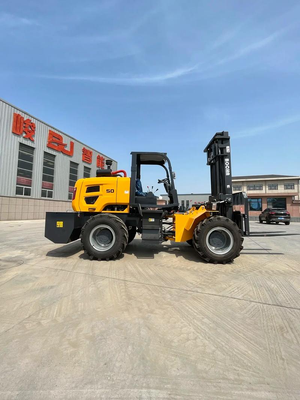
Inspection methods, procedures and precautions for engineering forklif
Forklifts are the core equipment for material handling, and their safety and reliability directly affect the operational efficiency and personal safety.