

The inspection methods, procedures and precautions for bulldozers
Grader is an indispensable precision leveling equipment in various engineering projects such as road and railway subgrade shaping, airport runway leveling, large-scale site leveling, maintenance of mining roads, and renovation of farmland water conservancy. Unlike the powerful bulldozer's heavy lifting and transportation, the grader achieves high-precision leveling operations by relying on six-direction adjustable tines (lifting, inclination, rotation, side extension, pitch, and swing angle). The equipment condition directly determines the elevation accuracy and flatness of the engineering surface. In scenarios such as new machine delivery, second-hand equipment trading, lease asset return inspection, and major overhaul factory acceptance, a comprehensive inspection covering the chassis frame, traction frame/rotating platform, tine system, automatic leveling control, and power transmission hydraulic system is crucial for accurately assessing the equipment's precision capability and residual value.
I. Overview of Inspection Methods
Based on the power level of the scraper, the transmission type (hydraulic mechanical/fully hydraulic), the driving form (full drive/ rear drive), the leveling control method, and the client's requirements, the inspection usually employs the following methods in combination:
Static full inspection: The vehicle is left stationary. The entire vehicle frame, traction frame, rotary drum, bucket assembly, loosening device/pushing shovel (if equipped), driver's cab ROPS/FOPS structure, power transmission assembly, hydraulic pipelines and electrical control system are inspected item by item through visual inspection, manual touch, and precise measurement with measuring tools.
Dynamic performance test: On a safe site or construction site, verify the engine's start-up, acceleration, idle performance, as well as the smoothness, response speed and accuracy of compound actions such as forward and backward driving, articulated steering, six-directional operation of the bucket, and retraction and extension of the loosening device.
Special system testing: Conduct specialized functional and performance verification for the articulated steering system, the gap between the shovel blade and the rotating disc, the automatic leveling/3D control system, and the pressure of each hydraulic circuit.
Precision verification (as needed): On a flat surface, using a shovel to set the elevation and comparing it with the actual leveling effect to verify the overall leveling accuracy of the machine.
Document and label traceability: Verify the consistency between the entire machine label, the host frame number (PIN code), the engine label, the transmission label, the hydraulic main pump label and the certificate.
The third-party inspection is carried out based on the "static full inspection + dynamic performance test + special system test + function verification" package. For equipment transactions with high precision requirements, it is strongly recommended to additionally include the actual measurement of the turntable gap and the function verification of the automatic leveling system.
II. Inspection Process
1. Data Collection and Preparation for Inspection
The client provides a list of the machines to be inspected, specifying the manufacturer, model, rated power, working weight, transmission type, blade specifications (length × height), leveling control method (mechanical/automatic/3D), soil loosening device/forward shovel configuration, working hours, applicable standards (such as GB/T 8506, JB/T 7920, etc.). The inspector prepares: long tape measure/ laser distance meter, steel plate thickness gauge, vernier caliper, feeler gauge, micrometer/percentage gauge (for measuring gap between rotating parts), infrared thermometer, hydraulic pressure gauge set, noise meter, oil sample bottle, etc.
2. Confirmation of Venue and Safety Conditions
The inspection site should be a solid and flat hard surface, with a length and width sufficient for full-speed driving, articulated steering and full-action testing of the bucket. The test area should be isolated and guarded, and non-inspection personnel are prohibited from entering. Inspectors should wear safety helmets, reflective vests and anti-shatter shoes. Before conducting the inspection of the vehicle bottom, make sure the engine is turned off, the parking brake is locked, the working device is placed on the ground, and wheel chocks are placed at the front and rear of the tires.
3. Identity and Label Verification
Host frame number (PIN code): Usually engraved on the rear frame or the hinged area, and imprinted and compared with the entire machine's nameplate and factory documents one by one. Check for traces of grinding, welding repair, and re-engraving.
Machine nameplate: Verify the manufacturer, model, factory serial number, manufacturing date, working weight, rated power, shovel blade specifications, etc.
Engine nameplate: Verify that the model, serial number, power, and emission stage match those of the entire machine's nameplate.
Transmission/Drive Coupling Label: Record the model and serial number.
Hydraulic main pump nameplate: Record the model and serial number. If any number is unclear, the nameplate is re-bolted, or the information is incorrect, it should be immediately upgraded to a serious non-conformity item.
4. Inspection of the frame and articulation system - The "skeleton" of the scraper machine
The bulldozer adopts a front and rear frame hinged structure. The hinge point is one of the areas where the entire machine experiences the greatest force.
Front frame: From the front weight/tilt bucket mounting seat to the hinge point, conduct a close inspection of the longitudinal and transverse beam weld seams under strong light. Key areas: The suspension support for the bucket traction frame, the swing fork support for the front axle, and the welding area of the hinge joint.
Rear frame: From the hinge point to the rear end of the engine compartment, inspect the longitudinal beams, transmission support crossbeam, and the welds at the connection area of the rear axle housing. Inspect the welds of the rear tiller/crusher mounting seat.
Hinge system: The axial and radial clearances of the upper and lower hinge pin shafts are precisely measured using a micrometer or feeler gauge. The hinge bearing seat shows no looseness or cracks. The gap of the hinge ear seat of the steering cylinder is inspected. The dust-proof seal at the hinge joint is in good condition. Excessive hinge clearance will cause the vehicle to veer during driving and the positioning of the bucket to become inaccurate.
Straightness of front and rear frames: On a flat surface, visually check whether the front and rear frames are on the same longitudinal axis. Check if there is any permanent skew at the hinge points due to overload or collision.
5. Inspection of the cab and ROPS/FOPS structure
ROPS/FOPS cab: The structure is intact, with no weld cracks, deformation, or penetrating rust. The door opens and closes normally, the glass is in good condition, and the sealing rubber strips are also intact.
Interior and Control: Seat shock absorption function is intact, seat belts are in good condition. The instrument panel self-check passed, and the hour counter displays the correct values. The steering wheel, multi-directional joystick, and pedals have no sticking.
Air conditioning / heating: Function verification.
Field of vision: The rearview mirrors are complete, and the front and rear views are good. The rearview camera (if equipped) provides clear images.
6. Inspection of the traction frame and rotary system - The core of the accuracy and stiffness of the scraper of the earth mover
This is the most crucial component that distinguishes the bulldozer from other earth-moving machinery.
Traction frame (Type A frame / parallelogram linkage): The frame material has no bending or weld seam cracks. The clearance between the connection ball head or pin of the traction frame and the front frame is measured using a feeler gauge. If the clearance is too large, it will cause the shovel blade to move back and forth, affecting the flatness accuracy.
Rotary turntable (rotation circle): Inspection of the connection bolts between the turntable and the traction frame. The rotary drive mechanism of the turntable - hydraulic motor / worm gear reducer has no oil leakage, and the rotation action is smooth without any jamming.
Drum clearance: This is the most crucial indicator for evaluating the precision capability of a scraper. A dial indicator or a dial indicator holder is attached to the tractor frame, with the indicator head contacting the outer edge of the drum gear or the installation seat of the blade. A certain force is applied at both ends of the blade (or the side extension cylinder of the blade is operated to gently load it), and the movement of the drum in the radial and axial directions is measured. Exceeding the clearance limit will cause the blade to shake and lose precision during operation, and the repair cost of the drum is extremely high.
Scarfing tool mounting base and slide rail: Inspection of wear on the slide rail or mounting base that connects the scarfing tool to the turntable. Measurement of the clearance between the side extension cylinder of the scarfing tool and the guide slide block.
7. Inspection of the shovel assembly - The working end of the scraper machine
Chisel body: Use an ultrasonic thickness gauge or caliper to measure the wall thickness at multiple points on the cutting edge of the chisel bottom, and compare the results with the original specifications. When the bottom of the chisel wears down to the critical thickness, its bending resistance will be lost.
Scarf blade/blade: Replaceable consumable part. Check the remaining edge height. Check if the blade fixing bolts are broken or loose. Uneven wear of the blade (thicker at one end and thinner at the other) indicates that the scarf blade is overloaded during adjustment or there is a problem with the operation habit.
Spatula curved plate: Check if the curved plate at the rear of the spatula has any dents or deformations, as these may affect the drainage effect during soil turning.
Verification of the six-directional movement of the shovel (executed as a key part in the dynamic test):
Up and down (left and right independently or联动
Sway (left and right tilting)
Rotation (rotation around the vertical axis, with a maximum angle of 360°)
Lateral extension (the shovel moves horizontally to the left or right)
Pitching (adjusting the cutting angle of the shovel)
Angle adjustment (adjusting the lateral movement of the blade within the horizontal plane to change the cutting width angle)
Each action should be smooth without crawling or shaking, and the oil cylinder should have no leakage.
8. Inspection of the cultivator and auxiliary working devices
Post-positioning soil loosener/land splitter: The teeth rods are worn and bent, and the tooth tips are worn. The frame weld seams are intact, and there is no leakage in the lifting cylinder. The retraction and extension actions are smooth.
Front shovel (if equipped): The shovel body is worn or deformed, the welds on the push arm, and the clearance of the connecting pin shaft. The lifting action is normal.
9. Inspection of Front Axle and Tire Traveling System
Front Axle: Measurement of the clearance between the swing fork of the front axle and the pin of the balance box. Clearance of the main pin of the front axle steering joint (for non-hinged steering models). Inspection of the hub bearing clearance - Use a jack to lift the front wheel, then shake the tire up and down to feel the clearance.
Tires: The tires of the scraper machine are subjected to significant lateral forces. Check for any cuts or bulges on the tire sidewall. Measure the depth of the tire tread at multiple points and record any uneven wear. The rim is free from deformation or cracks, and the bolts are securely fastened.
Drive rear axle: There is no oil leakage from the rear axle housing. The final drive/wheel hub reducer housing is in good condition, and the ventilation plugs are clean. For tandem drive axles (such as double-link rear axles), the oil level of the balance box is checked, and the oscillation function is normal.
10. Inspection of Power Transmission System
Engine: Cold start and hot start each performed once. Idle speed was stable without any fluctuation. Acceleration response was sensitive. Exhaust smoke color was normal. The rated maximum speed reached the specified value. External leakage checks were conducted.
Hydraulic torque converter / transmission: The housing shows no leakage. Check the transmission fluid level and quality. Road test to verify the smoothness of gear shifting. Utility vehicles usually have multiple forward gears and reverse gears (such as 6 forward and 3 reverse), and each gear position must be tested.
Transmission shaft: Check for looseness of the universal joints at the front and rear transmission shafts, and tighten the connecting bolts.
Hinged steering system: The hinged steering of the scraper is similar to that of the wheel loader. The tests for the maximum turning angles on both sides show that the steering is smooth and there are no jolts or abnormal noises. The gap between the steering cylinder and the pull rod ball head is checked. The steering limit block is in good condition.
11. Hydraulic system inspection
Hydraulic oil tank: The liquid level is within the scale range, the respirator is clean. The oil color is normal. If possible, take samples of the oil.
Main hydraulic pump: The housing shows no leakage and there is no abnormal noise during operation.
Multi-channel control valve group: The control circuit of the bulldozer valve group is extensive (at least 6-8 channels), and the action of each valve core corresponds to the function of the bucket. The connection surfaces of the valve body have no oil leakage, and the pilot lines are neatly arranged.
Hydraulic cylinders:铲刀 lifting cylinder (one on each side),铲刀 tilting cylinder,铲刀 side extension cylinder,铲刀 pitch cylinder,铲刀 rotation motor (if hydraulically driven), articulated steering cylinder, loosening device cylinder, etc. Inspection of the chromium coating on the piston rods of all cylinders, inspection of the ear seat clearance, and integrity of the dust-proof seals.
Piping and joints: Each rubber hose is inspected one by one for aging, cracking, and bulging. The interference and friction points between the rubber hose and the frame, as well as the traction frame, are particularly examined.
12. Electrical and Control System Inspection
Lights: The front and rear working lights and the outline lights function properly.
喇叭与警报:喇叭音量正常,倒车警报功能正常有效。
Automatic leveling/3D control system (if equipped): This is the core technical feature of the high-end grading machine. Check that the controller host has no fault codes. The mast/ laser receiver/UHF receiver/inertial sensor (3D system) is in good appearance and the cable connections are tight. System self-check function verification - after power-on, the system should complete the self-check and display the online status. If possible, conduct a simple comparison test of automatic/manual control on the site.
Battery: Terminal connections are securely fastened without corrosion, and the main power switch functions properly.
13. Dynamic Performance Testing
On the safety site, execute the following after the system reaches the operating temperature:
Driving performance: Smooth shifting between forward and reverse gears. When driving in a straight line on a flat surface, there should be no snake-like movement (if snake-like movement occurs, it indicates that the articulation gap is too large or the rear axle steering deviation is excessive).
Hinged steering: Full-angle steering in both directions, with smooth operation without any jamming, and reliable steering limit mechanism.
Full action test of the shovel: Execute each of the six directions of the shovel's movement one by one to verify the following points:
Each movement is smooth throughout the entire range without any crawling.
The shovel rotates 360° (as permitted by the design), and the turntable makes no abnormal noise.
The side extension of the shovel was smooth and did not get stuck at any point.
Complex action coordination - such as driving while adjusting the height and tilt of the shovel.
Tillage tool / Forward plow action: Normal retraction and extension.
14. Hydraulic system pressure test (per demand)
Connect the pressure gauge assembly to the pressure measurement port of the main relief valve and to each working circuit.
Check whether the main overflow pressure of the measurement system is within the standard range.
The overflow pressures of each working circuit (such as the lifting and tilting of the shovel) comply with the manufacturer's specifications.
15. Oil Sample Collection and Analysis (Recommendation)
Samples of engine oil, transmission oil, hydraulic oil, and rear axle/final drive gear oil have been collected for testing.
The focus should be on the cleanliness level of the hydraulic oil - the hydraulic system of the flatting machine includes precision proportional valves (for automatic leveling), and has extremely high requirements for the cleanliness of the oil. Failure to meet the cleanliness standards may indicate a risk of valve core wear in the leveling system.
16. Report Output
Summarize all inspection items, measurement data (articulation gap, turntable gap, blade thickness, tire tread depth, etc.), dynamic test records and oil analysis reports. Mark the qualified items, observation items, general defects and serious defects. Form the "Third-party Grader Machine Inspection Report" which includes photos with PIN codes, turntable gap measurement photos, blade thickness measurement photos, and automatic leveling system status photos, and deliver it to the client.
III. Notes
Spindle clearance - The "primary indicator" for the inspection of the scraper loader
The rotary table of the scraper of the bulldozer (the rotating circle) bears all the cutting force and lateral force of the scraper operations. The manufacturing accuracy and assembly clearance of this component directly determine the flatness accuracy of the entire machine. Once there is an excessive clearance in the rotary table, the repair cost is extremely high (usually requiring the disassembly of the entire tractor frame assembly, replacement of the wear-resistant copper sleeve/liner or complete replacement of the rotary table). During inspection:
It is necessary to use a dial indicator/kindle gauge to quantitatively measure the radial and axial runout. One cannot simply rely on the "it feels okay when shaken" approach.
The periodic "clicking" noise that occurs when the turntable rotates might be an indication of damage to the gear ring or the worm gear reducer. It is necessary to record this warning.
Hinged clearance and vehicle swaying during travel
When the hinge pin and bearings of the scraper machine are worn out, the rear frame of the machine will "sway" during operation, which directly affects the positioning accuracy of the bucket. The snake-like movement not only reduces the work efficiency but also may lead to safety accidents. During the inspection and road test, the test driver should drive the vehicle at high speed on a flat road in a straight line, hold the steering wheel lightly with both hands, and observe whether the vehicle automatically veers or snakes. Any obvious snake-like movement trend should be traced back to the hinge clearance, the steering linkage of the rear axle, or the uneven tire pressure.
The six-directional movement of the shovel - it must cover the entire area.
The six-directional movement of the bucket of the bulldozer is what makes it valuable. In inspections, there is often the misconception that "this movement is rarely used and should be fine". Although the side extension, elevation, and swing angle movements of the bucket have a lower frequency of use than the lifting and tilting movements, the oil cylinders for these movements may develop single-sided rust or sealing aging after remaining in a certain fixed position for a long time. During inspections, each movement must be executed for at least two full strokes to confirm that there is no jamming, no leakage, and that the stroke is fully in place.
Automatic leveling system - The "brain" of high-end grading machines
The earth-moving machine equipped with an automatic leveling system (laser/3D/GPS) may have its electrical control system accounting for a significant portion of the vehicle's incremental cost. During the inspection, it is necessary to:
Confirm that the controller has no fault codes and that the system can perform normal self-checks.
Check whether the laser receiver, the mast and the cables are in good condition - these components are prone to damage from construction site collisions.
If possible, conduct a simple automatic control comparison test (set a certain elevation, and observe the automatic tracking response of the shovel).
If the system fails or partially fails, it must be clearly indicated in the report, and the repair cost should also be mentioned.
Front axle oscillation and tire uneven wear
The front axle of a bulldozer usually has a swaying function to adapt to uneven terrain. However, when the swaying pinion shaft wears out, it will cause the front wheel alignment to become inaccurate, resulting in severe tire uneven wear. During inspection, observe whether there are single-sided wear steps on the tire tread. This is an "external signal" indicating a fault in the swaying system of the front axle.
Dynamic testing of security
When the vehicle is turning by means of the hinge, the change in the angle between the front and rear frames may cause squeezing risks. Therefore, inspectors are strictly prohibited from standing near the hinge area.
When the shovel rotates, the areas swept by both ends of the shovel are quite large, so they need to be cleared in advance.
When conducting the lift test of the shovel, no one is allowed to be under the shovel.
Key points for photo archives
The PIN code, the machine's nameplate, the measurement process of the rotation disc gap (with close-up shots of the installation of the dial indicator and the reading), the thickness measurement reading at the bottom of the chisel, the photos of the hinge pin shaft area, the screen display of the automatic leveling system controller, the close-up shots of the uneven tire wear, the status of each cylinder piston rod, all need to be independently and clearly archived. The measurement photos and videos of the rotation disc gap are the most technically persuasive evidence in the inspection report of the road grader.
Share this product
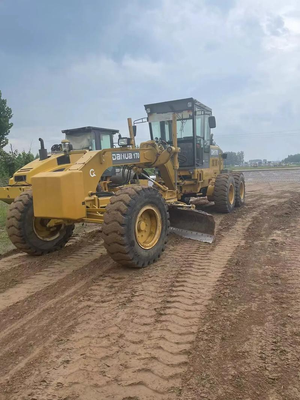
The inspection methods, procedures and precautions for bulldozers
Grader is an indispensable precision leveling device in various engineering projects.