

The Rise of Kenya's Automotive Industry: How Inspection, Factory Audit and Certification Seize Quality Opportunities in the East African Market Introduction
At present, the Kenyan government is actively encouraging the development of the local automotive assembly industry. The rapid growth of both the used car and new car markets in Kenya has unlocked significant potential for the automotive parts industry. For international suppliers planning to enter this market, establishing a comprehensive inspection, factory audit, and certification system is crucial for ensuring product quality, complying with local regulations, and seizing market opportunities.
I. Kenya Introduces Stimulus Policies to Encourage the Development of Local Automobile Assembly Industry
With the successful launch of the small family car Vivo Polo, which was assembled by Volkswagen in Kenya, Kenya continues to introduce stimulus policies to promote the development of the automobile assembly industry in the country.
Recently, Kenyan President Uhuru Kenyatta, while inspecting the Volkswagen production line, stated that he would stipulate that government departments and related institutions collectively purchase locally produced Vivo Polo vehicles, and promised a minimum annual purchase volume of no less than 300 units. He also hoped that county governments would actively purchase locally produced vehicles.
It is reported that the Kenyan government's purchase of new vehicles accounts for one quarter of the total new vehicle purchases in Kenya each year. In addition to the boost from government procurement, Kenya has recently abolished the 20% consumption tax on locally produced vehicles. This move helps local vehicles reduce costs, making them more price competitive than low-cost imported second-hand vehicles.
Under policy impetus, Kenya's automotive assembly industry is transforming from simple semi-knocked-down (SKD) assembly to complete knocked-down (CKD) assembly and even higher levels of local manufacturing. Currently, the proportion of CKD in new car sales has risen from 48.2% in 2015 to nearly 90% in 2025, while that of complete built-up (CBU) imports has dropped from 51.8% to 10.4%. This transformation has brought significant opportunities to international component suppliers and also raised higher requirements for inspection and verification in the supply chain.
In February 2026, Isuzu East Africa successfully rolled out the first MU-X SUV model produced outside of Thailand. By assembling locally, it attracted tax incentives, reducing the price from 13.5 million Kenyan shillings to 9.9 million Kenyan shillings, a decrease of 27%. This case demonstrates that meeting the certification requirements of localization policies can bring significant competitive advantages to enterprises.
II. Current Market Demand and Quality Control Requirements for Auto Parts in Kenya
Kenya has a stable exchange rate and no foreign exchange control. Profits of foreign companies can be freely remitted in and out. The investment cost in Kenya is relatively low, which is also a favorable condition for Chinese enterprises to invest in Kenya.
Kenya imports goods worth 6 billion US dollars annually, mainly including machinery, transportation vehicles and equipment, petroleum products, auto parts and motorcycle parts, steel and plastic products. Its major import partners are the United Arab Emirates, Saudi Arabia, South Africa, the United States, India, the United Kingdom, China and Japan. Kenya has no restrictions on entering the US and European markets and can reach a market of over 500 million people in East Africa, Central Africa and South Africa.
Transportation in Kenya mainly consists of cars and motorcycles, covering 380 million consumers in the East African market. The majority of cars are second-hand, with nearly 100,000 vehicles in the capital Nairobi alone. Due to the complex road conditions and the fact that second-hand cars account for 83%, the demand for motorcycles and auto parts in the local area is extremely strong, especially for products such as machinery, lubricating oil, spare parts, and ball bearings, which are experiencing continuous growth.
Kenya enjoys a superior geographical advantage, and its ports have a strong trade radiation capacity for neighboring countries. Many merchants from Ethiopia, Somalia, Sudan, Uganda and other countries make purchases within Kenya. The rapid industrialization and modernization sweeping through many African countries have led to an increase in demand in the African market, especially in the auto parts market, which has seen a 30% growth in imports.
In 2013, the sales volume of new vehicles in Kenya reached 14,500, representing a year-on-year growth of 13.1%. Currently, the Kenyan market is filled with vehicles such as the Gold Cup, Hino, and Japanese Toyota models. Specialized vehicles are scarce and mostly imported, with a relatively high demand. The trade between Kenya and China has been growing year by year, and the potential of the automotive market in Kenya is huge. The Kenyan government does not charge SGS fees for products such as electric vehicles, auto parts, and motorcycle parts, which is a favorable policy provided by the Kenyan government.
The SGS fee is a special import inspection charge implemented in many African countries. Kenya's policy of waiving this fee has significantly reduced the cost of importing components, but it also means that the quality responsibility for imported products falls more on the purchasers. Therefore, it is particularly important to conduct strict pre-shipment inspection (PSI) before shipment to ensure that the products comply with Kenyan standards (KS standards) and the norms of the East African Community.
III. Quality Certification and Compliance Requirements: Key Thresholds for Localized Procurement
As Kenya promotes localized procurement policies, the quality control requirements faced by component suppliers are becoming increasingly strict.
3.1 Enforcement of Localization Regulations
According to Legal Notice No. 112 of Kenya (LN112), motorcycle assemblers must source at least 14 types of components locally. For the automotive industry, the government is promoting the establishment of a parts certification framework in line with global standards to ensure that locally produced parts meet the strict quality requirements of original equipment manufacturers (OEMs).
3.2 Supplier Audit Standards for OEM
Isuzu East Africa currently uses 23 types of components in its localized regulations list. However, the company emphasizes that safety is an uncompromising bottom line. Before approving components for mass production, the OEM works closely with local suppliers to strictly enhance compliance with quality standards. This means that component enterprises hoping to enter the OEM supply chain must pass strict factory audits to prove that their quality management systems and product performance meet international standards.
The CEO of CFAO Mobility Kenya pointed out that although 21 kinds of locally manufactured parts are available, due to the strict quality requirements of OEMs, the current actual utilization rate is only about 50%. This indicates that obtaining authoritative inspection and certification (such as ISO 9001, IATF 16949) is the key to breaking through the supply chain barriers of OEMs.
3.3 National Standards and Regulations
The Kenya Bureau of Standards (KEBS) enforces the age limit for imported second-hand right-hand drive vehicles in accordance with the "Road Vehicles Inspection Standard Operating Procedures" (KS 1515:2000). As of January 1, 2026, only vehicles first registered in 2019 or later will be allowed for import. This policy aims to enhance road safety and reduce emissions, while also promoting the demand for new vehicles and high-quality spare parts.
With the advancement of the National Automotive Bill (NAB 2025), Kenya is accelerating its application to join the United Nations Economic Commission for Europe's World Forum for Harmonization of Vehicle Regulations (WP.29). This will bring Kenya's automotive manufacturing standards in line with international standards, and the requirements for inspection and certification of components will also be further enhanced.
IV. Types of Inspection Services in Kenya's Auto Parts Market
For international suppliers looking to seize opportunities in the Kenyan market, the following inspection and verification services are crucial:
4.1 Initial Inspection at the Start of Production
Before the production of components begins, raw materials and key components are inspected to ensure that the materials meet the specification requirements and to prevent batch defects caused by material issues.
4.2 Mid-production Inspection
During the mass production process, sampling inspection is carried out to monitor the stability of the production process, promptly identify and correct deviations, and reduce the defect rate of the final product.
4.3 Pre-shipment Inspection
Before the products are dispatched, a final inspection is conducted in accordance with the international AQL standard to confirm that the quality, quantity, packaging and labels of the products meet the requirements of the order. An authoritative inspection report is issued as the basis for customs clearance and quality traceability. The Kenyan government waives the SGS fee for auto parts, making pre-shipment inspection the core link for buyers to independently control quality.
4.4 Container Loading Inspection
Supervise the container loading process to ensure that the goods are properly packaged and securely fastened to prevent damage caused by shaking or squeezing during transportation.
4.5 Supplier Factory Audit and Review
For suppliers seeking to establish long-term cooperation with OEMs, a comprehensive assessment of their production capacity, quality control system, and fulfillment of social responsibilities through factory audits is a prerequisite for obtaining orders. The review focuses on ISO 9001 or IATF 16949 certification status, the advancement of production equipment, quality inspection processes, and mechanisms for handling non-conforming products, among others.
V. Conclusion: Seizing Opportunities in the East African Market through Quality Control
As the trade and financial hub of East Africa, Kenya's automotive industry is at a critical juncture of transitioning from a reliance on used car imports to local assembly and manufacturing. The strong support from government policies, the local production demands of OEMs, and the vast prospects of the regional market have presented unprecedented opportunities for international auto parts suppliers.
However, opportunities and challenges coexist. To establish a foothold in this emerging market and win the trust of OEMs, enterprises must prioritize quality and ensure that every batch of products meets international standards and the requirements of the target market through systematic inspection, factory audits, testing and certification.
Professional third-party quality service institutions can help enterprises:
Control quality at the source of production and reduce trade risks.
Obtain an authoritative inspection report as the certificate for customs clearance and delivery.
Pass the factory audit and meet the supplier admission requirements of OEM.
Keep track of the regulatory developments in the Kenyan and East African markets to ensure compliance.
Only in this way can Chinese enterprises truly grasp the huge potential of the auto parts market in Kenya and secure a place in the wave of "new industrialization" in Africa.
Share this product
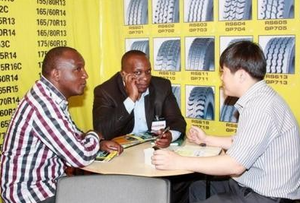
The Rise of Kenya's Automotive Industry: How Inspection, Factory Audit
The Rise of Kenya's Automotive Industry: How Inspection, Factory Audit and Certification Seize Quality Opportunities in the East African Market Introduction