
Shoes full inspection
In order to ensure the quality of every product in the entire order, customers require a quality inspection company, usually a third-party quality inspection company, to conduct a 100% full inspection of their shoes. Before or after packaging, we inspect the appearance, manufacturing process, function, safety, and packaging of each pair of shoes according to the key points of shoe inspection and shoe quality standards. Or we conduct a full inspection of the shoes according to the customer's requirements, select defective products, and return them for repair to ensure that every product packed in the box meets the requirements. 
1. Shoe inspection classification
- Sports shoes inspection
- Leather shoes inspection
- Sandals Inspection
- High heels inspection
- Flat shoes inspection
- Mesh shoes inspection
- Slippers inspection
- Canvas shoes inspection
- Rubber shoes inspection
- Rain boots
- Safety shoes
- Boots inspection
2. Key points for shoe inspection
Shoe factory inspection is mainly to check the quality of shoes to ensure that 100% of the footwear products meet the standards and requirements of customers. It includes the following aspects:
1. Check the appearance of the shoes
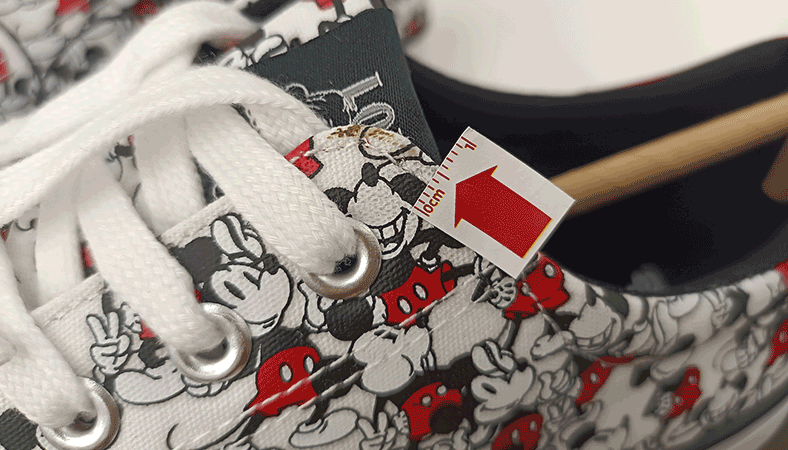
- Check whether all numbers (shoe insole, origin mark, outsole, tag, hook, number flag, etc.) are consistent;
- Check whether the upper, sole, heel and other parts have defects such as blemishes, stains, scratches, discoloration, starch loss, cracked edges, etc.
- Check whether the soles are matched and symmetrical, whether the outsole and heel are deformed, whether the outsole and heel are of the same material and color, and whether there are any stamps or reliefs on the outsole;
- Check whether the shoes are matched, whether they are symmetrical, the symmetry of the parts of the left and right feet, compare the surface treatment, color, material and texture, check whether the upper is centered and smooth, whether the outsole is matched, whether all decorations are symmetrical, check the tilt of the toe, etc.;
- Check the inside of the shoes for any sharp corners, rough edges, or protruding nails, whether there are tacks or staples, and check whether the insoles are glued flat or placed flat, etc.
2. Check if the shoe size meets the requirements
Check whether the size labels on the left and right feet are the same; whether the actual size (length) of the shoes is the same, and whether the sizes of the lining and midsole are the same.
3. Check whether the material of the shoes meets the requirements
Check whether the materials of the upper, sole, insole and other parts of the shoe are correct and meet the standards.
4. Check whether the workmanship of the shoes meets the requirements
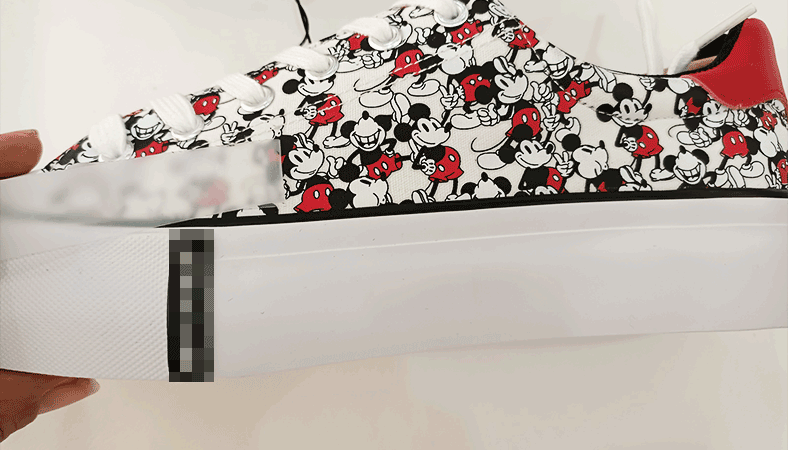
- Debonding: The finished shoes will no longer exceed 2mm, deeper than 1.5mm, and only the debonding area of the glue will be glued; the outsole and the upper are firmly bonded together without cracks or gaps.
- Damage: Check the toe, outer side of the midsole, front eye protection display surface, inner side of the midsole, back collar, tongue, and shoelaces of the finished shoes for damage;
- Firmness: The tongue must be firmly fixed and must not fall off; the webbing must be firmly fixed and must not fall off; the plastic drop, trademark, and letters must not fall off; hot cutting must be firm and must not fall off; transfer or cloth label size must not fall off; component stitching must be firm and must not fall off; metal buckles that are cracked, deformed, loose, without bottom buckles, or paint peeling are unqualified; plastic drop buckles are not firm, easy to break, and are unqualified; large bottom labels are not firmly connected and are unqualified; sole combinations are not firm and delamination is unqualified.
- Color difference: There should be no color difference in the symmetrical parts of the single upper and the left and right feet of the whole pair of shoes; there should be no color difference in the left and right soles, and there should be no color difference in the side walls of the soles. The bottom pattern is acceptable with slight color difference; accessories, such as trademarks, ribbons, plastic dripping, electric rust, high frequency, and printing are not allowed to have serious color difference.
- Sewing: Any part, if the sewing machine is broken, it will be unqualified; if there is no bottom line, it will be unqualified; if the sewing machine needle drops, it will be unqualified; if the double needle thread connection, repeated needles, thread stringing, line spacing is seriously uneven, and not smooth, it will be unqualified; the stress-bearing parts, the bottom line of the main parts are generally too loose, and the surface thread floats, which is unqualified; the margin and stitch distance are seriously uneven, the line is not smooth, which seriously affects the appearance and is unqualified; the left and right stitches are not the same color, and the single and double needle threads are not correct, it will be unqualified.
5. Check if the shoes are functioning properly
- Check the anti-slip properties of the soles, the comfort of the insoles, etc.
- Check that all trims are securely attached and that all accessories are functioning and looking good, including grommets, snap fasteners, zippers, eyelets, D-rings, hooks and buckles.
6. Issue inspection report
Issue inspection reports and provide timely feedback to production and quality management departments so that defects can be repaired in a timely manner and product quality can be improved.
3. Shoes Inspection Workflow
According to the order quantity and inspection time of the footwear products, confirm the number of inspectors and arrive at the factory for a full inspection of the shoes at the time specified by the customer or the time when the supplier's products are completed.
Generally, the factory provides the inspection site and conducts 100% inspection on the shoes according to the inspection standard operation instructions provided by the third-party inspection company or the customer. After the first full inspection, the good products are packed into boxes by the factory staff. The inspection QC is responsible for supervising and confirming the packaging process to prevent foreign matter or defective products from mixing in and confirming the packaging method and quantity. The outer boxes of good products without problems are sealed and stamped with the QC seal.
Defective products are counted and classified according to defects, and then sent back for repair by factory staff. After the defect repair is completed, a second inspection is carried out until all shoes are 100% qualified.
Note:
1. In order to ensure on-time delivery and shoe quality, traders need to send a professional third-party inspection company QC to the factory to conduct a full inspection of shoes to ensure that defective shoes are repaired in a timely manner and minimize the losses caused by quality problems.
2. In order to better ensure the quality of the goods after inspection, inspection and packaging must be carried out simultaneously. That is, before the inspectors leave the inspection site at each time period, the inspected goods must be packed into boxes under the supervision of QC. This prevents the factory from mixing defective goods into boxes.
3. Any defects/problems that can be found in the above inspection shall be recorded in the inspection report according to the description/classification of the footwear defects and photographed.
4. Shoes Inspection Report
Shoe inspection reports are usually divided into three parts: 1. Shoe inspection report, daily inspection report; 2. Defect pictures: 3. Abnormal conditions, reasons, and repair processing.
1. Shoes inspection report
Shoe inspection reports are generally daily reports, requiring inspectors to fill out inspection reports every day, feedback on the day's full inspection results, and record in detail the inspection date, inspection standards, model number, number of inspected products, number of good products, number of defective products, defective rate and defect details including all defect classifications.

2. Defect images
All different types of defective shoes will be photographed and recorded according to defects such as breakage, scratches, color difference, wrinkles, poor sewing, poor printing, overflowing glue, bubbles, dirt, poor bottoming, poor labeling, asymmetry, lack of glue, different feet, wrong code, poor accessories, and poor garter, and feedback will be given to customers.

3. Abnormal conditions, causes, and repair procedures.
Report abnormal situations, classify by defects, and notify the warehouse to follow up on the problem items for repair.
Share this product
Shoes full inspection
In order to ensure the quality of every product in the entire order, customers require a quality inspection company, usually a third-party quality inspection company, to conduct a 100% full inspection of their shoes. Before or after packaging, we inspect the appearance, manufacturing process, function, safety, and packaging of each pair of shoes according to the key points of shoe inspection and shoe quality standards. Or we conduct a full inspection of the shoes according to the customer's requirements, select defective products, and return them for repair to ensure that every product packed in the box meets the requirements.