

Crane Inspection Guide: Standards, Component Checks, and Third-Party Certification
Cranes are indispensable across construction, manufacturing, and logistics, moving massive loads with precision and efficiency. However, with that power comes serious responsibility. Crane failures can lead to catastrophic accidents, fatalities, and regulatory penalties. A systematic inspection and certification regime is essential for safe operation and regulatory compliance. This guide covers key standards, critical component inspections, load testing, and third-party verification for both in-service and used cranes.
1. Regulatory Standards and Inspection Frequency
In the United States, OSHA regulations (29 CFR 1910.179 for general industry, 29 CFR 1926.1412 for construction) and ASME B30 standards govern crane safety. Under ASME B30.5, mobile cranes require three inspection tiers: pre-use/shift inspections (operator-performed), periodic inspections (monthly/quarterly by a designated person), and annual comprehensive inspections by a qualified inspector. Documentation is critical: monthly reports retained for 3 months, annual reports for 12+ months.
2. Critical Component Inspection
Wire Ropes (ISO 4309:2017) – Inspect for broken wires (6 randomly distributed in one lay, or 3 in one strand, exceeds discard criteria). Diameter reduction over 5% (measure with calipers) mandates discard. Inspect for kinking, bird-caging, crushing, heat damage, and corrosion.
Hooks & Load Blocks – Measure throat opening; deformation exceeding 15% of original width requires discard (ASME B30.10). Twist exceeding 10° from plane requires removal. Safety latches must engage fully and swivel freely.
Boom & Structure – Inspect for cracks, dents, bends, corrosion, and signs of welding or repair. For lattice booms, check chords and lacing; for telescopic booms, check wear pads and extension/retraction mechanisms. Use dye penetrant or magnetic particle testing (NDT) for surface and near-surface cracks in critical welds.
Hoist & Trolley – Examine drum grooves, mounting bolts, and braking systems. Conduct a drift test: with a rated load, brakes should hold without significant drift.
Electrical & Control Systems – Limit switches, anti-two-block devices, load moment indicators, emergency stops, and warning alarms must all function correctly. Test upper limit switch at slow speed; verify anti-two-block device stops hoist before two-blocking.
Hydraulic Systems – Inspect hoses, fittings, cylinders, and pumps for leaks, unusual noises, slow or jerky movements, and contamination.
Crane Movement & Brakes – Check bridge, trolley, and hoist movements for smooth operation. Verify parking brakes and rail clamps hold position; test hoist brake with rated load.
3. Load Testing & Operational Checks
OSHA and ASME require load testing for new, extensively repaired, or altered cranes. Rated load tests must be performed by a qualified person, with test loads not exceeding 125% of rated load. Raise the test load 6–12 inches and hold for 10 minutes, checking for load drift, brake slippage, or abnormal sounds.
Pre-operational visual inspection by the operator each shift includes functional tests of hoist/trolley/bridge, visual inspection of hooks, ropes, sheaves, and checking for excessive brake wear.
4. Used Crane Inspection – Buying Guide
When purchasing a used crane, a thorough inspection prevents expensive surprises. Key steps include:
-
Documentation review – Verify serial numbers/VINs match documentation; review complete service history, oil changes, hydraulic service, wire rope replacements, and structural repairs. Gaps in records are red flags.
-
Boom inspection – Check for cracks, dents, bends, and welding repairs. Fully extend telescopic booms to inspect internal wear pads and cylinders. For lattice booms, inspect each section’s chords and lacing.
-
Wire ropes and hooks – Apply the same discard criteria as in-service cranes. Replacement costs are significant.
-
Hydraulic system – Look for leaks, contamination, and sluggish operation. A hydraulic pressure test and fluid contamination analysis are recommended.
-
Engine and powertrain – Listen for knocking, check for leaks, observe exhaust color. An oil analysis can reveal internal wear, coolant leaks, or fuel dilution.
-
Turntable and swing bearing – Excessive play, unusual noises during rotation, or visible damage to bearing teeth are red flags. Repair is expensive.
-
Tires or tracks – Check for uneven wear, sidewall cracking, or missing pads.
Never buy sight unseen. If you cannot inspect in person, hire a qualified third-party inspector. If the seller refuses inspection, walk away.
5. Third-Party Inspection & Certification
Accredited third-party providers (e.g., TÜV SÜD, DEKRA) offer independent inspection, testing, and certification services. These providers perform conformity assessments per Machinery Directive 2006/42/EC, ISO, EN, ANSI, and OSHA standards, covering technical safety evaluation, structural analysis, and design drawing review.
NCCCO’s CraneSafe USA Green Sticker program provides standardized periodic crane inspections, using CCO-certified inspectors and equipment-specific forms to ensure consistent, defensible outcomes.
A robust inspection and certification program extends equipment lifetime, minimizes liability, ensures operator safety, and protects your bottom line. Always verify your provider’s credentials and ensure reports are retained as required by regulations.
Share this product
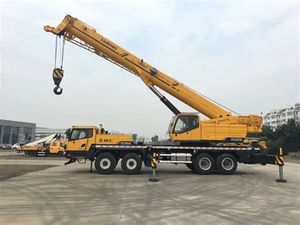
Crane Inspection Guide: Standards, Component Checks, and Third-Party C
Cranes are indispensable across construction, manufacturing, and logistics, moving massive loads with precision and efficiency.