

How to Detect Hidden Problems in Used Excavators: A Component-by-Component Guide
When inspecting a used excavator, obvious defects like broken tracks or leaking cylinders are easy to spot. The real danger lies in hidden problems – internal wear, hidden cracks, and intermittent faults that only appear under load. This component-by-component guide helps you uncover what sellers don’t want you to see.
1. Engine: Beyond the Start-Up
Cold start – Always ask the seller not to warm the engine before you arrive. A healthy diesel engine should start within 3-5 seconds.
Exhaust smoke analysis:
| Smoke type | Likely cause | Severity |
|---|---|---|
| White (lingering) | Injector issues, low compression | High |
| Blue | Oil burning (rings, valve seals) | High |
| Black under load | Fuel over-supply, air restriction | Medium |
| Brief black on start-up | Normal for many diesels | Low |
Listen for irregular noises – A knocking sound that speeds up with RPM indicates a failing connecting rod bearing or piston pin. A high-pitched squeal may be a turbocharger bearing failure.
Check blow-by – With engine idling, remove the oil filler cap. Light vapor is normal. Heavy, pulsing smoke that blows the cap off indicates worn piston rings – an engine rebuild is coming.
2. Hydraulic System: The Costliest to Repair
Pump noise – Whining, knocking, or screeching from the hydraulic pump indicates cavitation (low oil level or clogged suction strainer) or internal wear. A pump in good condition is surprisingly quiet.
Cylinder drift – quantitative test – Extend the boom cylinder fully, stop the engine, and mark the rod position. After 5 minutes, measure the drift. Over 10mm of drift means worn piston seals. For arm and bucket cylinders, anything over 5mm of drift is suspicious.
Pilot system delay – Operate the joysticks rapidly. There should be no noticeable delay between lever movement and attachment response. Delay indicates low pilot pressure or worn pilot valves.
Oil sampling – Draw hydraulic oil from the tank (not from a recently changed filter). Send it to a lab for particle count and viscosity analysis. ISO 4406 code above 18/16/13 indicates contamination that will accelerate pump wear.
3. Undercarriage: Reading the Wear Patterns
Track link wear – Measure the link height using a caliper. A new link is approximately 30-35mm. At 25mm, replacement is needed. Uneven wear between left and right tracks suggests the machine operated mostly on slopes or with frequent counter-rotation turns.
Sprocket hooking – A new sprocket has symmetrical teeth. When the leading edge becomes hooked, the track will climb and jump. Measure the tooth height; if less than 50% of original, replace soon.
Roller condition – Jack up one side and spin each roller. A seized roller will have flat spots and will not turn freely. Worn rollers develop scalloped (wavy) surfaces.
Track tensioner – Check for grease leakage around the adjuster cylinder. If the track sags more than 60mm and cannot be tightened, the tensioner seals have failed.
4. Structure: Finding Hidden Cracks
Boom and arm – Use a dye penetrant spray kit on high-stress areas: the boom foot, the arm-to-boom pivot, and the bucket linkage. Clean the area, apply penetrant, wait 10 minutes, then developer. Any red lines indicate cracks.
Main frame – Inspect around the slew ring mounting bolts. Cracks often start from bolt holes. Also check the track frame attachment points. A cracked frame is difficult to repair properly.
Slew ring inspection – Park on level ground. Place a dial indicator against the track frame and lift one track with a jack. Vertical movement exceeding 3mm indicates slew ring wear. Grinding sounds during swinging also confirm wear.
5. Electrical & Monitoring Systems
Diagnostic scan – Use a manufacturer-specific or multi-brand scanner. Look for:
-
ECU hours – Compare with dashboard hours. A mismatch confirms tampering.
-
Active fault codes – Engine, hydraulic, and emissions codes.
-
Over-temperature events – Repeated overheating logged in ECU indicates chronic cooling problems.
Harness condition – Inspect wiring harnesses for rodent damage, chafing, and splices. Poor repairs cause intermittent faults that are difficult to diagnose.
Display functionality – Check every gauge, warning light, and the main screen (if equipped). Non-functional displays may hide warnings.
6. Operational Test: The Final Verdict
Digging test – Excavate a trench in compacted soil (not loose stockpile). The machine should not stall or bog down. Listen for hydraulic relief valves – they should activate only at full stall, not during normal digging.
Swing test – Rapidly swing 180° left and right. Jerky motion or grinding sounds indicate slew ring or swing motor wear. The swing brake should hold the position firmly.
Tracking test – Drive the machine forward 50 meters on level ground. If it crabs (moves diagonally), the final drives are mismatched or one side has worn components. Drive backward the same distance – the crab direction may reverse.
Over-temperature test – After 30 minutes of heavy work, use an infrared thermometer to measure:
-
Engine coolant at radiator top hose: normal 80-95°C
-
Hydraulic oil at tank: normal 50-80°C
-
Final drive housings: normal 60-80°C
Any reading above 100°C indicates cooling system deficiencies.
7. Common Seller Tricks & Countermeasures
| Trick | What to look for | Countermeasure |
|---|---|---|
| Thick oil in hydraulics to mask noise | Oil viscosity visibly high (pours slowly) | Warm machine fully; noise returns |
| Stop-leak in radiator | Sealer residue in coolant | Test coolant with a refractometer |
| Turned tracks (flipped) | Worn inner pin surfaces, mismatched tension | Measure pin boss height |
| Painted-over cracks | Thick paint in specific areas | Use paint thickness gauge; tap with hammer |
| Reset fault codes before inspection | Many monitors show “not ready” | Drive machine until monitors complete |
8. Third-Party Inspection & Certification Checklist
A professional inspection and certification service should provide:
-
Engine – Cold start video, blow-by measurement, compression test (optional), oil sample bottle
-
Hydraulics – Cycle times, drift measurements, pump noise recording, oil sample
-
Undercarriage – Track sag, link height, sprocket tooth percentage, roller spin test
-
Structure – Dye penetrant results, slew ring play measurement, frame crack map
-
Electrical – Diagnostic scan printout, ECU hours, active fault list
-
Operational – Test drive log, temperature readings, performance notes
-
Final assessment – Clear statement: “Buy”, “Negotiate repairs”, or “Avoid”
9. Repair Cost Estimator (Parts & Labor, USD)
| Finding | Estimated repair |
|---|---|
| Worn piston seals in boom cylinder | 800–1,500 |
| Main hydraulic pump replacement | 6,000–12,000 |
| Slew ring replacement | 10,000–22,000 |
| Full undercarriage (tracks, sprockets, rollers) | 12,000–20,000 |
| Engine in-frame overhaul | 10,000–18,000 |
| Cracked boom weld repair | 2,000–5,000 |
| Final drive motor replacement | 5,000–9,000 each |
Add these potential costs to the asking price to determine true value.
10. Summary: Your Pre-Purchase Inspection Sequence
-
Paperwork – Service records, hour logs, ownership history, warranty status.
-
Cold start – Record smoke, start time, and idle stability.
-
Walk-around – Visual inspection, paint thickness, loose bolts.
-
Undercarriage – Measurements and wear assessment.
-
Structure – Dye penetrant on critical welds, slew ring play.
-
Hydraulics – Cycle times, drift, pump noise, oil sample.
-
Engine – Blow-by, coolant condition, turbo play.
-
Electrical – Diagnostic scan, display functions.
-
Work test – Digging, swinging, tracking, temperature readings.
-
Report – Third-party certification with all findings.
Conclusion
A thorough inspection is the only reliable way to avoid buying a used excavator with expensive hidden problems. By following this component-by-component guide, you can identify wear patterns and defects that even experienced operators might miss. For the highest level of confidence, hire an independent inspection and certification service. The cost of a professional verification is a fraction of the price of a new hydraulic pump or slew ring. For more expert inspection knowledge, stay tuned.
Share this product
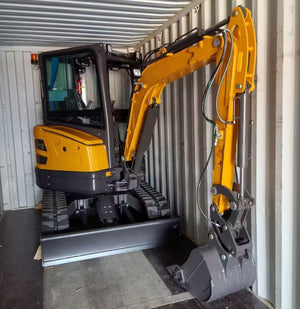
How to Detect Hidden Problems in Used Excavators: A Component-by-Compo
When inspecting a used excavator, obvious defects like broken tracks or leaking cylinders are easy to spot.