

Quality control of functional socks: Inspection, factory verification, testing and certification urgently need to be improved
With the improvement of people's living standards and the change of consumption concepts, as well as the demands of certain special industries, various functional socks with high technological content have emerged. Some enterprises often use functionality as their selling point, marking words such as antibacterial, far-infrared, flame retardant, acupoint massage, anti-chapping skin care, etc. on the product labels. However, after actual use, the actual functions of these products are often lacking in effective verification methods.
For functions such as acupoint massage and anti-chapping skin care, there are currently no unified testing methods and standards set by the state or the industry, resulting in a lack of criteria for inspection and testing. However, for functions such as antibacterial properties, far-infrared functionality, and flame retardancy, there are already corresponding testing standards, for example:
FZ/T 64010—2000 "Far-Infrared Textiles"
FZ/T 73023—2006 "Antibacterial Knitted Products" (Applicable to antibacterial knitted products made of natural fibers, chemical fibers, and blended fibers)
GB/T 17951—2006 "Flame Retardant Fabrics" (Applicable to woven and knitted fabrics used for decoration, vehicle interiors, and flame retardant protective clothing)
However, in actual production, many enterprises mainly adopt the FZ/T 73001 "Socks" standard. This standard does not refer to the aforementioned functional standards and does not assess functional items. This results in the national quality supervision department lacking assessment basis and evaluation indicators when conducting market quality supervision. The inspection and certification system for functional products urgently needs to be improved and complemented.
Therefore, for purchasers and brand owners of functional socks, establishing a strict inspection process, conducting factory audits on suppliers, and carrying out inspections and certifications in accordance with relevant standards are crucial for ensuring the authenticity and reliability of the product functions. Suggestion:
During the inspection stage, in addition to the routine items such as appearance, size, and color fastness, sampling tests for corresponding functional indicators should also be conducted.
During the factory inspection process, the focus is on verifying whether the factory has the ability to provide stable supplies of functional materials and whether the production environment meets the requirements for functional processing.
The supplier is required to provide a third-party inspection report or certification certificate to prove that the product's antibacterial rate, far-infrared emission rate, flame retardancy, etc. meet the claimed values.
Only through systematic quality control - including inspection, factory verification, testing and certification - can we avoid "false function labeling", protect consumers' rights and interests, and promote the healthy development of the industry.
Share this product
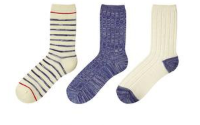
Quality control of functional socks: Inspection, factory verification,
Quality control of functional socks: Inspection, factory verification, testing and certification urgently need to be improved