

Special inspection of the hydraulic system of the excavator: A thorough examination from "blood" to "heart"
The hydraulic system is the core of the power transmission for excavators, and is referred to as the "blood circulation system" of the machine. More than 70% of the major overhauls of second-hand excavators are caused by hydraulic failures. This article focuses on the hydraulic system and provides a set of quantifiable detection methods.
1. Hydraulic oil: "Blood" Examination
Three aspects to observe in appearance
Color: Normal color is light yellow and transparent. Milky white → Water ingress; Dark brown close to black → High temperature oxidation; Grayish black → Severe contamination by metal powder
Fluidity: When dropped on a white sheet of paper, the oil spreads out evenly as normal; if it gathers into beads and does not spread out → The viscosity is too high or it has deteriorated.
Bubble: After stirring, the bubbles should disappear within 15 seconds. If they don't disappear for a long time, it indicates that the oil level is too low or there is a leak in the return oil pipe.
Odor judgment
Charcoal-like smell → The hydraulic system was once overheated (above 110℃), and the seals and pipelines had aged.
Fuel odor → The main pump shaft oil seal is damaged, engine diesel is mixed in, and the lubrication performance has sharply declined.
Metal particle inspection
Insert a magnet into the bottom of the hydraulic oil tank to attract iron filings:
A small amount of fine powder → Normal wear and tear
It can be seen that the sheet-like iron filings have peeled off inside the pump or motor.
Copper-colored particles → Severe wear of copper sleeves or thrust plates
II. Main Pump: The Power Heart
Pump body temperature
After working for 30 minutes, measure the temperature of the pump housing using an infrared thermometer:
The normal temperature is 5 to 10 degrees higher than the hydraulic oil temperature.
More than 20℃ higher → Severe internal leakage or the bearing is about to get stuck
Load the speed drop test
Hold all actions, observe the engine speed:
The rotational speed decreases by no more than 200 rpm → The pump power is matched normally
Severe speed drop or even engine stall → Fault of the pump regulator or proportional solenoid valve
Noise Diagnosis
High-frequency whistling → Blockage of the oil suction pipe or too low viscosity of the oil
Irregular "clicking" metallic impact → The plunger sliding shoe has come off. The machine must be stopped immediately.
Continuous dull "buzzing" → Excessive bearing clearance
Variable mechanism response
When the quick operation handle is moved from idle to full throttle, the pump should simultaneously change its displacement. If there is a delay of more than 1 second → The servo piston or control valve becomes stuck.
III. Main Control Valve: The Central Nervous System
Valve core oil leakage test
Retract the bucket all the way back and do not release the handle. Observe if the bucket arm slowly extends outward. If there is a significant outward extension → The valve core gap is too large and internal leakage is severe.
Verification of the merging function
Perform the combined action of lifting the arm and retracting the bucket arm. The speed should be significantly faster than that of a single action. No obvious acceleration during merging → Merging valve failure or valve core jamming
Lead pressure measurement
Connect a pressure gauge to the lead oil circuit interface: The normal value is 35 to 45 kg/cm². If it is lower than 30 kg/cm², it indicates that the lead pump is worn or the filter is clogged, resulting in heavy operation and sluggish response.
Overflow valve pressure test
Block each action and record the overflow pressure:
It should reach the original factory value (usually 320 - 350 kg/cm²) and the pressure for each action should be consistent.
If the pressure of a certain action is too low → It indicates that the spring of the relief valve is worn out or the valve seat is damaged.
IV. Execution Components: Hydraulic Cylinders and Motors
Measurement of internal leakage in the cylinder (comparison of cold and hot conditions)
Perform the settling test by cooling the machine to below 65℃ and then heating it to above 65℃:
The thermal settling amount of the hot machine is much greater than that of the cold machine → The sealing material ages and cannot fit tightly against the cylinder wall after thermal expansion
If the temperature difference between the hot and cold parts is too large, it will cause the piston to wear out or the cylinder liner to be scratched.
Leakage classification of hydraulic cylinders
The oil film at the rod seal is moist but does not drip → Acceptable
Formation of oil droplets adhering to the wall → Needs to be replaced soon
Continuous leakage → Sealing has failed, and the hydraulic oil has been contaminated
Brake performance of the rotating motor
The excavator is parked on a slope (about 15°), the engine is turned off, and observe if it slowly slides down. If the displacement exceeds 10cm within 5 minutes → The rotating brake valve is leaking or there is severe leakage in the motor
Motor end cover temperature during walking
Immediately measure the temperature difference between the two motor end covers after heavy-duty walking:
Within 10℃ difference → Normal
Significantly higher on one side → Fault of the balance valve or the oil replenishment valve on that side
V. Auxiliary Components: Heat Dissipation and Filtration
Examination of the return oil filter
Remove the return oil filter and cut open the pleated paper:
A large amount of copper powder → Wear of the pump plunger or the distribution plate
Rubber fragments → Peeling off the inner layer of the hose
Fibrous floccule→ Oil seal damage
The temperature difference between the front and rear of the radiator
After working for half an hour, the temperature gun measured the temperatures at the inlet and outlet of the radiator:
Temperature difference ≥ 8℃ → Good heat dissipation
Temperature difference < 5℃ → Radiator clogged or fan belt slipping. Immediate cleaning is required.
Respirator blockage inspection
When the engine is idling, open the fuel filler cap of the hydraulic oil tank. If there is a strong negative pressure that causes the cap to be sucked in → The respirator is blocked, which can lead to pump suction failure and damage.
Share this product
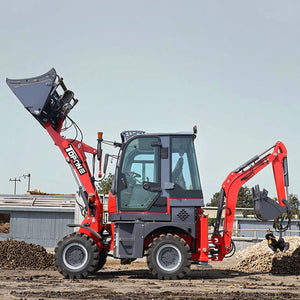
Special inspection of the hydraulic system of the excavator: A thoroug
The hydraulic system is the core of the power transmission for excavators, and is referred to as the "blood circulation system" of the machine.