

Supervision and Inspection at Loading: The Last Line of Defense for Quality Before Shipment
Title: Supervision and Inspection at Loading: The Last Line of Defense for Quality Before Shipment
During the process of goods shipment, container loading is a very crucial step. Even if the products have been strictly inspected and are of qualified quality, they may become defective during transportation if the loading method is incorrect. Improper loading and inadequate process monitoring may further lead to various problems such as the products not arriving at the correct destination on time, shortage of goods quantity, and damage due to moisture.
As the final step in the goods monitoring during the manufacturing process, the loading inspection is usually carried out in the manufacturer's warehouse or the freight company's premises. During the inspection, professional inspectors will supervise the entire container loading process to ensure that the delivered products and quantities are accurate. This is an important guarantee for customers to receive qualified products and an indispensable part of the supply chain quality control system.
Key points of loading inspection and verification
1. Inspection of container condition
Before loading, the inspector conducts a comprehensive inspection of the container:
Is the box intact? Are there any holes, cracks or deformations?
Whether the box door can be closed and sealed normally and whether the lock catch is in good condition.
Is the interior clean and dry? Are there any odors, residues or signs of moisture?
Are there any oil stains or chemical residues that may contaminate the products?
2. Product Conformity Verification
Check the inspection report and order requirements to confirm that the products to be loaded have passed the inspection and certification.
Check whether the product model, specification, color, etc. are consistent with the documents.
Confirm that the product packaging is intact, with no obvious damage or signs of re-packaging.
3. Supervision of the container loading process
Supervise the loading and unloading personnel to operate in accordance with the norms to prevent rough handling from causing damage to the products.
Check whether the heavy items are placed at the bottom and whether the light and fragile items are placed properly.
Make sure the products are stacked neatly and there is sufficient ventilation space.
Supervise whether the fixed measures are in place to prevent the goods from shaking and colliding during transportation.
4. Product Quantity and Classification
Count the quantity of each item being loaded into the container one by one to ensure it is exactly the same as the packing list.
Check whether products of different models and specifications are stored in separate areas to avoid mixed storage.
Confirm that the labels of the end-number boxes and odd-number boxes are clear and the quantities are accurate.
5. Product Packaging Inspection
Confirm that the packaging box is intact, without moisture, damage or deformation.
Check whether the inner packaging is in place and whether the shockproof and moisture-proof measures are effective.
Pay special attention to the packaging protection level of fragile and valuable items.
6. Box label verification
Confirm that the information on the carton label is exactly the same as the order requirements, including the destination port, consignee, item number, etc.
Check that the box labels are firmly attached, in a prominent position and not prone to falling off.
Check whether special labels (such as "Fragile", "Keep Dry", "This Side Up", etc.) are complete.
7. Weather Condition Assessment
When loading the container on a rainy day, make sure there are rainproof measures in place to prevent the products from getting damp.
Under high temperatures or extreme weather conditions, confirm the product's tolerance and necessary protection.
According to the weather conditions, it is recommended to take additional moisture-proof and sun protection measures when necessary.
8. Conformity to Customer's Special Requirements
Check the implementation of each item against the specific requirements clearly stated by the customer in the inspection commission.
If there are any special loading methods, reinforcement requirements or marking regulations, ensure that they are fully implemented.
Take photos to record key steps as the basis for subsequent verification and traceability.
The Value of Supervision and Inspection at Loading
For products that have undergone strict factory audits and multiple inspections during the production process, supervision and inspection at loading is the last line of defense to ensure quality. It not only guarantees that the products reach customers in perfect condition but also represents the ultimate fulfillment of the supplier's quality commitment.
Professional third-party inspection agencies provide customers with the following services through on-site supervision and inspection:
-
Objective and impartial on-site supervision records
Detailed loading supervision reports and video materials
A traceable evidence chain of the entire container loading process
Proof of container loading in compliance with international trade requirements
In the highly competitive global trade, a successful delivery not only depends on the product's own certification and qualification, but also on the precise control of every link from production to transportation. Supervision and inspection during loading is precisely the key link to ensure the integrity and closure of this chain.
Share this product
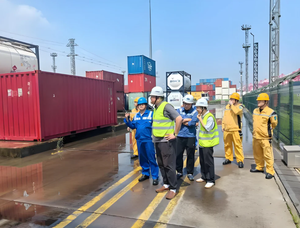
Supervision and Inspection at Loading: The Last Line of Defense for Qu
Supervision and Inspection at Loading: The Last Line of Defense for Quality Before Shipment