

The inspection methods, procedures and precautions for asphalt pavers
Asphalt pavers are the key equipment for asphalt pavement construction on highways, municipal roads, airport runways, large squares, etc. They evenly spread the asphalt mixture, initially vibrate and compact it, and then smooth it into shape. The quality of their operation directly determines the smoothness, density and service life of the pavement. The paver's structure is complex, integrating functions such as walking drive, material hopper feeding, spiral material distribution, vibration and compaction, heating of the smoothing plate, and automatic leveling. Any malfunction or deviation in any part will manifest as a quality defect of the pavement in the final project. During scenarios such as new machine delivery and acceptance, second-hand equipment trading, lease asset return inspection, and major repair factory inspection, a comprehensive inspection covering the smoothing plate assembly, spiral material distribution system, walking system, automatic leveling control and power transmission hydraulic system is a core means for accurately determining the paving accuracy and residual value of the equipment. From the perspective of third-party inspection and factory inspection, this article systematically analyzes the key technical points of the inspection for asphalt pavers.
I. Overview of Inspection Methods
Based on the spreading width grade of the asphalt paver, the walking form (tracked/ wheeled), the form of the leveling plate (mechanically widened/hydraulically extendable), the leveling control method, and the client's requirements, the inspection usually employs the following methods in combination:
Static full inspection: The vehicle is left stationary. For the main frame, hopper, scraper conveying chain, spiral divider, flat iron assembly, walking tracks/tires, driver's cabin/operation console, power transmission assembly, hydraulic system, electrical and leveling control system, heating system, etc., each item is inspected visually, touched by hand, and precisely measured using measuring tools.
Dynamic operation test: Start the engine on a safe site to verify all functions including the opening and closing of the hopper, the conveying of the scraper, the separation of the screw, the vibration/oscillation, the lifting and extension of the iron plate, the movement and steering.
Verification of paving accuracy (if conditions permit): Conduct a short-distance paving test on the designated site, using a 2m straightedge/3m straightedge or a laser level gauge, to verify the flatness, initial compactness and thickness consistency of the paved surface.
Document and label traceability: Verify the consistency between the entire machine label, the host frame number (PIN code), the engine label, the ironing plate label, the main hydraulic component label and the factory documents.
The third-party inspection is carried out based on the "static full inspection + dynamic operation test + functional verification" package. For high-value transactions or disputes over accuracy, it is strongly recommended to add the test for pavement accuracy and the measurement of the flatness of the iron plate base.
II. Inspection Process
1. Data Collection and Preparation for Inspection
The client shall provide a list of asphalt pavers to be inspected, clearly specifying the manufacturer, model, rated power, maximum paving width, maximum paving thickness, form of the leveling plate (mechanical widening/hydraulic telescopic), walking form, leveling control method (mechanical sliding shoe/ultrasonic/laser), working hours, applicable standards (such as GB/T 16277, JT/T 972, etc.). The inspector shall prepare: long tape measure/ laser distance meter, 2m straight ruler/3m straight ruler and feeler gauge, vernier caliper, ultrasonic thickness gauge, steel ruler, infrared thermometer, hydraulic pressure gauge set, noise meter, oil sample bottle, etc.
2. Confirmation of Venue and Safety Conditions
The inspection site should be a solid and flat hard surface with sufficient area for the full-scale operation and movement of the paver. If a trial paving is to be conducted, the client should coordinate the test site and the asphalt mixture. The test area should be isolated and guarded. The inspectors should wear safety helmets, reflective vests, anti-shock shoes, and heat-resistant gloves (when in contact with the heating plate).
3. Identity and Label Verification
Host rack number (PIN code): It has been imprinted and compared with the entire machine's nameplate and factory documents. There is no grinding or tampering.
Machine nameplate: Verify the manufacturer, model, factory serial number, manufacturing date, working weight, rated power, maximum paving width, etc.
Engine nameplate: Verify the model, serial number, power, and emission stage.
Ironing plate label: Records the model number of the ironing plate, basic width, configuration of the extension section, and vibration/vibration type.
Main hydraulic component nameplates: Model and serial number records for the walking pump/motor, conveying pump/motor, and vibrating/oscillating pump/motor. Any discrepancy in the information must be escalated as a serious non-conformity.
4. Inspection of the mainframe and structural components
Frame of the main unit: Use a strong flashlight to closely inspect the weld seams of the longitudinal and transverse beams of the frame. Key areas: Hinge seat of the hopper, traction arm mounting seat of the ironing plate, walking drive installation seat, engine/hydraulic pump mounting base. Look for weld cracks, base material deformation, and repair weld marks.
Hopper: There is no leakage in the left and right hopper opening hydraulic cylinders. The condition of the hopper bottom plate - measure the thickness of the bottom plate at multiple points using an ultrasonic thickness gauge. The side plates of the hopper have no severe deformation or cracking. Inspection of the hinge pin shaft and bushing clearance of the hopper.
Traction Arm: The left and right traction arms are the key load-bearing components that connect the main frame to the ironing table. Check for any bending or deformation of the traction arm body, as well as any cracks in the weld seams. Measure the clearance between the connection pin of the traction arm and the main frame. The length adjustment mechanism of the traction arm (if equipped) functions properly.
5. Inspection of the scraper conveying system - Material passage from the hopper to the screw
Scraping plate conveying chain: Open the bottom observation cover of the hopper, check the tension of the left and right scraping plate conveying chains. Excessive slack in the chains can cause teeth jumping. Inspection of chain link wear, checking for any bending or detachment of the scraping plate crossbars. Inspection of the wear condition of the scraping plate drive sprocket tooth surface.
Machining wear plates for the conveying channel: The wear condition of the wear plates at the bottom of the conveying channel. If the plates are worn through, it will damage the structure of the main frame.
Material feeding ratio control: The speed of the scraper for material feeding should be independently and continuously adjustable. The ultrasonic material level sensor for feeding (if equipped) or the mechanical material level detection plate function should be normal - the feeding stops automatically when the material level reaches the set height.
6. Inspection of the spiral feeding system - The core of material distribution for the spreading width
Spiral feeder: Wear condition of the left and right spiral blades - records of blade edge thinning, notches, and fractures. Visual inspection of the straightness of the spiral shaft - a bent spiral shaft will cause uneven feeding and uneven wear on the bearings. The spiral hanging bearing seat is firmly fixed and the grease filling status is normal.
Screw height adjustment: The height of the screw feeder should be adjustable mechanically or hydraulically according to the paving thickness. The height adjustment mechanism is free from jamming and the locking is reliable.
Material distribution uniformity: During the dynamic test, when observing the operation of the spiral feeder, the mixture should form a uniform pile height in front of the pressing plate, with no obvious segregation.
7. Inspection of the ironing plate assembly - Core working device
This is the most valuable component of the paver and has the most direct impact on the quality of the road surface.
Ironing plate base plate: Use a 2m straight ruler or steel ruler to closely align it in multiple directions along the longitudinal and transverse directions of the ironing plate base plate. Use a feeler gauge to measure the gap between the ruler and the base plate. The flatness deviation of the base plate exceeding the manufacturer's standard (usually requiring no more than 1-2mm within the full width) will directly affect the flatness of the paving surface. Base plate wear - Use an ultrasonic thickness gauge to measure the thickness of the base plate at grid points on the mesh fabric, and record the thinnest point. If there are贯穿 wear holes on the base plate, it is a mandatory replacement item.
Connection of the ironing table sections: The connecting bolts between the mechanical extension sections should be tightened. The joint surfaces of the sections should be flat - check with a straightedge across the joint to ensure there are no uneven elevations.
Ironing table extension mechanism (hydraulic telescopic type): The extension section moves smoothly throughout its full range of motion. The gap between the guide rail/滑块 is measured. The extension cylinder shows no leakage.
Vibration/振动 mechanism: The vibration motor and eccentric shaft drive mechanism have no oil leakage and no abnormal noise during operation (tested during dynamic testing). The vibration frequency and amplitude should be adjustable (for high-end models). The vibrator functions normally.
Heating system: The heating method for the ironing plate is usually electric heating or gas heating.
Electric heating: After power is applied, each heating rod/heating plate heats up normally in its respective area. Use an infrared thermometer to scan the bottom surface of the ironing plate, and the temperatures in each area should be uniformly reached at the set value (usually 120-160℃). If any heating rod is disconnected or the temperature controller malfunctions, they should be counted and recorded.
Gas heating: Inspection of the sealing of gas cylinders and pipelines (leak detection test). All burners ignited normally and the flames were uniform.
Flat iron floating and inclination angle adjustment: The flat iron is connected to the main frame through the traction arm. Its floating state forms the basis for achieving the spreading thickness. The inclination angle adjustment mechanism (screw or hydraulic) functions properly and the scale indication is clear.
8. Inspection of the walking system
Track行走:Check for wear and damage of the track plates (rubber/steel). The chain track tension is appropriate. The teeth of the drive wheels are worn, and the guide wheels and supporting wheels rotate flexibly. Independent drive function for left and right tracks - test for in-place steering.
Wheeled movement: Tires are worn but the tire pressure is normal. Gaps in the steering cylinder and the ball joint of the tie rod.
Walking speed control: During the operation of the paver, an extremely low and stable walking speed (usually 1-20 m/min) is required, while during transfer, a higher speed is needed. The dynamic tests verify the stability of the low-speed operation and the absence of crawling, as well as the normal switching of the high-speed gear during transfer.
9. Automatic leveling and depth control system inspection - The "brain" for determining paving accuracy
Leveling controller: The main unit has no fault codes, displays normally. The system self-check passed.
Sensor group:
Longitudinal leveling sensor (usually an ultrasonic or mechanical sliding shoe type): The sensor is in good appearance, and the cable connections are tight. Check for wear on the mechanical sliding shoe.
Slope sensor: Installed securely and passed self-check.
Baseline/Baseline Beam (Wire Rope Leveling): Sensitivity test of the sensor to track the baseline - Manually slightly move the sensor arm, and the control system should respond promptly to adjust the inclination angle of the ironing table.
Manual/Automatic Switching: In the manual control mode, all actions are normal. When switching to the automatic mode, the system should take over the control of the ironing plate's elevation.
10. Inspection of Power Transmission System
Engine: Cold and hot starts are normal, and the idle speed is stable. The response to sudden acceleration is sensitive, and the smoke color is normal. The power output at full load (with load and spreading rotation speed) is stable. External leakage checks. The fins of the radiator are clean - the working environment of the spreader is hot and there is a lot of asphalt smoke, and radiator blockage is a common problem.
Power transmission: There is no oil leakage in the transfer case from the engine to each hydraulic pump, and there are no abnormal noises during operation.
11. Hydraulic system inspection
Hydraulic oil tank: The liquid level is within the scale range, the respirator is clean. The oil color is normal. If possible, take samples.
Multi-loop hydraulic pump set: The hydraulic system of the paver usually consists of multiple independent or closed circuits such as traveling, conveying, screwing, vibrating, shaking, and auxiliary functions. There is no leakage in each pump housing and the connecting pipelines are in good condition.
Hydraulic motor assembly:Walking motor, conveying motor, screw motor, vibrating motor, vibration motor, etc.The housing shows no leakage and the operation is without abnormal noise.
Control valve assembly: The valve body shows no oil leakage, and the pilot piping is neatly arranged.
Piping and joints: Check the aging and cracking of all hoses one by one. Focus on inspecting the hoses near the ironing plate - high temperatures accelerate the aging of the hoses. Check the interference and friction points between the piping and the frame, as well as the traction arm.
12. Electrical and Control System Inspection
Main control console: Both left and right operation consoles (large graders usually have one set of control devices on each side) all buttons, knobs, and control levers function properly. The display screen information is complete.
Auxiliary control: The auxiliary control panels on both sides of the ironing table (controlling material feeding, screw, and the extension/retraction of the ironing table) are functioning properly.
Emergency shutdown: Pressing the emergency shutdown buttons on each operation console and on the aircraft body will cause the engine to immediately shut down.
Lighting and Warning: The work lights, outline lights, warning lights, and reverse alarm function are all functioning properly.
Battery: Terminal connections are securely fastened without any corrosion.
13. Dynamic operation test
On the safety site, after the engine is started and reaches the operating temperature, proceed as follows:
Bucket operation: The left and right buckets open and close independently and synchronously, with smooth movement without any jamming.
Scraping plate feeding: The left and right scraping plates are activated separately. The feeding speed can be adjusted. The operation is smooth without skipping teeth or abnormal noises. The feeding stops automatically when the level sensor is triggered.
Spiral feeding: The left and right spirals are activated simultaneously, running at full speed smoothly without any impact or abnormal noise from the blades.
Vibration/Impaction: The vibration and impaction mechanisms were activated respectively. They operated without any abnormal sounds and the frequency adjustment was normal.
Elevating of the ironing table: The left and right traction arm hydraulic cylinders rise and fall synchronously, with smooth operation. Floating function - Lower the ironing table to the ground. Place the operation handle in the "floating" position. The ironing table should be able to freely float with the ground's undulations.
Elastic plate extension (hydraulic type): The entire stroke is extended twice to verify the smoothness and synchronization of the movement.
Walking test: The vehicle moves forward and backward at low speed with stable speed and no crawling. The gear shifting between high and low speeds is normal. The steering operation is smooth.
14. Special Test of Heating System
Start the ironing plate heating system and set the target temperature.
Use an infrared thermometer to scan the temperature distribution on the bottom surface of the ironing plate every 5 minutes, and record the time required to reach the set temperature as well as the temperature uniformity in each area.
During the heating process, check for any smoke or unusual odors (indications of short circuit in electric heating or potential gas leakage).
15. Precision test for paving trial (optional, strongly recommended)
Carry out short-distance trial paving under permitted conditions:
Surface flatness of the paving: Use a 2m straightedge (applicable to the upper layer) or a 3m straightedge (applicable to the lower layer) to measure the gap between the straightedge and the paving surface at multiple points along the paving direction both horizontally and vertically. Use a feeler gauge to read the maximum value. The flatness should comply with the relevant technical specifications.
Thickness measurement: After the paving process, multiple temperature gauges are inserted with temperature measurement pins or core samples (after cooling) to verify the consistency between the actual paving thickness and the set thickness.
Pre-compaction degree: After the pressing table, use a nuclear density meter or a non-nuclear density meter to measure the initial compactness at the rear of the pressing table to determine the working effect of the vibrating/vibration mechanism.
Paving texture: The texture of the paved surface should be uniform upon visual inspection, without any phenomena such as tearing, roughening, or segregation.
Joint quality: Inspection of the flatness of longitudinal joints and transverse joints (at the starting and ending points).
After the trial paving, immediately recheck the condition of the base plate of the smoothing machine, the state of the spiral blades, the tension of the conveying chain, and the temperature of the hydraulic system.
16. Oil Sample Collection and Analysis (Recommendation)
Extract samples of engine oil, hydraulic oil and transfer case gear oil for testing.
The cleanliness of hydraulic oil is of vital importance to the precise proportional valves of the automatic leveling system. If the cleanliness exceeds the standard, an alert should be issued.
17. Report Output
Summarize all inspection items, measurement data (such as the flatness of the base plate, the thickness of the base plate, the uniformity of heating temperature, the smoothness of the test paving, etc.), dynamic tests and test paving records, and oil analysis reports. Mark the qualified items, observation items, general defects and serious defects. Form a "Third-Party Asphalt Paving Machine Inspection Report" that includes photos with PIN codes, photos of the flatness measurement of the iron plate base, scanning photos of the heating temperature, and photos of the smoothness measurement of the test paving surface. Deliver this report to the client.
III. Notes
Ironing table base - The ultimate determinant of road surface smoothness
The flatness of the base plate of the ironing table is the most critical accuracy indicator for the paver. Once the base plate develops warping, depression or misalignment at the connection section, no matter how precise the leveling control system is, it is impossible to lay out a smooth road surface. During the inspection process, a long straight ruler (not less than 2 meters) must be used to measure in multiple directions across the full width. Any deviation exceeding the manufacturer's standards must be clearly indicated in the report.
When the bottom plate wears down to a thickness close to the critical value, its heat capacity and anti-deformation ability will significantly decrease, resulting in uneven heating and roughening of the paving surface. The thickness measurement data is the sole basis for determining the remaining lifespan of the bottom plate.
Heating system - Uniformity of the base plate is the key to preventing adhesion.
If the heating of the base plate of the iron plate is uneven, it will cause the asphalt mixture to bond in some local areas, resulting in the surface of the paving being abraded and torn. During inspection, an infrared thermometer should be used to scan the temperature distribution of the base plate. The cold areas (usually at the joint sections or the areas where the heating elements are aged) must be marked. Breakdown of the electric heating rods is a common problem, and each heating circuit should be verified.
The gas heating system must undergo a leak detection test. The aging and leakage of the gas pipeline pose a serious safety hazard.
The traction arm and the ironing plate float - the mechanism for forming the paving thickness
The ironing plate is hinged to the main frame via the traction arm and remains in a "floating" state during the paving process. Its inclination angle determines the paving thickness. During inspection, the floating function must be verified - lower the ironing plate to the ground, place the control handle in the floating position, and pressing the front end of the ironing plate should enable the free up-and-down movement. If the floating function fails (such as)If the hydraulic lock of the traction arm cylinder remains engaged, it will result in the loss of control over the paving thickness.
If the gap between the hinge pin of the traction arm is too large, the leveling plate will move back and forth during the paving process, resulting in longitudinal waves. The gap must be measured using a feeler gauge or a micrometer.
Spiral feeding height and spreading segregation
The height of the spiral feeder should be adjusted according to the paving thickness - the height of the spiral axis should be slightly higher than the loose laying thickness of the paving layer. During inspection, check whether the adjustment mechanism of the spiral height is flexible and adjustable, and whether the locking is reliable. An inappropriate height of the spiral will cause longitudinal band-like segregation on the paving surface, which should be recorded as a functional observation item in the inspection report.
Conveyor belt - A common cause of shutdown failures
After long-term operation, the pitch of the scraper feeding chain will elongate and the chain links will wear out. In extreme cases, it may even break, causing the work to be halted halfway. When the asphalt mixture cools down, the entire section will be ruined. During inspection, it is necessary to check whether the tension of the chain is within the adjustable range and whether the meshing condition between the chain and the chain wheel is good. Chains that are overly stretched should be judged as items that require mandatory replacement.
Automatic leveling system - Each sensor path must be verified
Paving machines are usually equipped with longitudinal leveling sensors and slope sensors. During inspection, the appearance and cables of each sensor are checked one by one, and the controller self-check passes. If possible, manually move the sensor arm or cover the ultrasonic probe to observe whether the control system responds accordingly with the lifting of the leveling plate. A failure of one sensor means that only the other control mode can be used, which directly affects the paving accuracy in special conditions.
Safety precautions during dynamic testing
After being heated, the surface temperature of the ironing board can reach above 160℃. Inspectors must wear heat-resistant gloves and must not touch it with their bare hands.
When the feeding chain and the spiral feeder are in operation, it is strictly prohibited to insert hands or tools into the hopper or the spiral groove.
When conducting the trial paving, the process of the dump truck unloading materials into the hopper is a high-risk area prone to collisions. Inspectors must stay away from the area in front of the hopper.
Key points for photo archives
The PIN code, the nameplate of the ironing plate, the measurement process of the flatness of the base plate (with the ruler and the feeler gauge readings displayed in the same frame), the reading of the thickness measuring instrument for the base plate, the infrared scanning image of the heating temperature of the ironing plate, the measurement of the gap of the hinge pin shaft of the traction arm, the close-up view of the conveying chain condition, the close-up view of the wear of the spiral blade, and the measurement process of the flatness of the test paving surface, all need to be independently and clearly archived. The measurement of the flatness of the base plate of the ironing plate and the distribution of the heating temperature are the most technically persuasive core evidence in the inspection report of the paver.
Share this product
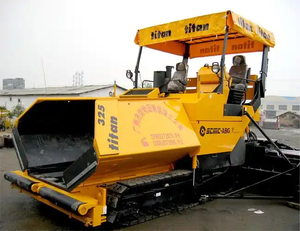
The inspection methods, procedures and precautions for asphalt pavers
Asphalt pavers are the key equipment for asphalt pavement construction on highways, municipal roads, airport runways, large squares, etc.