

The inspection methods, procedures and precautions for self-propelled pesticide spraying vehicles
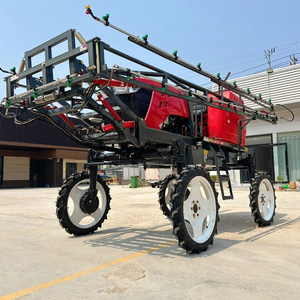
Self-propelled spraying vehicles are crucial equipment for the prevention and control of crop diseases and pests as well as foliar fertilization. They integrate a self-propelled chassis, a liquid tank, a spray boom and spray system, a liquid pump and pipeline control. A single operation can achieve uniform spraying over a large area. The quality of their operation - the uniformity of droplet distribution, the stability of spraying pressure, the consistency of spray boom height, and the absence of over-spraying or missed spraying - directly determines the efficacy of the pesticide and the crop yield. More importantly, the spraying vehicles operate with pesticides as their target. Any leakage in the spraying system, severe drift of droplets, or improper protection by the operator will cause serious consequences such as pesticide damage, environmental pollution, and personal poisoning. In scenarios such as new machine delivery and acceptance, verification of agricultural machinery subsidies, second-hand transactions, inspection of equipment for pest control service teams, and pre-operation maintenance and inspection before the operation season, a comprehensive system of inspection covering the spray system, spray boom mechanism, liquid control, safety protection, and environmental friendliness is a basic requirement for ensuring the quality of pest control operations and personal and environmental safety.
I. Overview of Inspection Methods
Based on the chassis type of the self-propelled spraying vehicle (wheel type / track type), spray arm layout (horizontal spray arm / boom / air-assisted), spray system (hydraulic atomization / centrifugal atomization), and the control method of the liquid agent (manual / variable spray / GPS precise spray) as well as the requirements of the client, the inspection comprehensively employs the following methods:
Static full inspection: The spraying vehicle is left to stand still. The chassis, engine, liquid tank, liquid pump, filter, piping system, spray arm frame, spray head assembly, electrical control system, and safety protection devices are inspected item by item through visual inspection, touch measurement, and use of measuring tools.
Dynamic operation test: Start the engine on a safe site to verify the functions of components such as the liquid pump operation, spray pole extension/folding, spray pressure adjustment, spray status of each nozzle, and the mixing system. Listen for any abnormal noises and check for pipeline leaks.
Spray performance test: Using measuring cups, stopwatches, pressure gauges, etc., measure the uniformity of flow rate of each nozzle under the rated pressure, calculate the coefficient of variation; check the spray angle and the distribution of droplets.
Field trial spraying test (as needed): Conduct short-distance spraying tests in the crop fields. Use water-sensitive paper or droplet testing cards to measure the density and uniformity of droplet coverage, and comprehensively evaluate the spraying quality.
Document and label traceability: Verify the consistency between the entire machine label, the label of the liquid pump, the certificate of conformity, and the promotion and certification documents (if subsidies are involved).
The third-party inspection is carried out based on the "static full inspection + dynamic operation test + spray performance test" package. For high-value transactions or when there are disputes over spray quality, it is recommended to add field spray test and droplet coverage density detection.
II. Inspection Process
1. Data Collection and Preparation for Inspection
The client provides a list of the vehicles to be inspected, specifying the manufacturer, model, chassis type, capacity of the drug tank, width of the spray boom, pump type (diaphragm pump/ piston pump/ centrifugal pump), type of spray head (fan-shaped head/conical head/anti-drift head), control method, factory serial number, applicable standards (such as GB/T 24680, JB/T 9806, etc.). The inspection party prepares: tape measure, stopwatch, measuring cup (500ml/1000ml), precision pressure gauge (or calibration pressure gauge), level gauge, water-sensitive paper/fog droplet test card, magnifying glass or scanning software, anemometer, noise meter, etc.
2. Confirmation of Venue and Safety Conditions
Static inspection and spray test are conducted on hard and flat ground, in areas with sufficient water supply and good drainage. Field spray tests must be carried out in representative crop fields, with wind speed not exceeding 3m/s (to prevent droplet drift from affecting the accuracy of the test). Inspectors wear protective clothing, protective gloves, protective masks or respirators, and protective shoes. The operation site is equipped with a water rinse device and a first aid kit. The test water is clean water (without adding pesticides), to avoid personnel exposure risks during the testing process.
3. Identity and Label Verification
Machine nameplate: Verify the manufacturer, model, factory serial number, manufacturing date, capacity of the medicine box, width of the spray gun arm, and matching power, etc.
Pump nameplate: Verify the model, rated flow, rated pressure, and rotational speed of the pump, and confirm its compatibility with the entire machine.
Promotion certification (subsidy verification): Verify the model, enterprise, and validity period.
4. Inspection of the chassis and walking system
Self-propelled chassis: Wheeled chassis - Check the engine (diesel engine / gasoline engine) for starting, idle speed, acceleration performance, and the three leaks. The gearshift of the transmission is smooth, and there is no oil leakage in the drive axle. The depth of tire treads and tire pressure. Abnormal wear indicates a problem with the front axle alignment. Track-type chassis - Check the tension of the tracks, the wear of the rubber blocks, and the condition of the drive wheel / guide wheel / supporting wheel.
High ground clearance design: Self-propelled spraying vehicles usually have high ground clearance (with a ground clearance of 1.5-2 meters), allowing them to cross the crop canopy. Check whether the ground clearance of the front and rear axles is consistent with the nominal value. The structural components of the chassis - the weld seams of the longitudinal beams, cross beams, and legs of the high ground clearance frame - have no cracks, as these are the key structures that bear variable loads.
Walking speed: The gear shifting between the operation speed (usually 3-8 km/h) and the transfer speed (up to 20 km/h or more) is normal. When walking at a low speed, it should be stable without any crawling. The continuous speed change function (if equipped) responds sensitively.
5. Inspection of the drug solution tank and the pipeline system
Pharmaceutical liquid box: The box body is undamaged and free from leakage. The box cover is tightly sealed, and the ventilation holes are unobstructed. The inside of the box is clean - there are no residual crystals from the previous season's pesticides, no rust, and no sediment. Pesticide residues not only affect the efficacy of the next season but also chemical reactions between different pesticides may cause damage to the plants. The drainage port/cleaning port functions properly.
Level indication: The level gauge displays clearly and is consistent with the actual water level. The float type/electronic level sensor functions properly, and the low level alarm (if any) is verified to be effective.
Mixing system: The mechanical stirring or hydraulic reflux stirring functions are normal. After starting the liquid pump, there should be a clear stirring and reflux liquid flow in the drug solution tank, ensuring uniform drug concentration. Insufficient stirring will lead to sedimentation and uneven application of the drug.
Dosing port / dosing device: The filter screen of the dosing port is intact and undamaged - a missing filter screen will cause large particles of impurities to enter the pipeline and block the nozzle. Function verification of the chemical agent injection device (if equipped).
6. Inspection of the liquid pump and pipeline system
Liquid pump: The pump housing shows no leakage or cracks. For the belt-driven type - the tension of the transmission belt is appropriate and there is no aging or cracking. For the direct coupling type - the connection is reliable and there are no abnormal gaps.
Pump pressure test: Start the liquid pump, adjust the pressure regulating valve, and verify that the pressure gauge reading rises smoothly from 0 to the rated working pressure (usually 0.2 - 0.5 MPa). Maintain the pressure at the rated level, and the pressure gauge pointer should be stable with no significant fluctuations or pressure drop. After closing the valve of the spray rod section, the pressure gauge reading should rise and stabilize at the opening pressure of the safety valve.
Pressure regulating valve and safety valve: The knob of the pressure regulating valve can be adjusted flexibly within the full range, and the pressure response is sensitive. Function of the safety valve - when the pipeline pressure exceeds the set value, the safety valve should automatically open to relieve pressure, protecting the pipeline and the pump body.
Filter: The sprayer usually has multiple levels of filtration - the filter screen at the drug injection port, the coarse filter in the suction pipeline, the fine filter in the discharge pipeline, and the small filter screens in each nozzle body. Carefully disassemble and check each filter screen to see if it is clean and free of damage. Blockage of the filter screen will result in reduced flow and insufficient pressure at the nozzle; damage to the filter screen will cause impurities to clog the nozzle. Filter elements of the fine filter that have changed color after a long service life should be recommended for replacement.
Piping and joints: Each flexible hose for the medication solution is inspected individually for aging, cracking, and flattening. All joints - slip joints, quick joints, and clamps - are securely connected without any leakage. During operation, touch each joint with your hand to check for any leakage of the medication solution. The color markings on the medication solution piping (usually distinguishing the clear water pipe from the medication solution pipe) are clear.
7. Inspection of the spray bar mechanism
Spray bar frame: The structure of the spray bar frame shows no deformation, and there are no cracks in the welds. The locking mechanism of the spray bar frame is reliable in both the transportation state (folded) and the operation state (extended). The folding/extension mechanism - either hydraulic or electric - operates smoothly without any jamming.
Spray bar level and height adjustment: After unfolding, the spray bar should remain horizontal without any sagging or arching. Use a level gauge for inspection. The height adjustment mechanism of the spray bar (hydraulic lifting or manual screw) functions properly and is securely locked. The height of the spray bar should be adjustable according to the height of the crop canopy, and it should be consistent on both sides.
Spray bar balance and shock absorption: Spray bar balance suspension mechanism (spring/damper/twist rod) function - When lightly pushing one end of the spray bar during inspection, the spray bar should be able to automatically return to a horizontal position. Shock absorption mechanism function - During field spraying tests, observe whether the shaking amplitude of the spray bar on bumpy roads is effectively suppressed. Failure of shock absorption will cause the spray bar to swing up and down significantly, resulting in a serious deterioration of spray uniformity.
8. Inspection of Spray Head Assembly
Spray head type verification: Check the spray head model, material (copper/stainless steel/ceramic/plastic), flow specification (usually indicated by color), and ensure it is consistent with the configuration table. The internal Venturi structure of the anti-drag spray head (air-induced type) is intact.
Spray head status: Individual head inspection - Abrasion of the spray ports, presenting an elliptical or flared shape, will result in increased flow and changed spray angle; Damage to the spray holes of ceramic or stainless steel plates will cause irregular mist flow. Cleaning of the filter inside the spray head.
Drip prevention device: Each nozzle should be equipped with a drip valve (one-way valve) that automatically closes when the liquid pump stops. This prevents residual liquid from dripping and causing damage from the chemicals. Testing method: Spray at the rated pressure, suddenly shut off the liquid pump or close the ball valve of this section. Observe if there is any continuous dripping from the nozzle. If there is dripping from the drip valve, it must be replaced.
Spray head spacing: Use a measuring tape to measure the distance between adjacent spray heads. The standard spacing is usually 50 cm. Deviations in the spacing will result in an uneven distribution of the spray overlap areas.
9. Spray Performance Test - Core Component
Flow uniformity test
Add clean water to the liquid tank of the spraying vehicle, start the pump, and adjust it to the rated working pressure.
Number all the nozzles. Use measuring cups and stopwatches. Take the amount of water sprayed out for the specified time (such as 1 minute) from beneath each nozzle, and weigh or measure the volume.
Calculation: Total average flow rate, percentage deviation of each nozzle, coefficient of variation (CV value). The CV value should be ≤ 10% (for conventional spraying) or ≤ 7% (for precise spraying). If the flow rate of a certain nozzle is significantly larger (> 15%), it indicates that the nozzle is worn or misinstalled; if it is significantly smaller (< 15%), it suggests that the nozzle is clogged or the filter is clogged.
Replacement: Replace all the defective nozzles with new nozzles of the same model and specification, and re-test until the CV value meets the standard.
Spray angle and mist shape inspection
At the rated pressure, visually check whether the spray fan surfaces of each nozzle are complete and whether the spray angles are consistent (for fan-shaped nozzles, the angles are usually 110° or 80°). Any deviation or bifurcation in the spray shape indicates that the nozzle is damaged.
10. Inspection of Electrical and Intelligent Control Systems
Control panel: The functions such as spray pressure adjustment, spray pole extension and folding, spray pole height adjustment, and segmented spray control (with each segment having independent switches) are all operated normally through the buttons/handles.
Variable spray system (if equipped): GPS signal reception is normal, and the controller has no fault codes. Based on the preset prescription chart or real-time sensor signals, verify the automatic adjustment function of the spray flow.
Automatic conforming system (if equipped): The ultrasonic or laser sensors are in good condition. Simulate the undulations of the ground or the changes in the crop canopy to verify the automatic following-up and elevation function of the spray boom.
Lights: The functions of the work lights, the outline lights, and the turn signals are all functioning properly. During frequent night pesticide spraying operations, lights are a necessary safety feature.
Battery: The terminals are not corroded and the main power switch is functional.
11. Safety and Environmental Protection Inspection
Operator protection: Whether the cab/operation console is equipped with an activated carbon filter fresh air system (positive pressure cab), the status of the filter elements. Storage location for protective masks/masks.
Cleaning device: The clean water handwashing tank/cleaning bucket is in good condition and has sufficient capacity. After the operation, the operator's cleaning is crucial to prevent pesticides from being absorbed through the skin.
Anti-drift measures: Installation status of anti-drift nozzles. Verification of the operation of the fans and the formation of the wind curtains in the wind curtain anti-drift system (if equipped).
Emergency shutdown: The emergency shutdown button is activated.
Fire extinguisher: Within the validity period, the pressure is normal.
12. Field trial spraying test (as needed)
In representative crop fields, conduct a test spraying using clean water at the rated pressure and operating speed:
Placement of water-sensitive paper/fog droplet test cards: Uniformly place the water-sensitive paper at the top, middle and bottom of the crop canopy within the width of the spray gun.
Test spraying: The sprayer travels through the test area at its normal operating speed.
Fog droplet coverage density: Collect the water-sensitive paper and use a magnifying glass or dedicated scanning software to analyze the fog droplet coverage density (per cm²). According to the requirements of plant protection, fungicides typically require 50-70 droplets/cm², insecticides 30-50 droplets/cm², and herbicides 20-30 droplets/cm². Insufficient coverage density indicates insufficient spray volume, too fast operation speed, or improper nozzle selection.
Uniformity of droplet distribution: The coefficient of variation of the coverage density of water-sensitive paper at each position should be ≤ 30%. Poor uniformity indicates incorrect spray bar height, mismatched spray head spacing, or fluctuation in spray pressure.
13. Report Output
Summarize all inspection items, measurement data, spray performance test data, and test results of water-sensitive paper for spraying. Formulate the "Third-Party Self-propelled Spraying Vehicle Inspection Report". The report must include a data table of uniformity of each nozzle flow rate, coefficient of variation calculation, and analysis of the coverage density of water-sensitive paper (if any). For cases involving verification of agricultural machinery subsidies, the verification record of the promotion certification must also be attached.
III. Notes
Personal safety protection - Special requirements for pesticide application vehicle inspection
The inspection of the spraying vehicle involves assessing the risk of exposure to pesticide residues. Even when using a water test, pesticide residues may still remain in the pesticide tank, pipelines, and nozzles from the previous season. The inspector must wear protective gloves and a protective mask or respirator throughout the inspection process. After the inspection, thoroughly wash hands and face with water and soap.
During the spray performance test, personnel should stand in the upwind direction to avoid inhaling the spray mist.
Sprayer flow uniformity - the first factor for application accuracy
The nozzle is the most easily worn component in the spray system. The lifespan of nozzles made of different materials varies significantly - copper nozzles last about 100 hours, stainless steel nozzles last about 300 hours, and ceramic nozzles can last for over 1000 hours. After wear, the flow rate of the nozzle increases, and the spray angle changes, resulting in either excessive local dosage (pharmaceutical damage) or insufficient dosage (ineffectiveness). The uniformity test of flow rate during inspection cannot be omitted. Any nozzle that exceeds the limit must be replaced.
Users often mix different specifications of nozzles (such as using old nozzles with new ones), resulting in uneven flow. The inspector must check whether the color markings of all nozzles are consistent. During the flow test, measure each nozzle individually. For mixed installations, record and rectify the situation.
Anti-drip Valve - The Hidden Source of Pesticide Damage
Failure of the drip prevention valve will result in residual pesticide liquid remaining in the pipeline after the spraying stops, which may leak onto the fields or transfer roads, causing local crop damage or environmental pollution. During inspection, it is necessary to check for any leakage at each spray head after the spraying stops. The drip prevention valves that cause leakage are usually due to fatigue of the internal spring or the valve ball sealing surface being blocked by impurities. They should be replaced or cleaned.
Spray bar balance and shock absorption - Ensuring consistency in spray bar height
When wide-width sprayers (with a length exceeding 18 meters or even 36 meters) are moving across the field, due to uneven ground, they will experience up-and-down vibrations. The movement range of the end spray heads can reach several centimeters. Failure of the shock absorption mechanism will result in the spray rod end being sometimes too low (with too dense droplet coverage and increased drift) and sometimes too high (with droplets unable to penetrate the canopy). During inspection, it is necessary to verify the damping effect of the shock absorption mechanism. A simple method is to pull the end of the spray rod downward and then release it. The spray rod should slowly return to its original position under the damping effect, rather than bouncing repeatedly.
Drug residue and cross-contamination
The types of pesticides vary significantly for different crops and different growth stages. The herbicides remaining in the pesticide tank and pipeline may cause devastating damage if used for spraying broad-leaved crops in the next season. During the inspection process, the inspectors should observe whether there are crystals, sediment, or peculiar odors inside the pesticide tank and the inner walls of the pipeline. Any remaining suspected pesticide substances should be recorded and it is recommended to thoroughly clean (using special cleaning agents or activated carbon adsorption cleaning) before they can be put back into use.
The matching of spray pressure and operation speed
The flow rate and droplet size of the same group of nozzles vary under different pressures. Excessive pressure will result in a large number of fine droplets, significantly increasing the risk of drift; while too low pressure will cause the droplets to be too large, resulting in uneven coverage.
During the inspection, it should be confirmed that the actual working pressure is consistent with the rated pressure of the nozzle (for fan-shaped nozzles, it is usually 0.2 - 0.3 MPa). The operation speed should match the spray volume. If the speed is too fast, it will result in insufficient explosive dosage per unit area. Water-sensitive paper can be used for verification during the test spray.
Key points for photo archives
Close-up shots of the machine nameplate, the liquid pump nameplate, photos of the flow measurement and weighing of each nozzle, comparison photos of nozzle wear (with both new and old nozzles side by side), photos of the spray rod's horizontal expansion degree, photos of the coverage density of water-sensitive paper, photos of the internal cleaning state of the liquid tank, the status of the filter element, and the safety protection device (operator protection equipment) all need to be independently and clearly archived.
Share this product
The inspection methods, procedures and precautions for self-propelled
Self-propelled spraying vehicles are crucial equipment for the prevention and control of crop diseases and pests as well as foliar fertilization.