

Vibratory Roller Inspection: Deep Dive into Drum Vibration Systems & Compaction Quality
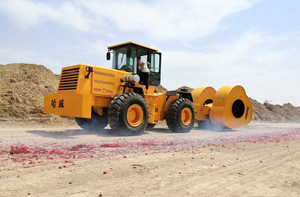
Vibratory rollers are the most common type used in soil and asphalt compaction. Their effectiveness depends entirely on the health of the vibration system. A roller may look clean and start easily, but if the eccentric weight assembly or bearings are failing, compaction quality suffers and repair costs skyrocket. This article focuses on the vibration system—the heart of a roller—along with key wear indicators that standard inspections often miss.
1. Understanding the Vibration System
Vibratory rollers use a rotating eccentric weight inside the drum to generate dynamic force. This force is transmitted to the ground, rearranging soil particles. The system consists of:
-
Exciter shaft – Carries one or two eccentric weights (fixed and movable, for variable amplitude)
-
Bearings – Heavy-duty tapered roller or spherical bearings supporting the exciter shaft
-
Hydraulic motor – Drives the exciter shaft
-
Vibration control valve – Regulates oil flow to start/stop vibration and change amplitude
-
Isolators – Rubber or polyurethane mounts separating the drum from the frame to prevent vibration transfer to the operator
Failures in any of these components lead to poor compaction or complete system breakdown.
2. Pre-Start Vibration System Inspection
Oil level and condition – Most vibratory drums have a sealed oil bath. Check the sight glass or dipstick on the drum end plate. Low oil level indicates leaks. Milky or dark, burnt-smelling oil means water contamination or overheating. Take an oil sample – laboratory analysis can detect metal particles from bearing wear long before failure.
Leaks – Inspect around the exciter housing seals, hydraulic motor mounting plate, and oil fill plug. Even a small weep can lead to major component failure.
Mounting bolts – Check bolts securing the exciter housing to the drum shell. Loose bolts cause misalignment and rapid bearing wear.
Rubber isolators – Inspect for cracks, separation, or compression set (flattening). Failed isolators transmit vibration to the frame, causing operator fatigue and cracking.
3. Operational Vibration Testing
Start the engine and engage vibration at low RPM (around 1000-1200 RPM). Listen carefully:
-
Normal – A smooth, deep humming sound.
-
Grinding or screeching – Bearing failure.
-
Knocking – Loose eccentric weight or damaged exciter.
-
Intermittent vibration – Hydraulic motor or control valve issues.
Warm-up check – Run vibration for 2-3 minutes. Using an infrared thermometer, measure the temperature of each drum end plate near the bearing housings. Temperatures should be similar (within 5°C). A hot spot indicates a failing bearing.
Frequency measurement – Use a vibration tachometer or a smartphone app with accelerometer (placed on the drum). Compare measured frequency (Hz) to the machine’s specification. Significant deviation suggests exciter or hydraulic flow problems.
Amplitude check – This requires specialized tools. On dual-amplitude machines, switch between low and high amplitude. You should feel a clear difference in ground vibration intensity. No change indicates a stuck eccentric weight.
Vibration shut-off test – When the operator releases the travel lever or applies the brake, vibration should stop automatically. A non-stopping vibration is a safety hazard and control system defect.
4. Asphalt Roller Special Checks (Tandem Vibratory Rollers)
Asphalt rollers have additional requirements:
Water spray system – Clogged nozzles, a weak pump, or a leaking tank prevent proper mat release. Run the system and verify even spray across the drum width.
Scrapers – Check that steel or polyurethane scrapers contact the drum evenly and are not worn down. Uneven scrapers leave streaks on the asphalt.
Drum surface smoothness – Look for asphalt buildup, rust, or pitting. A rough drum marks the asphalt surface.
5. Common Vibration System Defects & Repair Costs (USD)
| Defect | Symptom | Estimated Repair |
|---|---|---|
| Exciter bearing failure | Grinding noise, overheating | 1,500–4,000 |
| Eccentric weight mechanism stuck | No amplitude change | 2,000–5,000 |
| Exciter shaft seal leak | Oil dripping from drum end | 500–1,200 |
| Hydraulic motor failure | Vibration weak or absent | 2,500–5,500 |
| Rubber isolators collapsed | Operator fatigue, frame cracks | 800–2,000 |
| Drum shell crack | Visible crack, oil leak | 4,000–10,000 |
| Water pump failure | No spray | 300–700 |
6. Used Roller Purchase: Vibration System Checklist
When buying a used roller, perform these additional checks:
-
Ask for service records – Look for bearing replacements, exciter overhauls, and oil change intervals. Bearings typically last 2,000-4,000 hours depending on usage.
-
Run vibration through the full range – Test at low and high amplitude for several minutes.
-
Measure drum end temperature – After 5 minutes of vibration, both ends should be warm but not hot.
-
Check for previous welding – A drum that has been cracked and welded may be out of balance. Ask for repair documentation.
-
Inspect the drum shell with a straightedge – Place a long straightedge along the drum face. A gap of more than 3mm indicates shell deformation, affecting compaction uniformity.
7. Third-Party Certification for Roller Vibration Systems
A specialized inspection and certification for a vibratory roller should include:
-
Vibration system oil analysis (particle count, water, viscosity)
-
Bearing housing temperature profile (thermographic image)
-
Frequency measurement (Hz) vs. specification
-
Amplitude verification (if equipment available)
-
Isolator condition assessment
-
Water spray system performance test
-
Final certification: “Vibration system within spec” or “Repairs required before purchase”
8. Summary
The vibration system is the most expensive and most commonly overlooked part of a used roller. A roller with a failing vibration system may still move and steer perfectly, hiding its true condition. By following this focused inspection guide and obtaining a third-party certification, buyers can avoid machines that will require costly exciter or bearing repairs within the first operating season. For more heavy equipment inspection knowledge, stay tuned.
Share this product
Vibratory Roller Inspection: Deep Dive into Drum Vibration Systems & C
Vibratory rollers are the most common type used in soil and asphalt compaction. Their effectiveness depends entirely on the health of the vibration system.